
Pruning
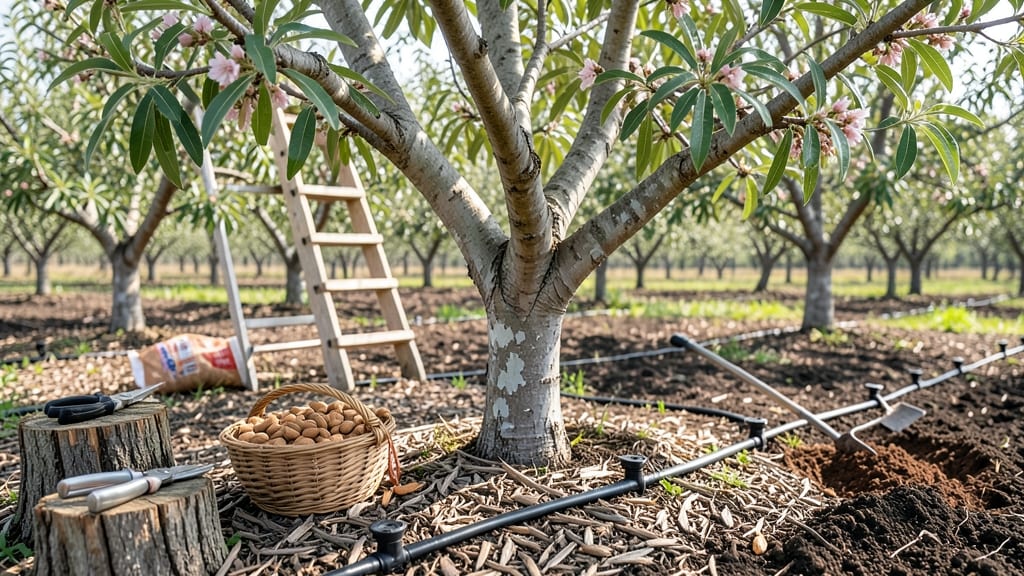
Pruning in almond tree farming year-round isn't just about cutting branches—it's the secret to doubling your nut harvest while keeping trees healthy for decades. 🌱 I learned this the hard way after my first orchard produced sparse crops because I only pruned in winter. The right cuts at the right time mean more sunlight on developing nuts, better air flow to prevent disease, and a tree that lives longer than most gardeners expect.
You don't need fancy tools—just sharp pruners, a ladder, and a clear plan. Start with winter dormancy pruning to remove dead wood, then shift to light summer pruning to shape the tree without stressing it.
The key is working with the tree's natural growth patterns, not against them. Even small-scale growers with just 3-5 trees can see dramatic improvements in just one season.
By following this schedule, you'll end up with thicker branches supporting heavier crops, more sunlight reaching the nuts, and a tree that produces reliably every year. The first harvest after proper pruning feels like winning the lottery—suddenly your backyard orchard is actually paying off.
Plus, the trees become easier to maintain as they mature.
This works for both backyard enthusiasts and small orchard owners in USDA zones 5-9, though exact timing shifts slightly by region. The principles stay the same—just adjust your calendar. Let's get those trees shaped for maximum production!
📚 In This Guide
- What you need
- Instructions
- Tips and common mistakes
- Wrapping up and next steps
What you need
- ● Pruning shears (bypass or anvil type) – 2-3 pairs (sharp, high-quality blades for clean cuts).
- ● Loppers (for thicker branches) – 1-2 pairs (10-12” cutting range).
- ● Pruning saw – 1 (for branches >2” in diameter).
- ● Gloves (cut-resistant, heavy-duty) – 2-3 pairs (protects hands from thorns and splinters).
- ● Disinfectant (70% rubbing alcohol or pruning sealant) – 1 bottle (prevents disease spread).
- ● Marking paint (bright colors like pink or white) – 1 small can (identifies cuts for future reference).
- ● Pruning rope or zip ties – 50+ ft (supports heavy branches during pruning).
- ● Ladder or tree steps – 1-2 (aluminum or fiberglass, 16-20 ft tall).
- ● Wheelbarrow or buckets – 2-3 (for debris and tools).
- ● Water hose with nozzle – 1 (cleans tools and washes sap off cuts).
- ● Almond trees – Age 3-5+ years (younger trees need minimal pruning; mature trees yield best).
- ● Well-draining soil – Test pH (6.0-7.5 ideal) and amend with compost if needed.
- ● Sunlight access – Full sun (6+ hours/day) for optimal growth.
- ● Irrigation system – Drip irrigation or soaker hoses (1-2 gallons per tree/day during dry seasons).
- ○ Frost protection (optional but critical in cold climates) – Frost cloth or sprinklers for young trees.
- ● Pole pruners – Extend reach for high branches (10-15 ft models).
- ● Tree pruning spray – Reduces sap bleeding and speeds healing.
- ● GPS-enabled pruning map – Tracks cuts and tree health over seasons (digital tools like AgriWebb).
- ● Safety harness – For large orchards (if climbing trees is necessary).
Step-by-Step guide to year-round almond tree pruning
Here’s my go-to pruning schedule that keeps trees productive and healthy—no guesswork involved.
✂️ Step 1: Winter Pruning (Dormant Season)
Start in late winter (just before buds swell) when the tree is dormant but pests are inactive. This is the best time to remove dead, diseased, or crossing branches—they’re easy to spot without leaves blocking your view. Use clean, sharp pruners to make cuts just outside the branch collar (the swollen area where the branch meets the trunk).
Focus on opening the canopy to improve airflow and sunlight penetration. Remove suckers (shoots growing from the base or roots) and water sprouts (fast-growing vertical shoots) first—they drain energy from nut production. I like to step back every few cuts to visualize the tree’s structure. Aim for an open vase shape that lets light reach the center.
☀️ Step 2: Summer Pruning (Post-Harvest)
After harvest, in late summer, prune to encourage next year’s growth. Remove any branches that produced nuts this season—these are called fruit-bearing spurs and should be cut back to 1/3 of their length. This rejuvenates the branch and promotes new, vigorous growth for future harvests.
Look for overlapping branches or those growing inward—they compete for sunlight and nutrients. Thin these out to 3-4 inches apart between branches. Avoid heavy pruning now; just light shaping and cleanup. Water the tree deeply after pruning to help it recover.
🌱 Step 3: Spring Pruning (Bloom Preparation)
In early spring, just as buds begin to swell but before flowers open, do a final light pruning. Remove any damaged or broken branches from winter storms and trim back overly long shoots to 6-8 inches from the main branch. This prevents energy loss from excessive leaf growth and directs it toward nut development.
Pay special attention to the tree’s scaffold branches (the main structural limbs). If any are growing too upright, make a small notch cut on the underside to encourage outward growth. Never remove more than 25% of the tree’s foliage in one season—this weakens the tree and reduces yield.
⏰ Step 4: Ongoing Maintenance (Year-Round)
Throughout the year, monitor for suckers, dead wood, or pest damage and prune as needed. Use sterilized tools (wipe with rubbing alcohol between cuts) to prevent disease spread. Thin out excessive foliage in the center of the tree to improve airflow and reduce humidity, which can lead to fungal issues.
I check my trees monthly for signs of stress—yellowing leaves, dieback, or unusual growth patterns. If you notice gummy sap oozing from cuts, it’s a sign of stress; keep the area clean and avoid pruning during wet weather. Mulch the base with 2-3 inches of organic matter (like wood chips) to retain moisture and regulate soil temperature.
Tips & tricks for perfect almond tree pruning
Here's what nobody tells you about keeping your almond trees thriving through every season.
Timing is Everything: In Step 1, when you're pruning in late winter, look for those tiny buds just starting to swell—this is your cue that it's the perfect time. I've learned the hard way that pruning too early can leave branches vulnerable to frost damage, while waiting too long risks waking up pests. The dormant season gives you the cleanest view of what needs to go, so take advantage of that clear visibility to remove every dead branch you spot.
The 1/3 Rule for Summer Pruning: During Step 2's summer pruning, cutting back fruit-bearing spurs to one-third their length might seem drastic, but trust me on this. This aggressive approach forces the tree to redirect its energy into new, more productive growth. I've seen trees that skipped this step produce fewer nuts the following year—don't skip this critical renewal process. Use a string or measuring tape to mark that one-third point before you cut.
Scaffold Branch Strategy: In Step 3's spring pruning, pay special attention to those scaffold branches—they're the backbone of your tree's structure. When you notice branches growing too upright, make that small notch cut on the underside to encourage outward growth. This simple technique prevents the classic "Christmas tree" shape that blocks sunlight from reaching the center. I've found that trees with properly angled scaffold branches produce nuts all the way to the trunk.
Monthly Stress Check: The ongoing maintenance in Step 4 isn't just about trimming—it's about understanding your tree's health signals. That monthly check for yellowing leaves or gummy sap is your early warning system. I've caught potential problems before they became serious by simply taking 10 minutes each month to walk through my orchard and observe. The key is consistency—trees don't show stress overnight, but catching it early makes all the difference.
Pro Tips for Almond Tree Farming
- Here's what nobody tells you about keeping your almond trees thriving through every season.
- Timing is Everything: In Step 1, when you're pruning in late winter, look for those tiny buds just starting to swell—this is your cue that it's the perfect time.
- The 1/3 Rule for Summer Pruning: During Step 2's summer pruning, cutting back fruit-bearing spurs to one-third their length might seem drastic, but trust me on this.
Frequently asked questions
Got questions about almond tree farming and pruning? You’re not alone! Here are some of the most common concerns—plus clear, actionable answers to keep your orchard thriving.
How often should I prune almond trees, and when is the best time?
Prune almond trees twice a year for optimal results: late winter (dormant season) to shape the tree and remove dead wood, and summer (June–July) to control growth and improve airflow. Avoid pruning during heavy frost or when nuts are forming—timing is key!
What’s the best pruning technique for young vs. mature almond trees?
For young trees (1–3 years), focus on open-center shaping—remove competing branches and encourage a strong central leader. For mature trees (4+ years), prioritize thinning cuts to reduce density and improve sunlight penetration. Always cut just outside the branch collar to avoid damage.
How do I tell if my almond tree is overpruned or underpruned?
Signs of overpruning include stunted growth, excessive leaf drop, or weak wood. Underpruned trees may have dense canopies, poor airflow (inviting pests/disease), and lower nut yields. Aim for 20–30% removal of foliage per pruning session to strike a balance.
Can I prune almond trees in the fall, or should I avoid it?
Fall pruning is risky for almond trees because it stimulates new growth that’s vulnerable to frost. If you must prune in fall, limit it to light cleanup cuts (removing dead/diseased branches only). Wait until late winter for major structural work.
What should I do if my almond tree isn’t producing nuts after pruning?
Low nut production could stem from over-pruning, poor pollination, or nutrient deficiencies. Check for healthy blooms (almonds need cross-pollination—plant compatible varieties nearby). Test soil pH (ideal: 6.0–7.5) and fertilize with nitrogen in early spring. Patience helps—young trees take 3–5 years to bear fruit!
Pro Tip:
Use sterilized tools (rubbing alcohol or bleach) between cuts to prevent disease spread. And always prune on a dry day—wet conditions speed up bacterial infections. Happy pruning!
Wrapping up and next steps
Almond tree farming thrives on consistent care, and pruning is your secret weapon for bigger yields and healthier trees! 🌱 From winter’s bold cuts to summer’s gentle shaping, each season plays a role in optimizing growth.
With the right tools, timing, and techniques, you’re not just maintaining trees—you’re investing in a bountiful harvest.
Ready to elevate your orchard? Start small—pick one tree this season to practice your pruning skills, then expand as you gain confidence. Your future almond crop will thank you! 🌟