
Pruning
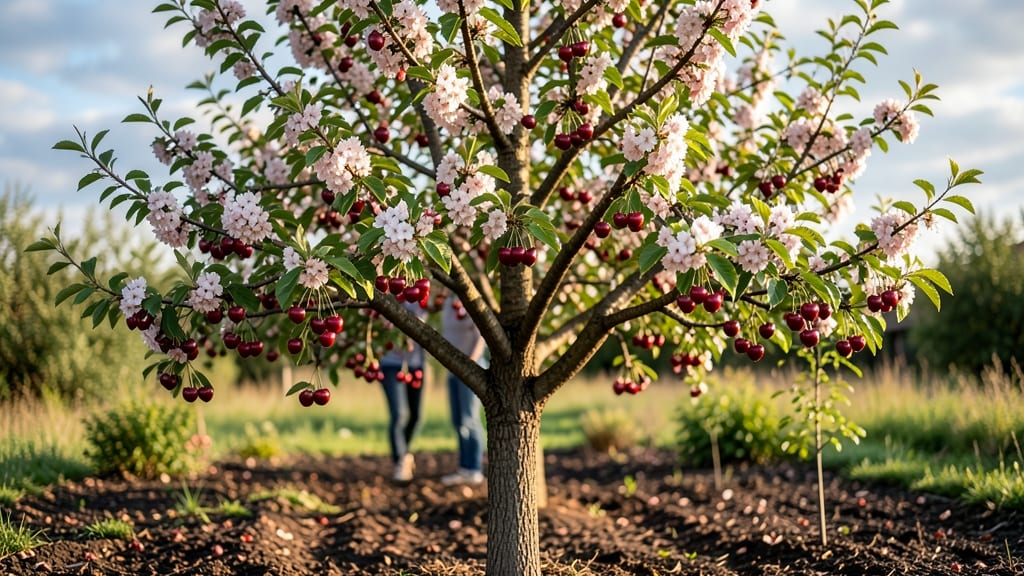
A Bing cherry tree's height can turn your small garden into a fruiting dream—or a space-crushing nightmare, depending on the variety you choose.
Picture this: a 25-foot standard Bing cherry tree 🍒 towering over your patio, or a compact 8-foot dwarf version that fits neatly into a corner. The difference isn’t just aesthetics—it’s about whether you’ll be harvesting sweet cherries or wrestling with overgrown branches.
In this guide, we’ll break down the height ranges of standard, semi-dwarf, and dwarf Bing cherry trees, so you can pick the perfect size for your space. You’ll also learn how pruning and planting techniques can keep your tree at an ideal height while maximizing fruit production.
Whether you’re working with limited yard space or planning a full orchard, understanding these height differences is the key to a thriving Bing cherry tree that fits your garden—and your life.

Bing cherry tree height comparison: standard vs dwarf varieties
Choosing the right Bing cherry tree height starts with understanding the dramatic differences between standard varieties and dwarf rootstock options. A standard Bing cherry tree can soar to 20-30 feet tall, while dwarf varieties stay compact at just 6-12 feet.
This height difference isn't just about aesthetics—it impacts your garden layout, fruit accessibility, and even maintenance efforts.
The rootstock you choose determines 90% of your tree's final height. Standard Bing cherries grow on their own roots or vigorous rootstock like Mahaleb, while dwarf varieties are grafted onto semi-dwarf or dwarfing rootstock like Gisela 5 or Colt.
This grafting technique creates a tree with the same fruit characteristics but a fraction of the height.
Here's where things get practical: dwarf varieties produce fruit 2-3 years earlier than standard trees because their smaller size allows them to focus energy on fruit production rather than vertical growth. Meanwhile, standard trees take 5-7 years to bear significant fruit due to their larger canopy and structural demands.
| Type | Mature Height | Rootstock | Spacing Needs | Fruit Production Time |
|---|---|---|---|---|
| Standard | 20-30 ft | Mahaleb, Mazzard | 20-25 ft apart | 5-7 years |
| Semi-Dwarf | 12-18 ft | Gisela 6, Colt | 12-15 ft apart | 3-5 years |
| Dwarf | 6-12 ft | Gisela 5, St. Julian A | 8-10 ft apart | 2-3 years |
When planning your garden layout, remember that standard Bing cherries need significant horizontal space—their wide canopies require 20-25 feet between trees to prevent overcrowding. In contrast, dwarf varieties can thrive in urban gardens or even large containers with just 8-10 feet of clearance.
This space efficiency makes dwarf trees ideal for patios or small backyards where every inch counts.
The pruning requirements also differ dramatically. Standard trees need annual structural pruning to maintain their massive canopies, while dwarf varieties benefit from light annual pruning and regular shaping to encourage fruit production. Over-pruning dwarf trees can actually reduce their already limited height, so a gentle approach works best.
For fruit production, dwarf varieties might yield slightly less per tree, but their compact size allows you to plant multiple trees in the same space. This creates better pollination opportunities and can actually increase overall yield in small gardens.
Standard trees produce more fruit per individual tree, but their size often limits how many you can grow together.
Consider your harvesting needs when choosing height. Dwarf Bing cherries are easier to pick—no ladder required! Their lower branches make them perfect for families with kids or seniors.
Standard trees, while impressive, often have unreachable upper fruit that may rot before harvesting. This accessibility factor alone makes dwarf varieties a practical choice for many home gardeners.
One final consideration: wind resistance. Standard Bing cherries have deep root systems that anchor them against storms, while dwarf varieties may need additional staking in windy areas.
If you live in a coastal or exposed location, you might need to choose a semi-dwarf variety as a compromise between height and stability.
Ready to make your choice? The right Bing cherry tree height depends on your garden's unique conditions—whether you prioritize space efficiency, easy harvesting, or maximum fruit production.
With this comparison, you can select a variety that will thrive in your yard and reward you with delicious cherries for years to come. 🍒
How to select the right Bing cherry tree height for your garden space
Choosing the perfect Bing cherry tree height depends on your garden’s size and layout. A standard Bing cherry tree can reach 20-30 feet, making it ideal for large yards but unsuitable for small spaces.
Meanwhile, dwarf varieties stay between 6-12 feet, perfect for urban gardens or containers. Let’s explore how to match your space to the right tree.
Your garden’s available space is the first factor. A standard Bing cherry tree needs at least 15 feet of clearance in all directions for proper airflow and sunlight.
If your yard is smaller, consider a semi-dwarf variety (12-18 ft) or a dwarf Bing cherry grafted onto a Gisela rootstock, which stays compact while still producing abundant fruit.
Urban gardeners often opt for container-grown dwarf Bing cherries. These varieties thrive in large pots (20+ gallons) and can be placed on patios or balconies. Just ensure the container has drainage holes and you’re using well-draining soil to prevent root rot.
A 5-gallon pot works for young trees, but upgrade to 15+ gallons as the tree matures.
Standard Bing Cherry (20-30 ft)
Dwarf Bing Cherry (6-12 ft)
- ✅ High fruit yield
- ✅ Longer productive lifespan
- ✅ Ideal for large orchards
- ❌ Needs large garden space
- ❌ Requires pruning for height control
- ❌ Harder to maintain in small yards
- ✅ Fits small gardens or containers
- ✅ Easier to prune and maintain
- ✅ Good for urban or balcony gardening
- ❌ Lower total fruit yield
- ❌ Shorter productive lifespan
- ❌ Needs pollination partner if isolated
Sunlight is another critical factor. All Bing cherry trees require 6-8 hours of full sun daily, but taller varieties may cast longer shadows that block nearby plants.
If your garden has limited sun exposure, a dwarf Bing cherry is your best bet—its smaller canopy ensures it gets enough light without overshadowing other plants.
For urban gardens or small backyards, consider planting two dwarf Bing cherry trees side by side. This setup mimics natural cross-pollination, increasing fruit production. Space them 10-12 feet apart to allow airflow and prevent disease.
If space is extremely limited, choose a self-pollinating dwarf variety like 'Stella' or 'Compact Stella' for hassle-free growing.
Finally, think about maintenance. Standard Bing cherries require regular pruning to control height and shape, while dwarf varieties need less aggressive pruning but still benefit from annual trimming to remove dead or crossing branches. If you’re new to pruning, a dwarf Bing cherry is more forgiving and easier to manage.
Ready to pick the perfect Bing cherry for your space? Start by measuring your garden’s dimensions, then choose a variety that fits your layout and sunlight. With the right height, you’ll enjoy sweet, juicy cherries without the space struggles! 🍒🌳