
Diseases
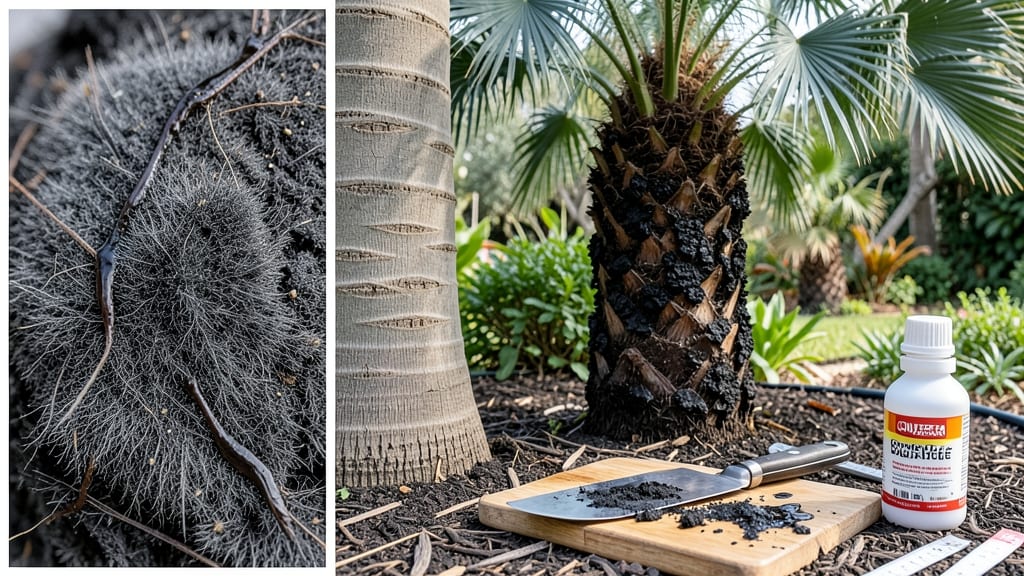
That velvety black fungus on the palm tree trunk creeping up your palm isn’t just dirt—it’s a fungal warning sign that could weaken your tree if ignored. ✨ I’ve battled this exact issue with my Canary Island date palm, and what I learned could save yours before it’s too late.
The fungus thrives in damp, shaded conditions, turning your tree’s trunk into an energy drain rather than the tropical centerpiece it should be.
Most cases are sooty mold or anthracnose, feeding on honeydew from sap-sucking insects or poor air circulation. The good news? You can reverse it with targeted treatments—organic options like neem oil or copper fungicide work well for early stages, while severe cases might need a stronger chemical approach.
Think of it like giving your palm a deep clean and a breath of fresh air.
Within 2-4 weeks of consistent care, you’ll see the black film recede and fresh green fronds pushing through. The key is acting fast—prune away infected fronds, improve airflow, and keep the trunk dry.
I’ve seen palms bounce back completely when caught early, but neglect turns this into a costly removal job.
If the fungus spreads beyond the trunk or your tree shows yellowing leaves despite treatment, it’s time to call an arborist. Some infections signal deeper rot or pest damage that DIY fixes can’t handle.
Better to address it now than lose your palm entirely—trust me, the view won’t be the same without it.
The Hidden Triggers Behind Palm Fungus
Black fungus creeping up your palm tree trunk isn’t just a cosmetic nuisance—it’s a warning sign that your tree is under siege. Understanding why this fungal blight takes hold is the first step to stopping it before it spreads.
Let’s break down the key culprits, from environmental stressors to human habits, and how they create the perfect storm for fungal growth.
Palm trees thrive in well-draining soil, but when roots sit in soggy conditions, they become a buffet for fungal spores. Here’s how it happens:
- Root suffocation: Compacted or clay-heavy soil traps excess moisture, cutting off oxygen to roots. Weakened roots can’t fight off pathogens like Phytophthora or Thielaviopsis, which cause black, mushy lesions.
- Fungal spores love dampness: Black fungus spores (often Botryosphaeria or Cercospora) germinate rapidly in wet environments. A constantly wet trunk or soil creates a high-humidity microclimate, accelerating infection.
- Signs to watch for:
- Yellowing fronds (even if the trunk looks fine at first).
- Black, tarry streaks on the trunk or at the soil line.
- Foul, musty odor near the base.
Actionable fix: Amend soil with perlite or sand to improve drainage. Elevate the tree slightly with a mound of gravel if your yard floods easily. Pro tip: 💡 Water deeply but infrequently—palms hate "wet feet" but need consistent moisture.
Any injury to a palm tree’s trunk—whether from pruning, storms, or pests—creates an entry point for fungal invaders. Here’s the breakdown:
- Physical damage: Rough pruning (especially with unsterilized tools) or hail scars expose the vascular system. Fungi like Ganoderma (a shelf fungus) or Fusarium exploit these wounds, leading to black, decaying patches.
- Insect gateways: Palm weevils or borers burrow into trunks, leaving tunnels that trap moisture and debris—ideal for fungal colonization.
- How to spot it:
- Black, sunken lesions around pruning cuts.
- Sawdust-like frass (insect droppings) at the base.
- Trunk oozing a dark, sticky resin.
Actionable fix: Always sterilize pruning tools with rubbing alcohol. Seal wounds with copper-based fungicide or pruning sealant (like Tanglefoot Tree Wound Pruning Seal). Pro tip: ✨ Avoid "topping" palm trees—it stresses the trunk and invites rot.
Palm trees in tropical or subtropical climates face a double threat: intense heat weakens defenses, while high humidity fuels fungal spores. Here’s the science:
- Heat stress: Temperatures above 90°F (32°C) reduce the tree’s ability to produce antifungal compounds. This leaves the trunk vulnerable to opportunistic fungi like Cercospora, which thrives in warm, moist conditions.
- Humidity’s role: Relative humidity above 70% keeps fungal spores viable longer. In coastal areas or during monsoons, spores can spread via wind or splashing water.
- Red flags:
- Black, velvety growth on the trunk (especially on the shady side).
- Fronds wilting in heat but not recovering at night.
Actionable fix: Improve air circulation with strategic pruning (remove crowded fronds). In extreme heat, provide light shade during peak afternoon sun. Pro tip: 🌡️ Use a hygrometer to monitor humidity—aim for 40–60% around your palm.
A palm tree starved of essential nutrients can’t fight off fungal attacks. Here’s how deficiencies pave the way:
| Nutrient Deficiency | How It Helps Fungi | Symptoms on Trunk/Fronds |
|---|---|---|
| Potassium (K) | Reduces cell wall strength, making tissue easier for fungi to penetrate. | Black, necrotic spots; fronds yellowing at tips. |
| Magnesium (Mg) | Disrupts chlorophyll production, weakening the tree’s energy reserves. | Interveinal yellowing; black fungal growth in older fronds. |
| Zinc (Zn) | Impairs wound healing, leaving cuts and splits vulnerable to infection. | Stunted growth; black, crusty lesions at pruning sites. |
Actionable fix: Conduct a soil test and amend with balanced palm fertilizer (high in K and Mg). Pro tip: 💪 Apply Epsom salt (magnesium sulfate) every 3 months for a quick boost.
Some pests don’t just weaken palms—they actively spread fungal spores. For example:
- Palm weevils: Their larvae tunnel into trunks, creating moist, decaying tunnels perfect for Ganoderma (a deadly shelf fungus). Adult weevils carry spores on their bodies.
- Scale insects: Their honeydew secretions attract sooty mold, a black fungal film that smothers the trunk and blocks sunlight.
- Mealybugs: Their fluffy white colonies trap moisture, creating ideal conditions for Fusarium or Botrytis.
Actionable fix: Treat infestations with neem oil or horticultural oil. Prune heavily infested fronds and dispose of them off-site to prevent spore spread. Pro tip: 🔥 Introduce ladybugs or parasitic wasps to control pests naturally.
Fixing Fungal Issues on Palm Trunks
Now that you’ve identified the culprit behind the black fungus on your palm tree, it’s time to take action! The right approach depends on the root cause—whether it’s overwatering, poor air circulation, or a weak immune system.
Below, we’ll break down practical, step-by-step solutions tailored to each issue, plus prevention tips to keep your palm healthy long-term.
Problem: Excess moisture creates the perfect breeding ground for fungal spores, leading to black, slimy patches on the trunk.
How to Fix It:
- 🔥 Stop Watering Immediately
- Let the soil dry out completely before watering again. Stick your finger 2–3 inches into the soil—if it’s damp, wait another day.
- 👨🍳 Improve Drainage
- Amend the soil with perlite, sand, or gravel to create air pockets. For potted palms, ensure the container has drainage holes.
- If planted in the ground, consider raising the planting bed slightly to prevent water pooling.
- 🥘 Apply Fungicide (If Needed)
- Spray a copper-based fungicide (like Bordeaux mixture) or a neem oil solution (1 tsp neem oil + 1 quart water) on the trunk and surrounding soil. Reapply every 7–10 days until the fungus clears.
- ⏰ Monitor for Recovery
- Healthy palms should show improvement in 2–4 weeks. If the fungus persists, the issue may be deeper (like root rot).
💡 Pro Tip: Water palms deeply but infrequently—once every 1–2 weeks (adjust for climate). Early morning is best to allow foliage to dry quickly.
Problem: Poor ventilation traps humidity, giving fungi like sooty mold or Ganoderma a foothold on the trunk.
How to Fix It:
- 🔪 Prune Strategically
- Trim dead, crossing, or overcrowded fronds to improve airflow. Use sterilized pruners (wipe with rubbing alcohol) to avoid spreading spores.
- 🌡️ Increase Air Circulation
- Space palms 6–10 feet apart if planted in groups. For indoor palms, use a small fan on low setting near the plant.
- ✨ Clean the Trunk
- Scrub the blackened areas with a mixture of water and mild dish soap (1 tbsp soap per gallon of water). Rinse thoroughly.
- For stubborn spots, use a soft brush and hydrogen peroxide (3%) to disinfect.
- 🎯 Prevent Future Buildup
- Wipe down leaves monthly with a damp cloth to remove dust and fungal spores.
- Avoid fertilizing during wet seasons—excess nutrients can attract pests that weaken the palm.
Problem: Nutrient deficiencies or pest damage leave palms vulnerable to fungal infections.
How to Fix It:
- 📊 Test Soil & Fertilize Smartly
- Conduct a soil test to check for deficiencies (common culprits: magnesium, potassium, or nitrogen).
- Use a balanced palm fertilizer (like 8-2-12 NPK) once every 3–4 months during growing season (spring–summer).
- 💪 Boost Natural Defenses
- Compost tea or fish emulsion (diluted to 1 tbsp per gallon) can enhance resistance. Spray on leaves and trunk.
- Silica-rich supplements (like kelp meal) help strengthen cell walls against pathogens.
- 🥗 Treat Underlying Pests
- Inspect for scale insects, mealybugs, or spider mites—they weaken palms. Use insecticidal soap or neem oil as needed.
- 🌿 Mulch Properly
- Apply 2–3 inches of organic mulch (like wood chips) around the base—but keep it 6 inches away from the trunk to prevent rot.
If the fungus has spread aggressively or the trunk shows soft rot, oozing sap, or large black patches, act fast: - 🔪 Remove Severely Infected Tissue – Cut away blackened, mushy areas with a sterilized knife.
Dispose of debris in a sealed bag (do not compost). - 💊 Use Systemic Fungicide – Apply a phosphite-based fungicide (like Phostrol) to the soil and trunk.
Follow label instructions. - 🌳 Consider Professional Help – For Ganoderma (brown rot) or advanced root rot, consult an arborist—some infections are untreatable and may require removal.
💡 Final Prevention Checklist: ✅ Water wisely – Deep but infrequent watering. ✅ Prune regularly – Keep foliage open and airy. ✅ Inspect monthly – Catch early signs before they spread. ✅ Avoid over-fertilizing – More isn’t always better! ✅ Disinfect tools – Clean pruners after each use.
With these steps, your palm should bounce back within weeks—and stay fungus-free for years! 🌴✨
Frequently asked questions
Is black fungus on my palm tree trunk always harmful?
Not all black growth is dangerous—sooty mold (a harmless black film) often appears after aphids or scale insects feed on your palm. However, true fungal infections like Ganoderma or Botryosphaeria cause decay and can kill your tree. Check for soft, mushy trunk tissue or oozing sap—these are red flags. Sooty mold wipes off easily with water, while fungal infections require treatment.
Can I use household vinegar to treat black fungus on palm trunks?
Yes, but with caution! A 1:1 vinegar-water solution (sprayed on leaves/trunk) can help kill fungal spores due to its acidity. However, never apply undiluted vinegar—it can burn the palm’s tissue. For stubborn cases, mix with 1 tsp baking soda per gallon to boost effectiveness. Reapply every 5-7 days until the black growth disappears.
How do I know if my palm tree has root rot from black fungus?
Root rot often starts with yellowing fronds even when the trunk looks fine, followed by a musty odor at the base. Dig carefully around the roots—healthy roots are firm and light brown, while rotten roots are black, slimy, and crumble easily. If you suspect root rot, stop watering immediately and improve drainage with perlite or sand before applying a systemic fungicide like Phostrol.
Will pruning infected fronds spread the fungus to healthy parts?
Only if your tools aren’t sterilized! Always clean pruners with rubbing alcohol between cuts to prevent spreading spores. Dispose of heavily infected fronds in a sealed plastic bag (don’t compost them). For severe cases, wear gloves and avoid touching other palms until you’ve washed your hands thoroughly. Prune during dry weather to minimize fungal spore dispersal.
How long does it take to see results after treating black fungus?
With proper care, you’ll typically see improvement in 2-4 weeks. Early-stage sooty mold may clear within 1-2 weeks of cleaning and improving airflow. For deeper infections like Ganoderma, recovery can take 3-6 months or may require professional intervention. Monitor progress by checking for new frond growth and reduced black patches—consistency is key!