
Container Gardens
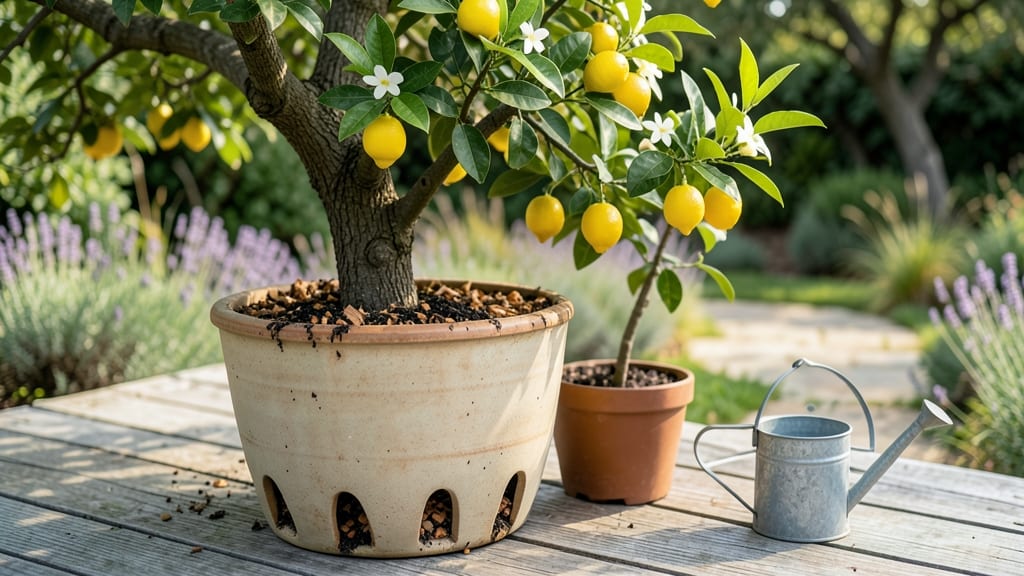
Keeping a lemon tree in a pot is absolutely possible with dwarf varieties like Meyer or Improved Meyer, which adapt beautifully to container life when given bright sunlight, well-draining soil, and consistent care to control growth and fruit production.
Dwarf lemon trees are specifically bred to thrive in containers, making them perfect for patios, balconies, or even sunny windowsills. 🌿 The key to success lies in choosing the right variety—Meyer lemons, for example, are not only cold-hardy enough for USDA zones 9-11 but also produce sweeter, easier-to-peel fruit than standard varieties.
Improved Meyer hybrids take this a step further with even better disease resistance and consistent yields. Remember, container size matters: a 15- to 20-gallon pot gives roots enough room to establish while keeping the tree manageable.
Beyond variety selection, proper care transforms these potted citrus trees from decorative plants into productive additions to your kitchen. Well-draining soil mixes with perlite or sand prevent root rot, while regular watering (letting the top inch dry between sessions) mimics natural rainfall patterns.
Fertilizing every 4-6 weeks during growing season with a citrus-specific formula ensures your tree gets the nutrients it craves for vibrant foliage and sweet fruit. The payoff? A thriving potted lemon tree that can produce up to 50 lemons per year with minimal space requirements.
💡 In This Article
- Best Dwarf Lemon Tree Varieties for Pots
- Container Lemon Tree Care Essentials
Best dwarf lemon tree varieties for pots
Dwarf lemon trees are specially cultivated to thrive in containers, offering the perfect solution for urban gardeners or those with limited outdoor space.
The most popular varieties for potted growth include Meyer lemons, which produce sweeter, easier-to-peel fruit than standard lemons, and Improved Meyer hybrids, bred for even better disease resistance and consistent yields.
These varieties typically grow 6-10 feet tall in containers, compared to full-size lemon trees that can reach 20 feet in the ground. 🌱
Another excellent option is the Eureka lemon, known for its high fruit production and cold tolerance (down to 20°F with protection), making it suitable for containers in cooler climates. However, Eurekas require slightly larger pots (20+ gallons) due to their vigorous growth.
For smaller spaces, the Ponderosa lemon offers a unique, bumpy fruit and compact growth (8-10 feet), thriving in 15-gallon containers. Each variety has distinct characteristics: Meyer lemons are more cold-hardy, while Eurekas produce more fruit per tree.
The key to choosing the right variety lies in matching your climate and space constraints. Meyer lemons, for instance, can tolerate brief dips to 25°F with proper winter care, making them ideal for USDA zones 9-11.
Improved Meyer hybrids take this further with enhanced disease resistance, reducing the need for chemical treatments. When selecting a pot, ensure it's at least 12-15 inches deep and has drainage holes to prevent root rot—a common issue in containers.
Larger pots (like 20-gallon containers) allow for more extensive root systems, supporting heavier fruit production.
Growth habits also vary significantly. Meyer lemons grow more upright, while Eurekas develop a broader canopy, which may require staking in windy conditions. The Improved Meyer hybrids strike a balance, offering both cold tolerance and manageable size.
For best results, choose a variety that aligns with your local climate and the amount of sunlight your space receives. A south-facing window or balcony typically provides the 6-8 hours of direct sunlight these trees need daily to thrive.
One often-overlooked factor is the tree's maturity rate. Dwarf varieties like Meyer lemons can bear fruit in as little as 2-3 years when grown in containers, compared to 5-7 years for full-size trees.
This accelerated timeline makes them ideal for impatient gardeners eager to harvest homegrown lemons. The trade-off is slightly smaller fruit, but the convenience of container growth often outweighs this for urban gardeners. 🍋
Consider your long-term goals when selecting a variety. If you're primarily growing for ornamental value, the Ponderosa's unique fruit and compact size may appeal to you. For consistent harvests, the Improved Meyer hybrid offers the best balance of productivity and care requirements.
Always check the specific variety's care instructions, as even dwarf trees have unique needs that can influence their success in containers.