
Pruning
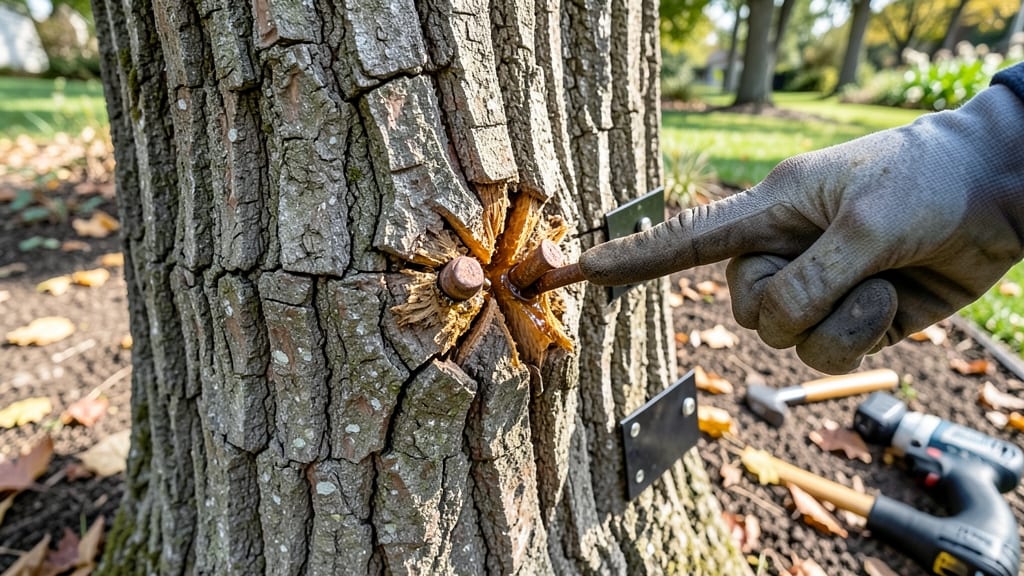
Screwing into a tree can damage it by disrupting sap flow, weakening structural integrity, and creating entry points for pests or disease, though proper techniques minimize harm to healthy, mature trees.
When you screw into a tree, you're essentially creating wounds that can compromise its natural defenses.
The cambium layer—the tree's growth engine—is particularly vulnerable, and any disruption can slow down or even stop nutrient transport. 🌳 Different species react uniquely; hardwoods like oak or maple are more resilient than softwoods such as pine, but even the toughest trees can suffer if screws are placed improperly.
The key is understanding where to drill and what tools to use to avoid long-term harm.
For example, screws near the root flare or branch collars can block water and nutrient flow, while improperly sized screws may split the wood. I always recommend using stainless steel lag bolts with pilot holes to reduce stress on the tree's structure.
If you're working with a young or stressed tree, it's often better to avoid screws altogether and opt for alternative mounting methods.
💡 In This Article
- How Tree Anatomy Affects Screw Damage
- Safe Screwing Methods to Preserve Tree Health
How tree anatomy affects screw damage
The tree's cambium layer—a thin, living layer just beneath the bark—is where all growth happens. When you screw into a tree, you're piercing this critical zone, which disrupts the tree's ability to transport water, nutrients, and sugars.
This layer is especially sensitive in softwoods like pine or fir, where the wood is less dense and more prone to splitting.
In contrast, hardwoods like oak or maple have denser wood fibers that can better resist damage, but even they suffer if screws are too large or improperly placed.
Sap flow is another key factor. Trees rely on a network of vessels in their xylem and phloem to move water and nutrients throughout their structure. A screw acts like a blockage, forcing the tree to reroute its resources—something that can weaken the tree over time.
For example, a 1/4-inch screw in a 2-inch diameter branch can reduce sap flow by up to 30% in that area, leaving the branch vulnerable to disease or breakage. The deeper the screw, the greater the disruption to these vital transport systems.
Root systems are equally important. Screwing near the root flare (the swollen base where roots meet the trunk) can sever critical root fibers, cutting off the tree's water supply. This is especially dangerous for young trees, where the root flare is still developing.
Even mature trees can struggle to recover if screws are placed too close to this zone. The branch collar—the thickened area where branches meet the trunk—is another high-risk area. Damaging this region can lead to compartmentalization failure, where the tree's natural defense system can't isolate the wound.
Species also play a role in how screws affect a tree. Oak and maple, with their dense wood and strong vascular systems, can handle screws better than birch or willow, which have softer, more porous wood.
For instance, a 3/8-inch lag bolt in a 4-inch diameter oak trunk may cause minimal harm, while the same bolt in a 3-inch birch trunk could split the wood entirely. Always consider the tree's species and trunk diameter before drilling.
Pests and diseases take advantage of screw wounds. The open holes create entry points for bark beetles, fungi, and bacteria, which can weaken the tree further. For example, honey fungus often enters through wounds, spreading through the cambium and killing the tree over time.
The larger the hole, the greater the risk of infection. Even if the screw is removed, the wound may never fully heal, leaving the tree permanently compromised.
Time of year matters too. Screwing into a tree during active growing season (spring to early fall) causes more damage than in dormant months (winter). During dormancy, the tree's metabolic activity slows, reducing the impact of wounds.
However, if you must screw during growing season, choose a dry, sunny day to minimize stress on the tree's water transport system.