
Pruning
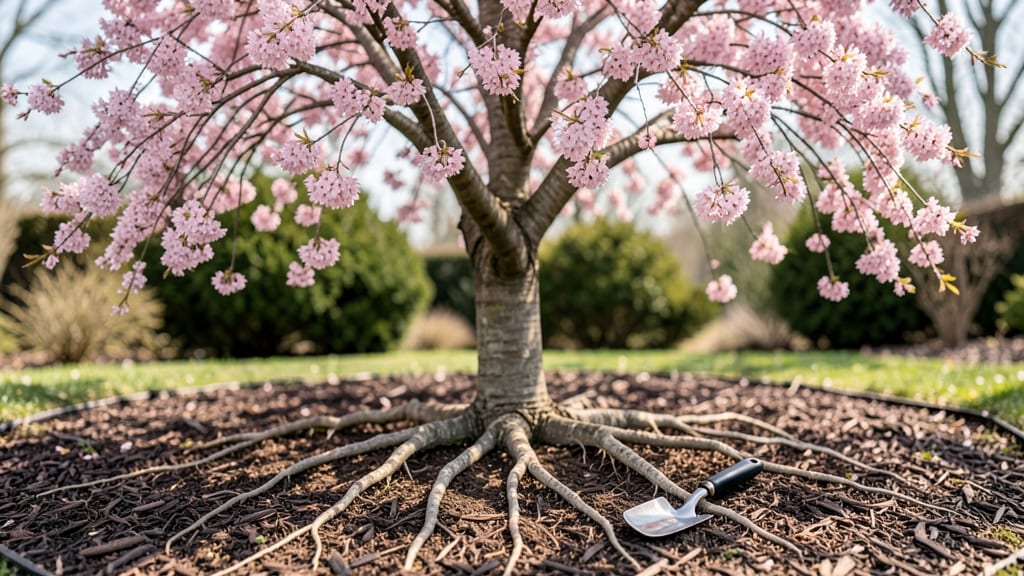
Flowering cherry tree roots spread aggressively, reaching 12–18 inches deep and 2–3 feet wide in their first year alone. Their lateral roots extend outward, competing fiercely for nutrients—so keep them at least 15 feet away from sidewalks, foundations, or other trees. Annual pruning of competing roots helps preserve both soil moisture and your tree's long-term health.
Understanding this growth pattern is key to avoiding headaches later. 🌳 Flowering cherry trees develop a shallow but expansive root system, meaning they spread horizontally more than vertically. This makes them particularly vulnerable to soil compaction near driveways or patios, where roots can get crushed or suffocated.
I’ve seen cases where homeowners planted these trees too close to foundations, only to deal with cracked walkways years later—soil movement from root expansion is the silent culprit. The good news? Proper spacing and occasional root pruning can prevent these issues while keeping your tree thriving.
For new plantings, focus on loose, well-draining soil mixed with compost to encourage healthy root development. Mulching around the base (but not touching the trunk) helps retain moisture and regulates temperature—critical for young roots still establishing themselves.
And if you’re dealing with an established tree crowding nearby plants, hand-pruning aggressive lateral roots in early spring gives them time to regenerate before summer’s peak growth. Think of it as giving your tree’s roots room to breathe.
💡 In This Article
- How Flowering Cherry Tree Roots Grow and Spread
- Planting Flowering Cherry Trees: Spacing and Root Management Tips
How flowering cherry tree roots grow and spread
Flowering cherry trees develop a fibrous root system with minimal deep taproot, meaning their strength lies in lateral roots that spread horizontally. Within the first year, these roots can extend 2–3 feet outward while penetrating only 12–18 inches deep—a shallow but aggressive pattern.
This wide spread explains why they compete fiercely with nearby plants for water and nutrients, especially in dry conditions. The root tips secrete enzymes that break down organic matter, creating a nutrient-rich zone around the tree’s perimeter.
The growth rate accelerates in spring and early summer, when soil temperatures rise above 55°F. During this period, lateral roots can grow 6–12 inches per month if conditions are ideal—moist, well-drained soil with organic matter. In contrast, winter growth slows dramatically, with roots entering dormancy below 40°F.
Sandy soils accelerate root expansion, while clay-heavy soils restrict spread but increase root depth slightly, though rarely beyond 2 feet. This explains why flowering cherries thrive in urban landscapes but struggle in compacted or waterlogged areas.
This root structure has critical implications for planting. The tree’s shallow roots make it sensitive to soil disruption, so avoid heavy machinery or construction within 15 feet of the trunk. I’ve seen cases where landscapers installed irrigation systems too close, severing roots and causing stress.
The key is to mimic natural conditions: loose, aerated soil with mulch (but never touching the trunk) to prevent moisture loss and fungal growth. Root competition becomes visible in summer when nearby plants wilt—signs your cherry tree is monopolizing resources.
Seasonal variations also matter. In early spring, focus on root-pruning aggressive lateral roots that encroach on sidewalks or driveways. Use a sharp spade to cut roots 6–12 inches from the trunk at a 45-degree angle to encourage regrowth.
Avoid pruning in fall, as new roots need time to establish before winter dormancy. For mature trees, test soil moisture at 12-inch depth—if it’s dry, the roots are struggling to reach deeper water sources.
One often-overlooked factor is mycorrhizal fungi, which form symbiotic relationships with cherry tree roots. These fungi extend the root system’s reach by 20–30% in nutrient-poor soils, but they’re sensitive to chemical fertilizers. Organic compost or slow-release fertilizers preserve this natural network.
If you notice stunted growth despite adequate water, fungal disruption might be the culprit—test soil pH (ideal range: 6.0–7.0) and adjust with lime or sulfur as needed.
Visualize the root spread like an umbrella: wide but shallow. This is why flowering cherries excel in open spaces but struggle near foundations. The roots’ aggressiveness isn’t just about size—it’s about competitive dominance.
Even mature trees can lift pavement if planted too close, as their lateral roots expand relentlessly. The solution? Plan for double the mature spread (typically 20–25 feet) when siting your tree.