
Trees
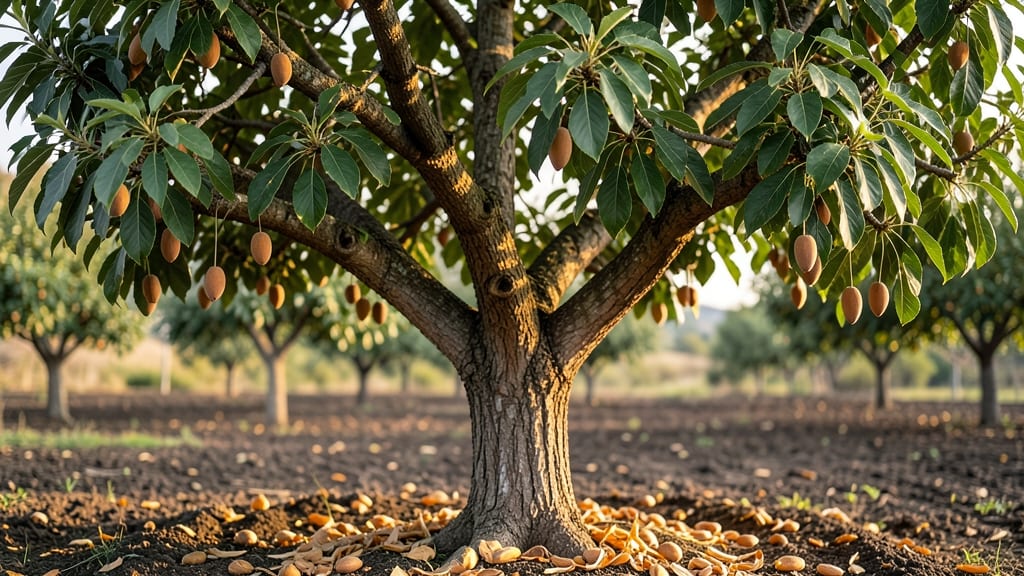
An almond tree 🌰 can grow anywhere from 20 to 40 feet tall at maturity, depending on the variety and growing conditions—but that’s just the start of the story.
Picture this: You’ve just planted your dream almond tree, only to realize years later that it’s outgrown your backyard entirely. Or maybe you’re dreaming of a dwarf variety for a small urban yard, but don’t know which one to trust.
The truth is, almond tree size isn’t just about height—it’s about spread, growth speed, and how your local climate plays a role.
Standard varieties like Nonpareil or Carmel can reach 30+ feet with a spread of 20 feet or more, while dwarf or semi-dwarf types stay under 15 feet.
But here’s the kicker: even dwarf trees need the right care to stay small, and climate zones can push sizes up or down by 30% or more.
In this guide, I’ll break down the exact mature sizes of popular varieties, how your zone affects growth, and the pruning secrets to keep your tree in check—no matter how much space you have.
Mature size of almond trees by popular variety (with height & spread data)
Choosing the right almond tree variety is critical for backyard growers—some varieties reach towering heights of 40 feet, while others stay compact enough for containers. The mature size of an almond tree depends on its genetics, rootstock, and growing conditions.
For example, Nonpareil, a popular commercial variety, can grow 30–40 feet tall with a 20–25-foot spread, while Butte stays shorter at 20–25 feet tall with a 15–20-foot spread. Understanding these differences helps you plan spacing, pruning, and even container gardening.
Almond trees are deciduous nut trees that thrive in USDA Zones 6–10, but their growth rates and final sizes vary. In warmer climates (Zones 8–10), trees grow faster and often reach their mature size quicker.
Meanwhile, in cooler climates (Zones 6–7), growth slows, and trees may stay smaller unless given extra care. Always check the rootstock—dwarfing rootstocks like GxN#1 or Nemaguard can reduce height by 30–50% compared to standard rootstocks.
| Variety | Mature Height (ft) | Canopy Spread (ft) | Growth Habit | Best For | ||||||||||||||
|---|---|---|---|---|---|---|---|---|---|---|---|---|---|---|---|---|---|---|
| Nonpareil | 30–40 | 20–25 | Upright, vigorous | Commercial orchards | ||||||||||||||
| Carmel | 25–30 | 18–22 | Round, dense canopy | Home orchards, fresh nuts | ||||||||||||||
| Butte | 20–25 | 15–20 | Compact, early bearing | Small yards, containers | ||||||||||||||
| Fritz | 20–25 | 15–18 | Dwarf on Nemaguard | Urban gardens, patios | ||||||||||||||
| Price | 25–35 | 20–25 | Vigorous, late blooming | Commercial, frost-prone areas | ||||||||||||||
| Texas | 12–15 | 10–12 | Dwarf, cold-hardy | Containers, small spaces | ||||||||||||||
| Mission | 15–20 | 12–15 | Semi-dwarf, self-pollinating | Home gardens, urban areas | ||||||||||||||
| Peerless | 25–30 | 18–22 | Upright, productive | Orchards, fresh markets | ||||||||||||||
| Ne Plus Ultra | 20–25 | 1
How climate Zones affect almond tree size and growth speedAlmond trees thrive in warm climates, but their mature size and growth speed can vary dramatically depending on your USDA climate zone. In California’s Zone 9-10, these trees grow 30% larger than their counterparts in Zone 7-8—often reaching 35-40 feet tall versus 25-30 feet. The difference comes down to temperature extremes, water availability, and seasonal stress. Cold winters in Zone 7-8 slow growth by forcing dormancy earlier. Trees in these areas may take 5-7 years to reach 10 feet tall, while Zone 9-10 trees hit that height in just 3-4 years. However, rapid growth in warm zones can also lead to weaker wood and lower fruit production if not managed properly.
In Zone 9-10, almond trees experience year-round growth with minimal dormancy, leading to larger canopies and thicker trunks. However, this rapid growth demands consistent watering—especially during California’s dry summers. Without proper irrigation, branches can become weak and prone to breaking under the weight of almond clusters. Conversely, Zone 7-8 trees face winter chill requirements for proper flowering. If winters are too mild, blooms may be sparse or irregular, reducing fruit production. Pruning in late winter helps stimulate new growth, but timing is critical—prune too early, and you risk frost damage to fresh cuts. For gardeners in Zone 5-6, almond trees often struggle to thrive unless planted against south-facing walls or heavily mulched. These trees may only reach 15-20 feet tall and produce smaller yields due to late spring frosts damaging blossoms. Choosing cold-hardy varieties like ‘Texas’ can improve survival rates. Regardless of zone, soil drainage is non-negotiable. Almond trees hate soggy roots, which can stunt growth in Zone 9-10 during monsoon seasons. Amend heavy soils with compost or sand to prevent root rot, and always plant on sloped ground if possible. 🌰 Whether you’re in a sunbaked orchard or a cooler backyard, understanding your climate’s impact on growth will help you plan spacing, prune strategically, and maximize fruit production—no matter how big (or small) your almond tree gets. |