
Size
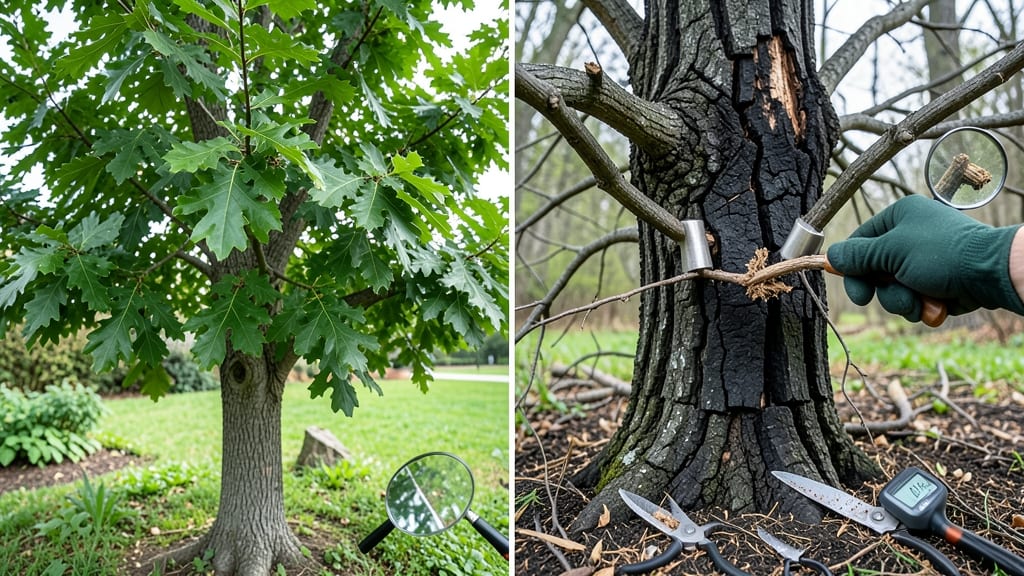
How can you tell when a tree is dead? That hollow sound when you tap a branch isn’t just eerie—it’s a death knell. 🌳 Identifying a dead tree isn’t just about missing leaves; it’s about subtle clues like bark sloughing off in sheets, branches snapping like dry twigs, or a complete absence of new growth after spring. These signs often go unnoticed until the tree becomes a hazard, and by then, it’s too late for simple fixes. Start with the scratch test: peel back a small section of bark—if it’s dry, crumbly, or reveals no green underneath, the tree’s days are numbered. Probing the trunk with a screwdriver (gently!) confirms the verdict: if it sinks in without resistance, the wood is rotting from within. This isn’t just about aesthetics; a dead tree can attract pests, spread disease to healthy plants, or even fall unexpectedly. What you’ll gain is peace of mind—and a safer yard. Once confirmed, removal is the safest option, but testing the soil afterward reveals what went wrong (pH, drainage, or nutrient deficiencies) so your next planting thrives. The right tools and timing make all the difference between a dangerous mess and a clean slate for new growth. For stubborn cases, consult a local arborist—they spot early warning signs we miss. Whether it’s a backyard sentinel or a street tree, knowing these signals turns a guessing game into a straightforward solution. Here’s how to spot them before they become a problem.
Root Causes Of Tree Death
Understanding why trees die helps you spot early warning signs before it’s too late. Trees don’t just wither overnight—they succumb to a mix of environmental stress, disease, and human activity. Here’s a breakdown of the real culprits behind a tree’s demise, explained in clear, actionable terms.
Trees are resilient, but extreme or prolonged environmental conditions can push them past their limits. The most common stressors include:
🔥 Drought And Water Deficiency
Trees rely on a steady water supply to transport nutrients through their vascular system. When drought strikes or soil moisture drops too low, a tree’s xylem (water-conducting tissue) can’t function properly.
Over time, this leads to: - Embolisms – Air bubbles form in the xylem, blocking water flow (like a clogged pipe). - Leaf Scorch – Leaves dry out and turn brown at the edges, a classic sign of thirst. - Root Death – Fine root hairs die off first, reducing the tree’s ability to absorb water.
💡 Pro Tip: Deep watering (1–2 inches per week) during dry spells can save a struggling tree—but only if the roots are still alive. If the bark is cracked or the trunk is hollow, revival is unlikely.
❄️ Frost And Cold Damage
Freezing temperatures can kill trees in two ways: 1. Direct Cell Rupture – Ice crystals form inside plant cells, bursting their membranes (like a frozen balloon).
- Winter Desiccation – Dry winter winds + frozen ground = roots can’t replenish lost moisture, leading to sap freezing in the trunk.
🌡️ Key Sign: Look for sunken, blackened bark or peeling patches—these indicate frost cracks where moisture escaped.
🌪️ Storm And Physical Trauma
High winds, hail, or falling debris can sever roots, snap branches, or strip bark, exposing the tree to:
- Fungal Infections (via open wounds).
- Girdling (when the cambium layer is damaged, cutting off nutrient flow).
- Structural Weakness (leading to slow death or sudden collapse).
🚨 Warning: If a tree loses more than 50% of its canopy in a storm, its survival odds drop dramatically.
Not all tree deaths are slow and visible—some are fast-tracked by pathogens or hungry pests.
🍄 Fungal Infections (The Most Common Threat)
Fungi like Armillaria root rot or Hypoxylon canker thrive in wounded trees, spreading through:
- Root Girdling – Fungi encircle roots, strangling water/nutrient transport.
- Cankers – Sunken, discolored patches on the trunk/branches that expand over time.
- Sap Stain – Dark streaks in the wood signal fungal invasion.
🔍 How to Check: Scrape the bark—if you see mushrooms at the base or black, stringy mycelium, the tree is likely doomed.
🐜 Insect Attacks: The Tiny Terrorists
Beetles, borers, and bark-eating insects tunnel into living tissue, disrupting the tree’s ability to photosynthesize or transport nutrients.
Watch for: - Sawdust-Like Frass (insect droppings) at the base of the trunk. - Exit Holes (round, perfectly drilled holes where beetles emerged). - Wilting Despite Moisture (a sign of emergald ash borer or pine bark beetles).
⚠️ Red Flag: If you see birds pecking at the bark (they’re eating insects), the tree is already compromised.
From poor planting choices to outright neglect, human activity is the #1 controllable cause of tree death.
🚜 Soil Compaction And Construction Damage
Heavy machinery, foot traffic, or poorly compacted soil crushes roots, reducing their ability to:
- Absorb oxygen (roots suffocate).
- Anchor the tree (leading to uprooting in storms).
- Store water (increasing drought vulnerability).
🛠️ Fix It: If you’re landscaping near trees, avoid deep tilling—roots often extend beyond the canopy’s drip line.
💀 Girdling Roots Or Wounds
- Girdling Roots – Roots growing in a circular pattern around the trunk strangle the tree by cutting into the cambium.
- Improper Pruning – Topping (cutting back to a stub) or removing too much foliage starves the tree of energy.
- Lawn Equipment Damage – String trimmers, mowers, or nails create entry points for disease.
🌳 Prevention: Inspect the soil flare (where roots meet the trunk)—if it’s buried under mulch or soil, the tree is suffocating.
💧 Overwatering Or Poor Drainage
While drought kills, too much water is just as deadly. Waterlogged roots suffocate because:
- Oxygen is displaced in saturated soil.
- Anaerobic bacteria release toxins harmful to roots.
- Root rot (from fungi like Phytophthora) sets in within weeks.
💧 Test Your Soil: Stick a screwdriver in the ground—if it goes in easily after 10 minutes, your soil is too wet.
Many trees don’t show obvious signs until 50–70% of their structure is already dead.
That’s because: - Heartwood vs. Sapwood – The outer sapwood (living, water-conducting layer) can die while the inner heartwood (dead but structurally sound) remains intact. - Compartmentalization – Trees wall off damaged areas (like a scab on skin), hiding decay until it’s too late to save them.
🔥 Bottom Line: If you suspect a tree is dying, act fast—once symptoms appear, the damage is often irreversible. The next section will show you how to confirm death before it’s too late.
Revive or Remove Dead Trees
Now that you’ve identified the signs of a dying or dead tree, it’s time to take action. Whether you’re dealing with a diseased tree, environmental stress, or physical damage, the right steps can save your tree—or at least prevent it from becoming a hazard.
Below are practical solutions tailored to the most common causes of tree death, along with prevention tips to keep your trees thriving for years.
If your tree is struggling due to poor soil, root rot, or compacted ground, here’s how to nurse it back to health—or at least slow its decline:
🔥 Improve Drainage & Soil Health
- Test your soil (a simple DIY kit from a garden center works). If it’s too clay-heavy or waterlogged, amend it with compost, sand, or organic matter (like peat moss or coconut coir).
- Avoid overwatering—soggy roots suffocate the tree.
Instead, water deeply but infrequently (1-2 inches per week, depending on the species). - Mulch properly: Apply 2-4 inches of mulch (wood chips, bark, or straw) around the drip line (the edge of the tree’s canopy). Keep mulch 6 inches away from the trunk to prevent rot.
🌡️ Treat Root Rot or Fungal Infections
- If you suspect root rot (mushrooms at the base, foul smell, or spongy roots), prune affected roots carefully (if safe to do so) and reduce watering immediately.
- For fungal diseases, apply a copper-based fungicide (like Bordeaux mixture) or neem oil spray to the trunk and soil. Remove infected leaves or branches to stop the spread.
- Aerate compacted soil with a garden fork or soil aerator to help roots breathe.
💡 Prevention Tips for Healthy Roots
✅ Plant trees in well-draining soil—avoid low spots where water pools. ✅ Check irrigation systems—drip lines or sprinklers should not soak the base constantly. ✅ Monitor for pests—grubs, termites, and borers weaken roots.
Use beneficial nematodes or insecticidal soap if needed.
If your tree is dead from storm damage, pests, or disease, some cases are salvageable—others require removal for safety.
🍳 Salvage a Partially Damaged Tree
- Prune dead or broken branches using sterilized pruners (clean with rubbing alcohol between cuts). Cut just outside the branch collar (the swollen area where the branch meets the trunk).
- Seal wounds on larger trunks with tree wound paint (optional but helps prevent decay in some cases).
- Boost its immune system with a balanced fertilizer (like 10-10-10) in early spring, only if the tree shows signs of recovery (new buds, green leaves).
🔪 Remove a Truly Dead Tree
If the tree is completely hollow, leaning dangerously, or covered in pests, removal is the safest option:
- Call a professional arborist—they have the tools (like stump grinders and cranes) to remove large trees safely.
- DIY removal (small trees only): 1. Cut the branches into smaller sections (wear gloves and safety goggles!).
- Cut the trunk into manageable logs (use a chainsaw or handsaw).
- Grind or dig out the stump (rent a stump grinder or dig it out with a shovel and axe). - Replace it wisely: Choose a native, disease-resistant species suited to your climate and soil.
🎯 Prevention for Physical Damage
✅ Prune regularly—remove dead, weak, or crossing branches before storms. ✅ Support young trees with tree ties or stakes to prevent wind damage. ✅ Inspect for pests (like emerald ash borers or bark beetles) in early spring and treat if needed.
If your tree is struggling from drought, extreme heat, or poor sunlight, it may still recover with the right care.
👨🍳 Watering & Hydration Fixes
- Deep watering is key—water slowly at the base (not the leaves) for 30-60 minutes, 1-2 times per week (adjust for your climate).
- Use drip irrigation or soaker hoses to deliver water directly to the roots.
- Mulch heavily (3-4 inches) to retain moisture and regulate soil temperature.
🌡️ Protecting from Extreme Conditions
- Shade young trees in hot climates with shade cloth or partial sun exposure.
- Avoid transplant shock—if you recently moved a tree, water it daily for the first 2 weeks, then taper off.
- Group trees together to create a microclimate that retains humidity and moderates temperature.
✨ Long-Term Prevention
✅ Plant trees in the right spot—check sunlight, wind exposure, and soil type before planting. ✅ Monitor watering needs—some trees (like oaks) need deep but infrequent watering, while others (like willows) prefer constant moisture. ✅ Avoid compacting soil around the base—walk around the tree instead of stepping on roots.
Not all tree issues are DIY-friendly. Hire an arborist if:
- The tree is too large or hazardous to handle alone.
- You suspect advanced disease, fungal spread, or structural instability.
- The tree is near power lines, buildings, or driveways—removal requires expertise.
Final Thought: Some trees are beyond saving, but with the right care, many can bounce back—or at least die gracefully without becoming a liability. Act fast when you spot the first signs, and your yard will stay safe, green, and full of life! 🌿💪
Frequently asked questions
Why does a tree stay green even when it's dead?
Some trees retain leaves or green color for months after dying because their inner wood (heartwood) stays intact while the outer sapwood dies first. The leaves may stay green due to trapped moisture or chlorophyll breakdown taking time. Look for other signs like brittle branches or hollow trunks to confirm death.
Can a tree come back to life after being declared dead?
Only in rare cases! If the tree has some living roots and the bark is still intact, it might sprout new growth with proper care. However, if the trunk is hollow or the bark peels away easily, revival is nearly impossible. Test by scratching the bark—if it's dry and crumbly, the tree is truly gone.
How do I safely test if a tree is dead without damaging it?
Use the scratch test: Gently scrape a small area of bark (about 2 inches wide
What should I do with a dead tree in my yard?
Remove it promptly to prevent hazards like falling branches or attracting pests. For small trees, DIY removal is possible with proper tools, but for large or mature trees, hire a professional arborist. After removal, test your soil to understand why the tree died—this helps prevent future issues with new plantings.
Can I use a dead tree for firewood?
Yes! Dead trees make excellent firewood, but only if they're completely dry (seasoned for 6-12 months). Avoid trees treated with pesticides or near chemical spills. Split the wood properly for even burning, and store it in a dry place to prevent mold.