
Blooming
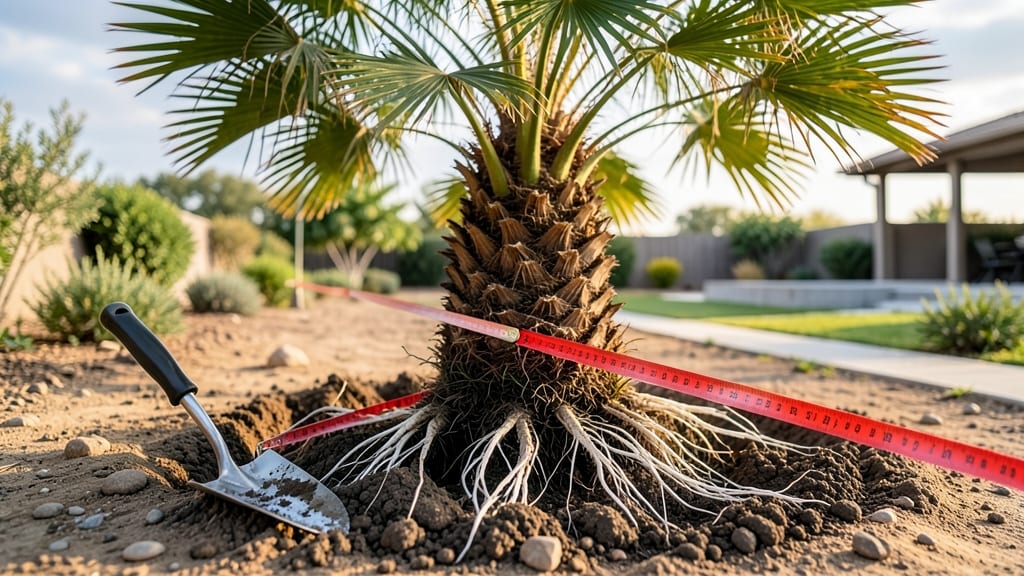
Palm tree roots typically spread 1.5 to 3 times the tree’s height horizontally, while most major roots extend 3 to 6 feet deep—though species like the sago palm can reach 10+ feet in loose, well-draining soil. Unlike many trees, palms rarely develop deep taproots, instead forming dense networks of fibrous lateral roots for stability and water access.
Understanding palm tree root length helps with proper planting and landscaping. 🌳 The horizontal spread is what often surprises homeowners—some mature palms can extend roots up to 50 feet from the trunk, making spacing critical in residential areas.
Soil composition plays a huge role: sandy soils encourage deeper penetration, while clay can restrict growth to shallow layers.
For instance, a 15-foot coconut palm might have roots spreading 25-45 feet outward but rarely exceeding 6 feet in depth, unless it's a species adapted to dry climates like the Mexican fan palm.
This fibrous root structure also explains why palms are so resilient against storms—when winds push, the wide lateral roots anchor the tree better than a single deep taproot ever could. However, this same trait means you'll need to plan carefully when planting near sidewalks, driveways, or underground utilities.
💡 In This Article
- Palm Tree Root Systems: Species-Specific Depth and Spread Patterns
- Planting Palm Trees: Soil Preparation and Root Health Tips
Palm tree root systems: species-specific depth and spread patterns
The root structure of palm trees is a marvel of adaptation, designed to thrive in tropical and subtropical environments where stability and water access are critical. Unlike deciduous trees that develop deep taproots, palms rely on a fibrous root system that spreads horizontally in a wide, shallow network.
This design allows them to absorb water and nutrients efficiently from the topsoil while providing exceptional wind resistance.
For example, a coconut palm—which can grow up to 100 feet tall—typically has roots extending 2 to 3 times its height outward, creating a sprawling canopy that anchors the tree like a natural tripod. 🌿
Soil type dramatically influences root depth and spread. In sandy, well-draining soils, roots like those of the sago palm can penetrate 10+ feet deep to reach groundwater, while in clay-heavy soils, roots often stay confined to the upper 3 to 6 feet.
The date palm, adapted to arid climates, develops deeper lateral roots (up to 8 feet) to access moisture in dry conditions, whereas tropical palms like the royal palm prioritize horizontal spread (up to 50 feet) for stability in storm-prone areas.
This variation explains why a 10-foot tall palm might have roots stretching 15 to 30 feet outward but rarely exceeding 6 feet in depth unless it’s a drought-resistant species.
The fibrous nature of palm roots also means they lack the rigid structure of taproots, making them more flexible but equally effective at preventing uprooting. For instance, the Mexican fan palm grows roots that angle downward at 45-degree slopes, creating a natural "root ball" that resists lateral forces.
This adaptation is why palms are often planted in coastal regions—where winds and salt spray are constant threats—without needing the deep anchorage of other tree species.
However, this shallow root system also makes palms vulnerable to soil compaction or poor drainage, which can stunt growth or cause fronds to yellow if roots struggle to breathe. 🌊
Exceptions exist in palms adapted to extreme conditions.
The windmill palm, native to Florida’s hurricane-prone coasts, develops deeper lateral roots (up to 10 feet) to combat storm surges, while the pygmy date palm—despite its small stature—has roots that spread twice its height to maximize stability in confined spaces.
These variations highlight how palm root systems evolve based on environmental pressures, whether it’s drought, wind, or nutrient-poor soil. Understanding these patterns helps gardeners and landscapers choose the right species for their climate and soil conditions.
One often-overlooked factor is the root-to-shoot ratio, which affects a palm’s growth rate. Younger palms allocate more energy to root expansion, which is why their roots grow faster than their trunks during the first 5 to 10 years.
This early investment in lateral roots explains why newly planted palms often show slow above-ground growth—all that energy is going underground to establish stability. As the tree matures, the ratio shifts, and the trunk grows more rapidly, but the root system’s horizontal dominance remains a defining trait. 🌱
For practical purposes, this root behavior means homeowners should plant palms at least 15 feet away from structures, sidewalks, or underground utilities to avoid root damage.
In urban settings, container-grown palms (like the parlor palm) are often preferred because their roots can be managed more easily, though they’ll still spread 1 to 1.5 times their height once mature. The key takeaway?
Palm roots are a balancing act of width over depth, a trade-off that ensures survival in some of Earth’s most challenging environments.