
How To
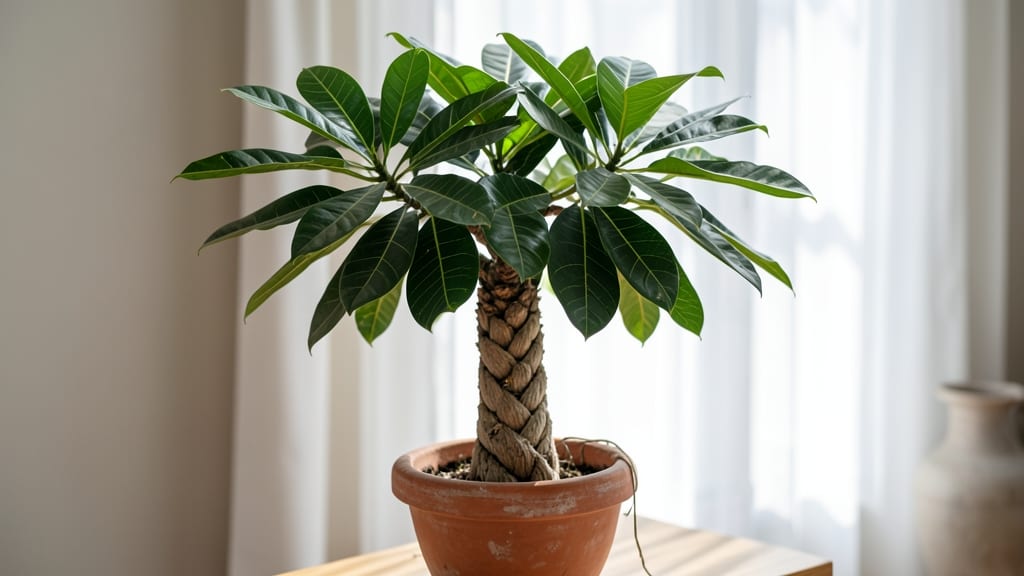
A money tree can grow up to 10 feet tall indoors if left unchecked, but its height depends entirely on how you care for it 🌿.
If you’ve ever wondered whether your money tree (Pachira aquatica) will soon reach the ceiling—or if it’s better suited for a shelf—you’re not alone. This tropical favorite can grow surprisingly large, but its height depends on where you grow it.
Let’s break down the indoor vs. outdoor growth potential so you can plan your space (and pruning schedule) accordingly.
Indoors, most money trees stay between 3 and 6 feet with regular pruning, but in ideal conditions, they can stretch toward 10 feet. Outdoors, however, they behave like small trees, reaching 15 to 30 feet in tropical climates. The key difference? Light, space, and pruning habits.
In this guide, you’ll learn how to control its height, when to prune for bushier growth, and whether it’s safe to grow outdoors in your zone. No more guessing—just practical tips to keep your money tree at your ideal height.


Indoor money tree height limits: how big can it get inside?
Your money tree (Pachira aquatica) can become a stunning indoor focal point—but its height depends entirely on your care routine. Under ideal conditions, it typically reaches 3 to 10 feet tall indoors, though many gardeners keep it smaller for space efficiency.
The key to controlling its size lies in understanding its growth triggers and proactive pruning.
Without intervention, a money tree can grow aggressively toward light sources, especially near windows. However, smaller pots and regular pruning can keep it compact for shelves or countertops. Let’s explore how to manage its height while keeping it healthy and thriving.
| Factor | Indoor Growth Range | Control Tips |
|---|---|---|
| Container Size | 3-10 ft (small pots = smaller tree) | Repot every 2-3 years in slightly larger pots |
| Light Exposure | Taller with bright indirect light | Rotate pot for even growth; avoid direct sun |
| Pruning Frequency | Unpruned = 6-10 ft; pruned = 3-5 ft | Trim leggy stems in spring/summer |
| Fertilization | Faster growth with balanced fertilizer | Use 10-10-10 in spring/summer; reduce in fall |
| Humidity Levels | Drier air = slower growth | Mist leaves or use a pebble tray |
Your money tree’s height is directly tied to its container size. Smaller pots restrict root growth, which naturally limits stem elongation. If you want a compact money tree (3-5 feet), use pots no larger than 10-12 inches in diameter.
For faster growth toward 6-10 feet, upgrade to 14-16 inch pots every 2-3 years during spring repotting.
Light exposure plays a critical role in vertical growth. Money trees stretch toward bright indirect light, often growing taller on one side if the light source is uneven.
To maintain a balanced shape, rotate your pot quarter-turns every 2-3 weeks. This prevents lopsided growth and encourages bushier, more controlled height development.
Pruning is the most effective way to control your money tree’s height. When you trim leggy stems back to a leaf node, you encourage branching and a fuller appearance. For a 3-4 foot tree, prune back by 1/3 in spring and summer.
To maintain a 5-6 foot height, limit pruning to shaping and remove only the longest stems.
Fertilizer choices can accelerate or slow growth. A balanced 10-10-10 fertilizer applied every 4-6 weeks during spring and summer promotes rapid growth. To limit height, reduce feeding to every 8-10 weeks in fall and winter. This slows stem elongation while maintaining leaf health.
Humidity levels affect your money tree’s overall vigor. In dry indoor environments (below 40% humidity), growth slows as the plant conserves moisture. To encourage steady, manageable growth, maintain 50-60% humidity using a pebble tray or humidifier. This prevents stunted growth while keeping your tree at an ideal height.
Many gardeners make the mistake of assuming money trees grow slowly. In reality, they can add 1-2 feet per year indoors with proper care. To prevent ceiling-height surprises, establish a pruning schedule from day one.
Start by pinching back the tips of new growth when stems reach 6-8 inches to encourage bushiness.
For apartment dwellers, consider using bamboo stakes or trellises to guide vertical growth. This gives you control over height while creating an elegant, structured look. Simply tie stems to the support as they grow, allowing you to shape the tree to your space’s dimensions.
Remember that money trees respond well to regular care adjustments. If you notice rapid height spikes, reduce light exposure slightly or prune more aggressively. Conversely, if growth stalls, increase light and fertilization.
With these strategies, you can enjoy a money tree that fits perfectly in your home—whether that’s 3 feet on a shelf or 8 feet as a statement piece.
Outdoor money tree growth: can it reach tree-like heights?
If you’ve ever dreamed of a money tree (Pachira aquatica) towering over your patio like a small tropical tree, outdoor growth can make that vision a reality.
Unlike its indoor counterpart, which typically maxes out at 6-10 feet, a money tree planted outdoors in ideal conditions can reach 15-30 feet or more—with some specimens even surpassing 20 feet under perfect circumstances.
This dramatic difference is why many gardeners transition their houseplants outside when the weather warms up.
The key to achieving this height lies in optimal growing conditions. Money trees thrive in USDA zones 10-12, where frost is rare and humidity levels stay consistently high.
In these climates, they grow rapidly, developing a thick trunk and lush foliage that resembles a miniature palm or banyan tree. Even in slightly cooler zones (like 9-10), they can still reach impressive heights with proper winter protection.
Transitioning your money tree outdoors requires patience and preparation. Start by acclimating it gradually over 2-3 weeks, moving it from indoor shade to partial sunlight, then to its permanent outdoor spot. Choose a location with bright, indirect sunlight—direct sun can scorch the leaves—while ensuring it’s sheltered from harsh winds. A well-draining, slightly acidic soil (pH 6.0-7.0) will encourage robust root development and faster growth.
| Growth Factor | Indoor Growth | Outdoor Growth |
|---|---|---|
| Height Range | 3–10 feet | 15–30+ feet |
| Growth Rate | Slow (1–2 ft/year) | Fast (3–5 ft/year) |
| Light Needs | Bright indirect | Partial shade to full sun |
| Frost Sensitivity | High (dies below 50°F) | Extreme (below 40°F) |
| Root Expansion | Limited by pot | Aggressive (needs space) |
One of the biggest challenges of growing a money tree outdoors is its frost sensitivity. Temperatures below 40°F can cause irreversible damage, while prolonged exposure to 32°F or lower will kill the plant.
If you live in a cooler climate, plan to bring it indoors before frost or protect it with a thick mulch layer and frost cloth. In colder zones, consider growing it in a large container that you can easily move when temperatures drop.
Another critical factor is root expansion. Money trees develop extensive root systems when planted in the ground, which can lead to competition with nearby plants or even crack sidewalks if roots grow too close.
To manage this, plant it in a large, raised bed or container with at least 2 feet of depth. If you’re planting directly in the ground, give it plenty of space—at least 10 feet in diameter—to accommodate its mature size and prevent root-bound stress.
For gardeners in tropical or subtropical climates, outdoor money trees can become stunning focal points in landscapes, especially when paired with other shade-loving plants like ferns, calatheas, or hibiscus. Their unique braided trunks and glossy leaves add architectural interest, while their fast growth rate makes them a rewarding addition.
Just remember: prune regularly to shape the tree and encourage bushier growth, and fertilize lightly during the growing season to support its rapid development.
If you’re ready to let your money tree stretch its legs outdoors, start small with a young, healthy plant and monitor its progress closely. With the right care, you could be looking at a 20-foot tropical giant in just a few years—turning your garden into a lush, money-tree oasis. 🌳💧