
How To
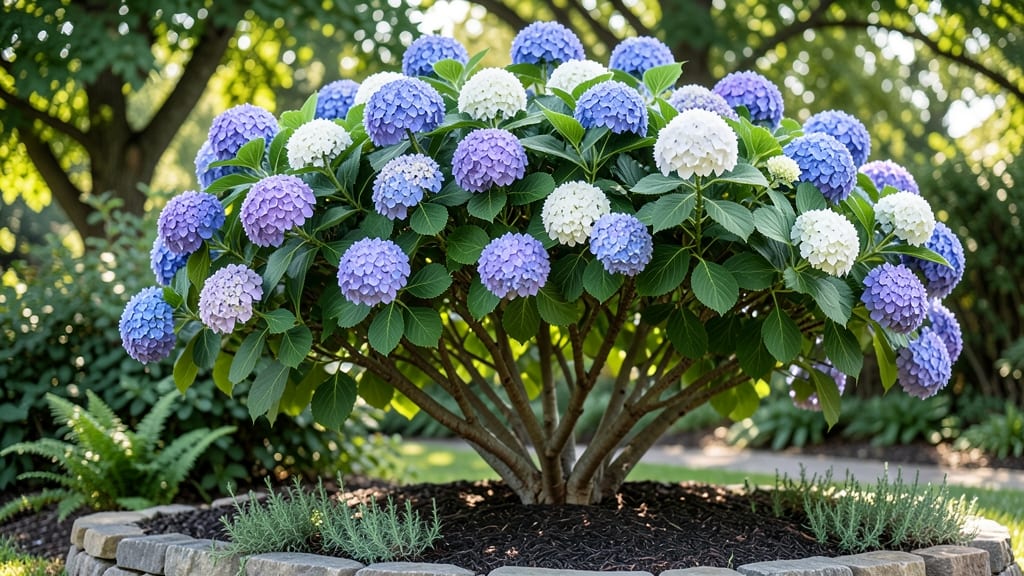
A hydrangea tree grows anywhere from 6 to 20 feet tall, depending on the variety and care you provide—so if you’re planning your garden layout, knowing these details is key.
Picture this: a 15-foot hydrangea tree 🌸 towering over your patio, its blooms cascading like a natural waterfall, or a compact 3-foot version adding charm to a small yard. The difference isn’t just in the height—it’s in the variety, pruning, and even your climate.
Some types, like Hydrangea paniculata, can reach heights of 12 to 20 feet, while others stay neatly under 6 feet with the right trimming.
But here’s the catch: without proper pruning, even a dwarf variety can outgrow its space. In zones like 6a, where winters are crisp but summers can be hot, your hydrangea’s growth habits shift—meaning the same plant might stretch taller in a cooler region than in a humid one.
The good news? With the right techniques, you can guide its growth to fit your vision, whether that’s a privacy screen or a statement piece.
In this guide, I’ll break down the height ranges for popular varieties, how pruning shapes their size, and the simple tricks to keep your hydrangea tree at your desired height—no guesswork required.


Hydrangea tree height by variety: from compact to towering giants
Choosing a hydrangea tree means deciding between a compact accent plant for containers or a towering privacy screen that reaches your roof. The difference? Variety, care, and your USDA hardiness zone.
Some varieties stay under 5 feet while others climb to 20 feet—let’s explore the spectrum so you can pick the perfect fit for your space.
I’ve grown hydrangeas in Zones 5–8 and seen firsthand how Hydrangea paniculata varieties like ‘Limelight’ can stretch toward the sky, while H. arborescens ‘Annabelle’ stays neatly contained.
The key? Understanding each type’s mature height range and how pruning habits influence growth. Let’s dive into the most popular varieties and their height potential.
The Hydrangea paniculata group is the tallest, with varieties like ‘Limelight’ and ‘Grandiflora’ reaching 12–15 feet—perfect for creating instant privacy or dramatic focal points. If your goal is a low-maintenance hedge, ‘Little Lime’ or ‘Annabelle’ stay under 6 feet while still delivering bold seasonal color.
Pro tip: Dwarf varieties like ‘Endless Summer’ thrive in containers, making them ideal for patios or balconies.
For shade-loving gardens, Hydrangea quercifolia (oakleaf hydrangea) is a standout with its oak-shaped leaves and peeling bark. While it can grow 10–15 feet, its slower growth rate means you’ll spend years admiring its elegant form without sudden height spikes.
I’ve seen it thrive in Zones 5–9 with minimal pruning—just remove dead stems in late winter.
Your USDA hardiness zone plays a role too. In warmer zones (8–9), hydrangeas grow faster and taller, while in cooler zones (4–6)Zone 5 might max out at 10 feet versus 15 feet in Zone 8. Always check the specific variety’s zone range before planting.
If you’re working with limited space, consider pruning for shape rather than height. For instance, I prune my ‘Annabelle’ hydrangea annually in late winter to encourage bushier growth and keep it under 4 feet.
Use sharp bypass pruners to cut back 1/3 of the oldest stems to the ground—this rejuvenates the plant and controls height naturally.
For large-scale projects, like creating a living privacy screen, plant ‘Limelight’ or ‘Grandiflora’ in a double-row layout, spacing them 4–6 feet apart. Within 3–5 years, they’ll fill in completely, blocking noise and creating a lush green barrier. Just remember: These giants need <
How pruning and growth zones affect hydrangea tree height
Your hydrangea tree’s height isn’t set in stone—it’s shaped by two powerful factors: pruning techniques and your USDA hardiness zone.
In warmer zones like 8–9, these trees can grow aggressively, reaching 15–20 feet without intervention, while colder zones (3–5) may see slower, more controlled growth of 6–10 feet.
Understanding how to prune and adapt to your climate lets you steer your tree’s height toward your vision—whether that’s a privacy screen or a compact patio centerpiece.
Pruning isn’t just about trimming back overgrowth—it’s a strategic tool to slow or accelerate growth. For example, heavy pruning in late winter (for Hydrangea paniculata) encourages taller, bushier growth, while light pruning in early spring keeps trees more compact.
Meanwhile, your zone dictates how quickly your tree will respond: Zone 9 hydrangeas may need pruning twice a year to manage rapid growth, while Zone 5 trees might only need annual maintenance.
🌿 Key Takeaway: Hydrangea Tree Height Control
- Dwarf varieties: 3–5 ft
- Standard trees: 10–20 ft
- Zone 3–5: 6–10 ft (slower growth)
- Zone 8–9: 15–20 ft (faster growth)
- Late winter pruning = taller growth
- Early spring pruning = compact growth
- Zone 9 needs 2 prunings/year
- Zone 5 needs 1 pruning/year
Let’s dive into zone-specific growth habits. In USDA Zone 3–5, hydrangeas grow more slowly due to shorter growing seasons, so pruning in early spring (just as buds swell) helps shape their structure without encouraging excessive height.
For Zone 6–7, you’ll find a balance—these trees grow steadily and respond well to moderate pruning in late winter or early spring.
Meanwhile, in Zone 8–9, where winters are mild, hydrangeas can grow 3–5 feet per year if unchecked, making aggressive pruning in late winter and summer essential to maintain manageable heights.
Timing your pruning is just as critical as the technique. For Hydrangea paniculata (like ‘Limelight’), prune in late winter or early spring to encourage tall, sturdy stems for summer blooms. If you prune too late, you risk cutting off next year’s flower buds.
For Hydrangea arborescens (like ‘Annabelle’), wait until after flowering in late summer to prune—this variety blooms on old wood, so early pruning can eliminate blooms entirely.
Don’t overlook the role of soil and sunlight in height control. Hydrangeas in partial shade (their preference) grow more slowly than those basking in full sun, which can push heights toward the upper limits of their variety’s range.
Amend your soil with organic matter to encourage steady, balanced growth rather than rapid, leggy shoots. In Zone 9, where growth is most vigorous, consider mulching heavily to slow root expansion and temper height spikes.
Finally, remember that young hydrangea trees need gentle guidance. Prune them lightly in their first few years to establish a strong structure—removing only dead or crossing branches. This sets the foundation for controlled growth later.
Whether you’re in Zone 3 or Zone 9, combining smart pruning with zone-appropriate care will help your hydrangea tree reach its full potential—without overpowering your space.