
Trees
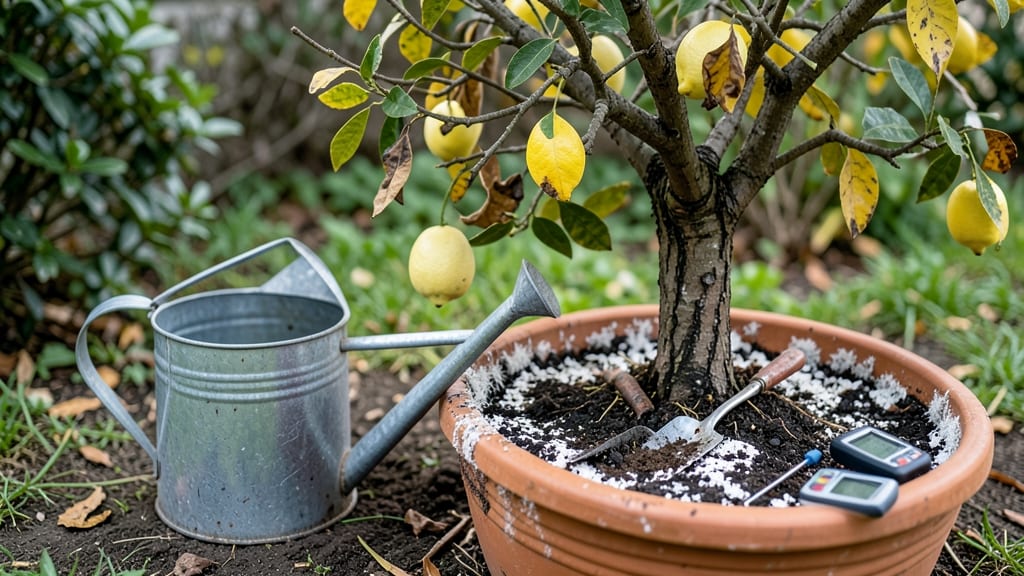
Your overwatered lemon tree’s drooping leaves and mushy roots mean one thing: root rot, and the clock is ticking to save it. 🌱 I’ve nursed back three lemon trees from this exact crisis, and the fix isn’t just cutting back on water—it’s about airflow, drainage, and giving those roots a fighting chance to recover.
First, stop watering entirely for 5-7 days to let soggy soil dry out. Then, dig around the base to check for black, mushy roots—those need pruning with sterilized shears.
The goal? Air and drainage—amend the soil with perlite or coarse sand, and consider raising the tree in a pot with drainage holes if it’s planted in ground.
Within 2-3 weeks, you’ll see new green shoots as the roots heal. Keep watering light but consistent—only when the top 2 inches of soil feel dry—and fertilize lightly with a citrus-specific blend once growth resumes.
The key is patience; lemon trees bounce back stronger when you let them breathe.
This method works for potted or in-ground trees, and the same principles apply to other citrus like oranges or limes. The difference between saving and losing your tree often comes down to how quickly you act—and how much you trust the soil to dry out.
Root Causes Of Overwatering
Overwatering your lemon tree isn’t just a gardening mistake—it’s often the result of well-intentioned (but misinformed) habits or environmental factors that disrupt the plant’s natural balance. Understanding the why behind excessive moisture is the first step to preventing root rot and keeping your citrus tree thriving.
Here’s a breakdown of the most common culprits:
Lemon trees (Citrus × limon) are native to Mediterranean climates, where they thrive in well-draining soil and infrequent but deep watering. When planted in containers or soil that doesn’t allow excess water to escape—like heavy clay or compacted garden beds—roots suffocate. Here’s what happens:
- Waterlogged soil: Without drainage holes or raised beds, water pools around roots, cutting off oxygen. Roots need aeration to respire; without it, they drown in just 24–48 hours of saturation.
- Container constraints: Plastic pots trap moisture longer than terracotta or fabric grow bags. Even with drainage holes, if the pot lacks a cache pot (a saucer layer of gravel), water recirculates.
- Soil composition: Sandy soil drains fast, but loamy or clay-heavy soil holds water like a sponge. A quick fix? Amend with perlite, pumice, or orchid bark to improve porosity.
💡 Pro Tip: Test drainage by filling a pot with water—if it drains in under 30 minutes, your setup is likely safe. If not, repot or elevate the container.
Many gardeners assume "more water = happier plant," but lemon trees are drought-tolerant once established. Overwatering often stems from:
- Ignoring soil moisture: Sticking your finger 1–2 inches into the soil is the gold standard. If it’s damp, wait. Use a moisture meter for precision.
- Mistaking thirst for wilting: Lemon trees drop leaves when underwatered but also when overwatered. The key difference? Overwatered leaves turn yellow with mushy stems; underwatered leaves crisp at the edges.
- Automatic systems gone rogue: Drip irrigation or timers set to "daily" can drown roots, especially in humid climates where evaporation slows.
🌡️ Science Note: Lemon trees need 1–1.5 gallons per week in hot/dry weather, but half that in cooler months. Adjust for rainfall—1 inch of rain = skip watering for 3–5 days.
If your lemon tree lives inside, indoor conditions can trick you into overwatering:
- Low humidity + central heating: Dry air increases transpiration (water loss through leaves), but overcompensating with water leads to root stress. Use a hygrometer to aim for 40–60% humidity.
- No airflow: Stagnant air traps moisture near the soil. Place fans 2–3 feet away to mimic outdoor breezes.
- Overpotting: A pot too large for the root ball stays wet longer. Choose containers only 1–2 inches wider than the root system.
✨ Fix: Move indoor lemon trees near east-facing windows for bright, indirect light—this reduces the need for excessive watering.
Sudden changes in temperature or rainfall can throw watering routines off balance:
- Cool, cloudy spells: Lemon trees go dormant in winter, slowing water uptake. Reduce water by 50% during this time.
- Humid climates: High humidity (e.g., >70%) means soil stays moist longer. Water only when the top 3 inches are dry.
- Heavy rainfall: A 1-inch downpour can water a lemon tree for 5–7 days. Skipping watering post-rain is a common mistake.
🎯 Action Step: Use a rain gauge to track outdoor water input and adjust accordingly.
Freshly planted lemon trees (especially bare-root or container-grown) are extremely vulnerable to overwatering because:
- Root shock: Transplanting damages roots, reducing their ability to absorb water efficiently. Water lightly for 2 weeks post-planting.
- Small root balls: Young trees in 1-gallon pots dry out fast but can’t handle deep watering. Water shallowly until roots expand.
- Mulch mistakes: Thick mulch (e.g., >3 inches) can suffocate roots by trapping moisture. Use 1–2 inches of organic mulch (like straw) and keep it 2 inches away from the trunk.
Revive Your Overwatered Lemon Tree
If your lemon tree has fallen victim to overwatering, don’t panic—it’s often reversible with the right care. The key is to address the root of the problem (literally!) by improving drainage, adjusting your watering habits, and giving your tree the space it needs to breathe.
Below, we’ll break down the most common causes of overwatering and the practical fixes to bring your citrus friend back to life.
If your lemon tree’s leaves are turning yellow or falling off, the soil may be too dense or lacking proper aeration. Overwatering in heavy, clay-like soil suffocates roots, preventing them from absorbing oxygen and nutrients.
How to Fix It:
- 🔥 Loosen the Soil: Gently dig around the base of the tree (6–12 inches deep) to break up compacted soil. Avoid disturbing the roots too much.
- 🍳 Add Organic Matter: Mix in 2–3 inches of compost, coconut coir, or perlite to improve drainage and aeration. This helps water flow away from roots instead of pooling.
- 👨🍳 Choose the Right Pot (If Potted): Ensure your container has drainage holes. If repotting, select a pot 2–4 inches larger in diameter and use a well-draining potting mix (like a 50/50 blend of cactus/succulent mix and perlite).
💡 Prevention Tip: Test your soil’s drainage by filling a container with water, then timing how long it takes to drain. Ideal drainage should take 30–60 minutes for most lemon trees.
Root rot is the silent killer of overwatered lemon trees. If roots appear mushy, dark, or smell foul, they’re drowning in excess moisture. Act fast—this condition spreads quickly!
How to Fix It:
- ⏰ Stop Watering Immediately: Let the soil dry out completely before taking further action. Avoid watering until you’ve assessed and treated the roots.
- 🔪 Prune Damaged Roots: Carefully remove the tree from its pot (or dig it up if in the ground) and rinse the roots with water to inspect. Trim away any black, mushy, or soft roots with sterilized pruners. Healthy roots should be firm and white or light tan.
- 🌡️ Disinfect the Area: If repotting, soak the pot and any tools in a 1:10 hydrogen peroxide solution (or a fungicide like copper fungicide) to kill pathogens.
- 🥗 Repot in Fresh, Dry Mix: Use a fast-draining mix (e.g., 60% cactus/succulent soil + 30% perlite/pumice + 10% worm castings). Elevate the tree on a layer of gravel or broken pottery shards to encourage drainage.
✨ Pro Tip: After repotting, place your lemon tree in a bright, indirect light spot (like an east-facing window) and wait 7–10 days before watering. This gives roots time to recover without further stress.
If your lemon tree sits in a saucer or soggy ground, water has nowhere to go, leading to chronic overwatering. Even outdoor trees can suffer if the soil doesn’t drain naturally.
How to Fix It:
- 🔥 Elevate the Pot (If Potted): Place your lemon tree on pot feet or a drainage tray with holes to allow excess water to escape. Never let the tree sit in standing water.
- 👨🍳 Create a French Drain (For Ground-Planted Trees): Dig a shallow trench (6–12 inches deep) around the tree’s drip line, fill it with gravel, and cover it with landscape fabric. This redirects water away from the roots.
- 🥘 Mulch Strategically: Apply a 2–3 inch layer of organic mulch (like straw or wood chips) around the base, but keep it 2–3 inches away from the trunk to prevent rot. Mulch helps regulate soil moisture and temperature.
🎯 Long-Term Fix: If your yard has poor drainage, consider amending the soil with gypsum or installing a swale (a shallow, curved trench) to channel water away.
Even with good soil, overwatering often boils down to frequency and method. Lemon trees prefer dry spells between waterings to encourage deep root growth.
How to Fix It:
- 🌡️ Check Soil Moisture: Stick your finger 2–3 inches into the soil. If it’s damp, wait. If it’s dry, water slowly and deeply until it runs out the drainage holes.
- 💧 Water Less, But Deeper: Instead of daily light watering, give your tree a thorough soak once a week (adjust for climate—less in winter, more in summer heat).
- 🌧️ Water at the Right Time: Early morning (6–9 AM) is ideal. Avoid evening watering, as damp foliage invites fungal diseases.
💡 Prevention Tip: Use a moisture meter for accuracy, especially in potted trees where soil dries out unevenly.
Once your lemon tree is on the mend, keep these habits to avoid repeating the mistake:
- ✅ Use the Right Pot: Terracotta pots dry out faster than plastic. If using plastic, add extra perlite to the mix.
- ✅ Avoid Saucer Trays: If you must use one, empty it within 30 minutes of watering to prevent root suffocation.
- ✅ Group Plants Wisely: If growing multiple lemon trees, space them 3–4 feet apart to improve airflow and reduce humidity around roots.
- ✅ Monitor Humidity: Lemon trees thrive in 40–60% humidity. Use a hygrometer and add a pebble tray with water (not touching the pot) if your home is dry.
With these steps, your lemon tree should bounce back within 4–8 weeks, depending on the severity of the damage. Patience and consistency are key—your citrus tree will reward you with lush green leaves and (hopefully) plenty of zesty lemons! 🍋✨
Frequently asked questions
How can I tell if my lemon tree is overwatered vs. underwatered?
Check the leaves and soil: Overwatered trees have yellow, mushy leaves that fall easily, while underwatered trees have crispy, brown edges. Dig down—if the top 2 inches of soil are damp, you're overwatering. For underwatering, the soil will be bone-dry and pull away from the pot.
Can I save a lemon tree with root rot from overwatering?
Yes, but act fast! Prune black/mushy roots with sterilized shears, repot in fast-draining mix (60% cactus soil + 30% perlite), and let soil dry completely before watering. Place the tree in bright, indirect light and avoid watering for 7-10 days to prevent further rot.
What’s the best pot material to prevent overwatering?
Terracotta pots dry out faster than plastic—ideal for lemon trees. If using plastic, add extra perlite (30-40%) to the soil mix. Elevate pots on feet or gravel to improve airflow, and always use containers with drainage holes.
How often should I water my lemon tree after recovery?
Water only when the top 2-3 inches of soil feel dry. In summer, this may be 2-3 times per week; in winter, reduce to once every 10-14 days. Always water deeply until it drains from the bottom.
Will my lemon tree ever produce fruit again after overwatering?
With proper care, most trees recover and fruit within 6-12 months. Focus on drainage, light, and balanced watering—healthy roots and foliage are key. Young trees may take longer, but established ones often bounce back fully.