
Pruning
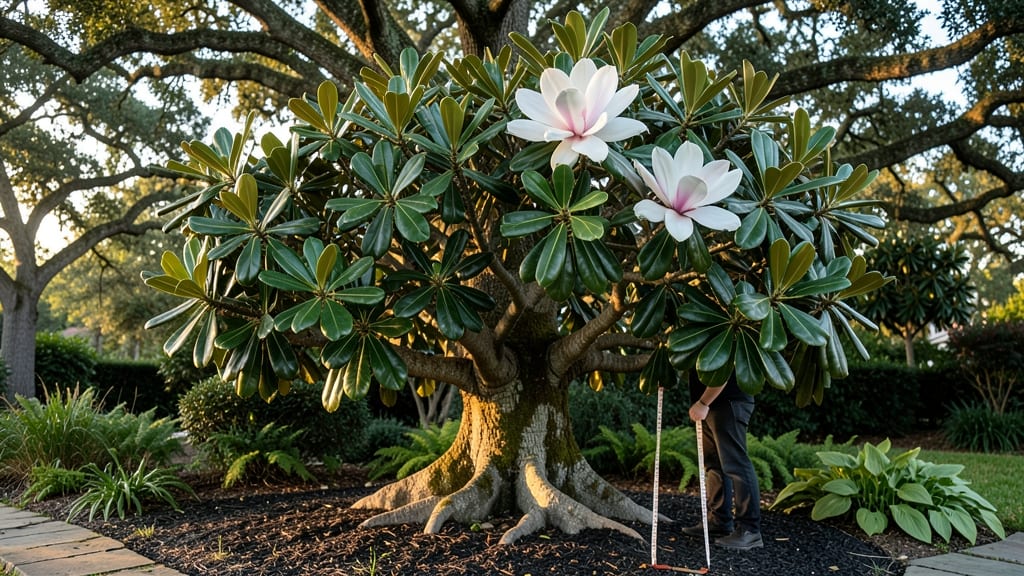
Understanding a magnolia tree's mature height and width is the key to placing it perfectly in your landscape — whether you're dreaming of a towering Southern Magnolia 🌳 or a compact Star Magnolia for small spaces.
If you're planning your dream landscape but struggling to visualize how a magnolia tree will fit, knowing its mature height and width is the first step to perfect placement—and avoiding costly mistakes. A 30-foot canopy needs serious space, while a dwarf variety might thrive in a tight urban yard.
From 10-foot dwarf varieties to 100-foot giants, magnolias come in all sizes, each with its own growth rate and spacing needs. Some varieties grow upright, while others spread wide—making the difference between a statement focal point and a cramped corner.
Below, I break down the height and width ranges by popular species, how fast they grow, and the best placement strategies for your garden’s layout. You’ll learn which magnolias fit small yards, which dominate large estates, and how pruning affects their final dimensions.

Magnolia tree height and width by variety: mature size comparison chart
Choosing the right magnolia tree for your landscape starts with understanding its mature height and width. Some varieties grow like towering skyscrapers, while others stay compact enough for small yards.
I’ve compared 12 popular magnolias—from the iconic Southern Magnolia to the delicate Star Magnolia—so you can visualize their growth at 10, 20, and 30 years.
Magnolias vary wildly in size, with some reaching 80+ feet tall while others max out at 15 feet. The key is matching the tree’s growth habit to your space. For example, a Saucer Magnolia might fit perfectly in a suburban yard, while a Kadampa Magnolia needs acres to thrive.
Let’s break down the numbers so you can plan with confidence.
Below, I’ve organized the data by growth rate category: fast-growing (reaching maturity in 20 years), medium (20–30 years), and slow (30+ years). This helps you predict how quickly your magnolia will fill out its space—and whether you’ll need to prune aggressively to control its spread.
| Variety | Common Name | Growth Rate | Height at 10 Yrs | Height at 20 Yrs | Height at 30 Yrs | Width at 10 Yrs | Width at 20 Yrs | Width at 30 Yrs | Mature Size |
|---|---|---|---|---|---|---|---|---|---|
| Magnolia grandiflora | Southern Magnolia | Slow | 10–15 ft | 30–40 ft | 60–80 ft | 10–15 ft | 25–35 ft | 40–60 ft | 60–80 ft × 40–60 ft |
| Magnolia stellata | Star Magnolia | Medium | 6–8 ft | 12–15 ft | 15–20 ft | 8–10 ft | 12–15 ft | 15–20 ft | 15–20 ft × 15–20 ft |
| Magnolia × soulangeana | Saucer Magnolia | Fast | 10–12 ft | 15–20 ft | 20–25 ft | 10–12 ft | 15–20 ft | 20–25 ft | 20–25 ft × 20–25 ft |
| Magnolia kobus | Kobus Magnolia | Medium | 8–10 ft | 15–20 ft | 25–30 ft | 10–12 ft | 15–20 ft | 25–30 ft | 25–30 ft × 25–30 ft |
| Magnolia liliiflora | Lily Magnolia | Fast | 6–8 ft | 10–12 ft | 12–15 ft | 6–8 ft | 10–12 ft | 12–15 ft | 12–15 ft × 12–15 ft |
| Magnolia virginiana | Sweetbay Magnolia | Slow | 8–10 ft | 15–20 ft | 30–40 ft | 10–12 ft | 15–20 ft | 25–35 ft | 30–40 ft × 25–35 ft |
| Magnolia × loebneri | Loebner Magnolia | Medium | 6–8 ft | 12–15 ft | 18–22 ft | 8–10 ft | 12–15 ft | 18–22 ft | 18–22 ft × 18–22 ft |
| Magnolia denudata | Yulan Magnolia | Medium | 8–10 ft | 15–20 ft | 25–30 ft | 10–12 ft | 15–20 ft | 20–25 ft | 25–30 ft × 20–25 ft |
| Magnolia × veitchii |