
Pruning
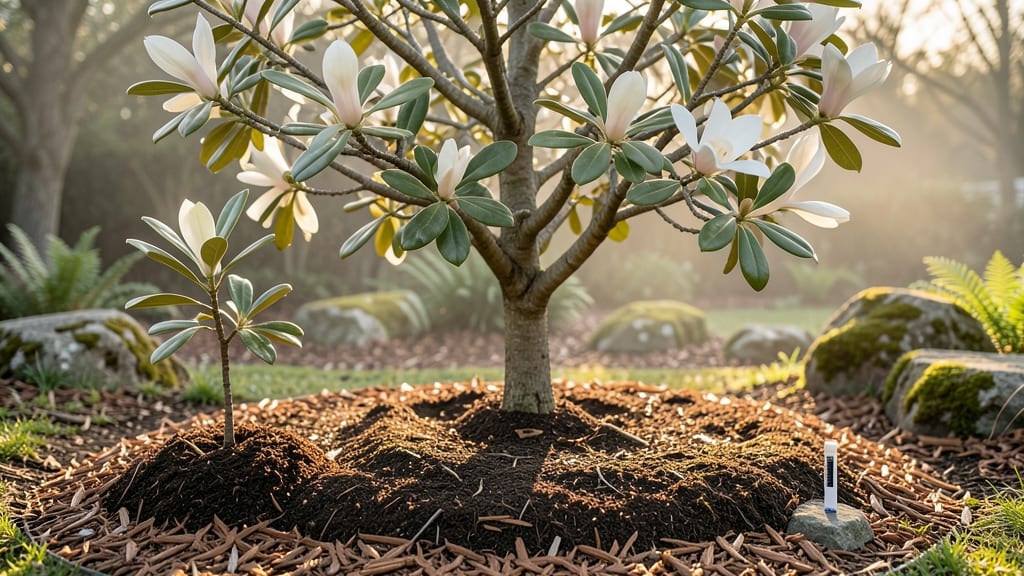
The right magnolia tree soil is the foundation for a showstopping 🌸 that thrives for decades — and most gardeners get it wrong without even realizing it.
Picture this: You’ve planted your magnolia in rich, fluffy soil, only to watch it struggle with yellowing leaves or slow growth. The issue isn’t your watering or sunlight — it’s what’s underneath.
Magnolias demand specific soil conditions, from pH to drainage, or they’ll fight you every step of the way.
In this guide, I’ll break down the exact soil mix your magnolia craves, how to test and tweak it like a pro, and the common mistakes that silently sabotage even the hardiest trees.
By the end, you’ll know how to create the perfect growing environment so your magnolia doesn’t just survive — it flourishes, year after year.
The ideal pH and soil composition for magnolia trees
Magnolias are finicky about their soil—too acidic or compacted, and you’ll see yellowing leaves, weak stems, or even flower failure. The key lies in mimicking their natural habitat: acidic, loamy soil rich in organic matter.
Native to the southeastern U.S., these trees thrive in soil with a pH between 4.5 and 6.5, where nutrients like iron and manganese become readily available. Without this balance, your magnolia’s roots struggle to absorb what they need, leading to slow growth or disease susceptibility.
For optimal root health, aim for soil that’s 60% organic matter—think composted leaves, pine bark fines, or well-rotted manure. This organic component improves water retention while preventing compaction, which is critical since magnolias hate soggy roots.
The remaining 40% should be a mix of sand and clay (roughly 20% each) to create a loamy texture that drains well but holds moisture during dry spells. This ratio keeps roots oxygenated while providing the stability they need.
If your soil tests outside this range, don’t panic—adjustments are simple. For alkaline soil (pH > 7.0), mix in elemental sulfur (1 lb per 100 sq ft) or peat moss to lower pH gradually over 2–3 months.
Conversely, if your soil is too acidic (<4.5), amend with wood ash or lime (sparingly) to raise pH. Always test soil before and after amending to avoid overshooting. Remember, magnolias are sensitive to sudden pH shifts, so aim for changes of no more than 0.5 pH points per season.
Texture is just as critical as pH. Heavy clay soils? Amend with coarse sand or perlite to improve aeration. Sandy soils? Blend in compost or coconut coir to retain moisture.
The goal is a soil that feels like a damp sponge—light enough to drain excess water but moist enough to support roots. A quick field test: Grab a handful of soil; if it crumbles easily when dry but holds shape when wet, you’re on the right track.
Magnolias also benefit from a mulch layer (2–4 inches of pine straw or shredded bark) to regulate soil temperature and retain moisture. Avoid fresh wood chips, which can rob soil of nitrogen as they decompose.
Instead, opt for aged compost or leaf mold, which adds organic matter without disrupting the pH balance. Replenish mulch annually in late winter to prepare for spring growth.
One common misconception is that magnolias need "rich" soil like vegetables. In reality, they prefer lean, well-draining conditions—think of a forest floor under oak trees. Over-fertilizing with nitrogen-heavy mixes (like lawn fertilizer) leads to excessive leaf growth at the expense of flowers.
Stick to a balanced 10-10-10 fertilizer applied lightly in early spring, or use slow-release organic options like fish emulsion. Less is more with magnolias; their roots are shallow and sensitive to salt buildup.
Regional adjustments matter too. In northern climates, where soils often lean alkaline, incorporate sphagnum peat moss or pine bark fines to acidify naturally. In southern gardens, where humidity is high, prioritize sand amendments to prevent waterlogging.
Urban gardeners may face compacted soil; here, gypsum (calcium sulfate) can help break up clay without altering pH. Always adapt these ratios based on your local soil type—what works in Georgia’s red clay won’t cut it in California’s sandy loam.
Finally, pay attention to your magnolia’s foliar clues. Yellow leaves with green veins? Likely iron deficiency from alkaline soil. Purple-tinged leaves? Possible phosphorus shortage or drought stress. Brown edges on new growth?
Check for chlorosis (a pH-related issue) or overwatering. By tuning your soil to these precise needs, you’ll see stronger stems, bigger blooms, and a tree that thrives for decades—no guesswork required.
🌱
How to test and adjust your magnolia tree’s soil for maximum growth
Your magnolia tree thrives when its soil is just right—think acidic, loose, and nutrient-rich. But how do you know if your soil is giving your tree what it needs? Testing and adjusting soil pH and composition is the key to unlocking those show-stopping blooms and strong roots.
The good news? You don’t need a lab to get started—simple DIY tests and organic amendments can work wonders.
First, grab a soil pH test kit (available at garden centers for under $10). These kits let you test your soil’s acidity right at home, which is crucial because magnolias hate alkaline soil.
If your soil is too basic, your tree will struggle to absorb essential nutrients, leading to yellow leaves and weak growth. Once you know your soil’s pH, you can make targeted adjustments with organic matter like compost or sulfur to bring it into the ideal 4.5–6.5 range.
- 🔍 Test soil pH with a DIY kit (aim for 4.5–6.5).
- 🌿 Add compost (2–3 inches) to improve organic matter.
- 🪴 Mix in pine bark fines for drainage in heavy clay.
- 💧 Water deeply after amending to settle soil.
- ⚠️ Call a pro if soil is extremely alkaline or compacted.
For heavy clay soil, which drains poorly and can suffocate roots, pine bark fines are your best friend. Mix in a 20–30% ratio of bark fines into your existing soil to create a loamy texture that improves aeration and drainage.
This is especially important if your magnolia’s leaves start turning yellow or brown—a classic sign of root stress.
If your soil test reveals it’s too alkaline (pH above 7), don’t panic. You can lower the pH naturally by adding elemental sulfur or peat moss. Sprinkle 1–2 pounds of sulfur per 100 square feet and water it in.
It may take a few months to see results, but it’s a safe, chemical-free way to acidify your soil over time. Re-test after 3–6 months to monitor progress.
Once you’ve adjusted your soil, mulch around the base of your magnolia with organic mulch like wood chips or pine straw. This helps retain moisture, regulates soil temperature, and slowly adds nutrients as it breaks down.
Just keep the mulch 2–3 inches away from the tree trunk to prevent rot. Mulching also suppresses weeds, reducing competition for nutrients.
If your soil is rocky, sandy, or severely compacted, consider calling in a local arborist or soil specialist. They can perform deeper soil amendments or even root aeration to break up compacted layers.
Heavy clay or alkaline soils often require professional intervention to avoid long-term damage to your magnolia’s roots. 🌳