
Pruning
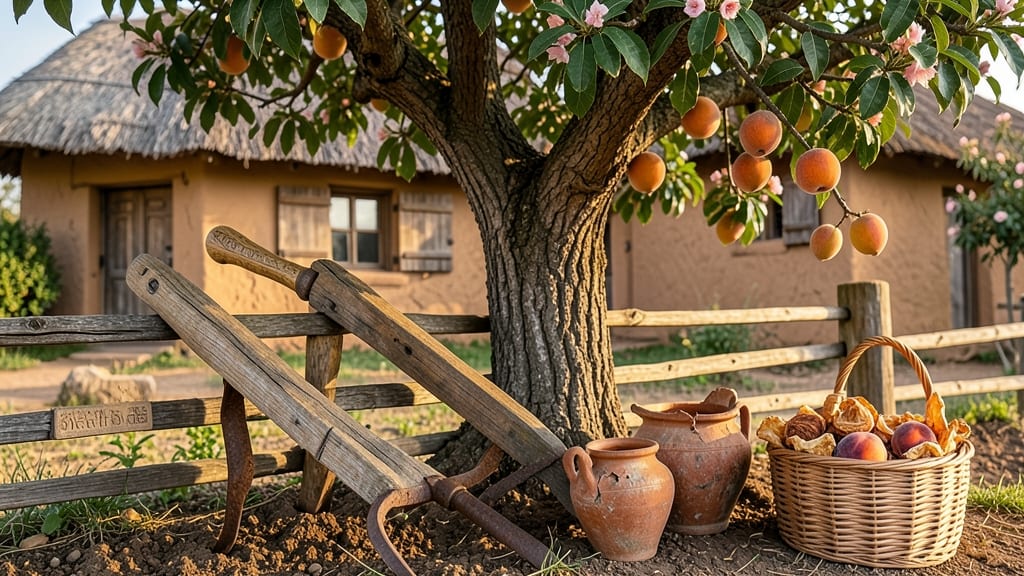
The history of peach trees begins in China over 4,000 years ago, where they were first cultivated as early as 2000 BCE. From there, these trees traveled through ancient trade routes to Persia, Rome, and eventually reached the Americas via European settlers in the 16th century. Their hardiness and delicious fruit helped them become a beloved crop worldwide.
The peach's journey from China's orchards to global gardens reflects more than just agricultural expansion—it mirrors centuries of cultural exchange. 🌍 Archaeologists have uncovered evidence of peach cultivation dating back to China's Shang Dynasty, where the fruit held symbolic importance in both medicine and mythology.
The peach's spread along the Silk Road wasn't just about trade; it carried agricultural knowledge that transformed farming practices across continents.
What makes this history fascinating is how peaches adapted to new climates. The Romans, for instance, prized them for their ornamental beauty as much as their taste, while Islamic scholars during the Golden Age preserved and improved peach cultivation techniques.
By the time European settlers brought peach trees to the Americas, they were already a sophisticated agricultural product—far removed from their wild Chinese ancestors.
💡 In This Article
- Ancient Chinese Origins of Peach Trees
- How Peach Trees Traveled the Silk Road and Beyond
Ancient Chinese origins of peach trees
Archaeological excavations in China's Henan and Shaanxi provinces reveal peach pits dating back to 6000 BCE, making them one of the earliest domesticated fruits. The fruit's cultivation truly flourished during the Shang Dynasty (1600-1046 BCE), where it became a symbol of immortality and prosperity in Chinese folklore.
Ancient texts like the Shennong Bencaojing (Divine Farmer's Herb-Root Classic) from the 2nd century BCE describe peaches as having medicinal properties, particularly for treating digestive ailments and skin conditions.
The peach's scientific name, Prunus persica, actually reflects its ancient journey—though it originated in China, the "persica" designation came later when Persians spread the fruit westward.
Chinese peaches were smaller (2-3 inches in diameter) and more tart than modern varieties, with a fuzzy skin that protected them during transportation along early trade routes. 🌿 These early trees grew wild in China's mountainous regions, particularly in the Yangtze River valley, where the climate provided the perfect balance of 100-150 frost-free days needed for optimal fruit development.
What makes the Chinese peach's history unique is its dual role as both food and cultural icon. The fruit appeared in Bronze Age rituals and was depicted in Han Dynasty (206 BCE-220 CE) tomb paintings alongside other symbols of wealth.
Confucian texts from the 5th century BCE mention peaches as a delicacy served during imperial banquets, demonstrating their status beyond mere sustenance. The Chinese also developed early grafting techniques around 1000 BCE, allowing them to cultivate sweeter varieties—a practice that would later spread with the fruit itself.
The peach's symbolic power extended to mythology, where it became associated with the goddess Xi Wangmu, who lived in a peach forest. This connection reinforced the fruit's sacred status, ensuring its preservation through generations.
Chinese farmers also noticed that peach trees thrived in well-drained, slightly acidic soils (pH 6.0-6.5), a preference that would influence cultivation practices worldwide. The combination of these factors—cultural reverence, agricultural innovation, and adaptable growing conditions—laid the foundation for the peach's global expansion.
One fascinating detail is how Chinese peaches were transported during this era. Merchants would carefully pack the fruit in straw-lined baskets to prevent bruising, a technique that became standard along the Silk Road.
The peach's ability to ripen after picking (a trait called climacteric ripening) made it ideal for long-distance trade, as it could continue maturing during the journey. This biological advantage, combined with human ingenuity, ensured the peach's survival and spread across continents.
By the time peaches reached Persia around 200 CE, they had already undergone centuries of selective breeding in China. The Persians, impressed by both the fruit's taste and ornamental value, began cultivating their own varieties, which would eventually earn the species its modern name.
This transition marked the beginning of the peach's second act—as a global agricultural and cultural phenomenon.