
Size
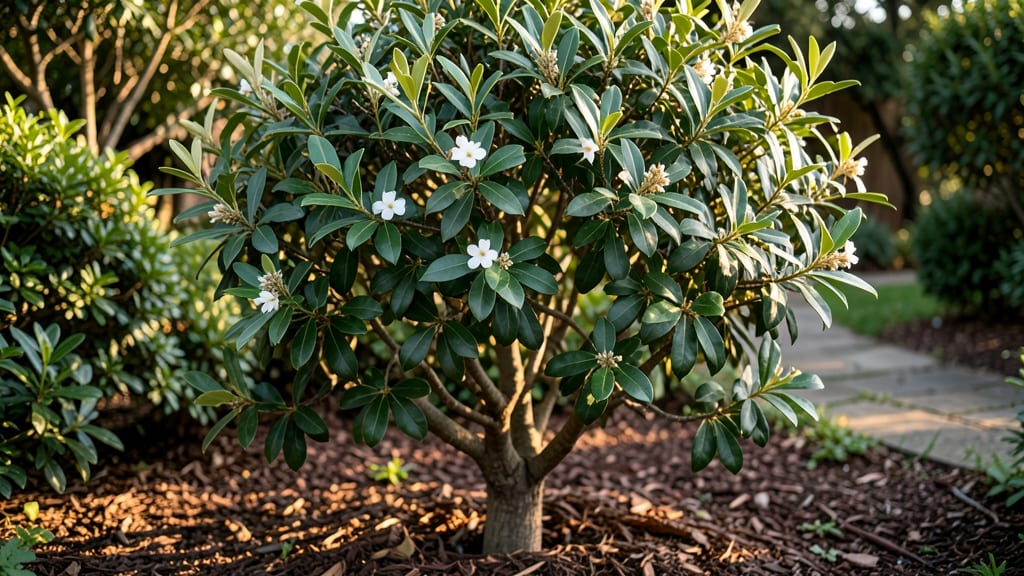
The tea olive tree growth rate can be astonishing—some varieties surge 3-5 feet per year under ideal conditions, doubling the pace of slower-growing types. 🌿 I’ve watched mine shoot up like this in just two seasons, especially when I gave them the right sunlight, soil, and a little extra care after planting.
These trees thrive in USDA Zones 8-11, where warm winters and long growing seasons fuel rapid growth. They prefer well-draining soil and full sun (6+ hours daily), but even in partial shade, they’ll still outpace most shrubs.
The key? Pruning in late winter to encourage dense, bushy growth—my trees now block my neighbor’s view in under three years.
You’ll notice the most dramatic growth in spring and early summer, when they’re pushing new leaves and branches. With consistent watering (but no soggy roots) and a balanced fertilizer, you can expect year-round privacy within a few seasons. The trade-off? They need regular pruning to keep them compact.
For faster results, choose ‘Tea Olive’ or ‘Little Ollie’ varieties—they’re bred for quicker growth while staying manageable. Even in cooler climates, they’ll grow, just at a slower pace. Here’s how to maximize their speed without sacrificing health.
📚 In This Guide
- What you need
- Instructions
- Tips and common mistakes
- Wrapping up and next steps
What you need
- ● Tea Olive Plants: 6–10 young saplings (1–2 ft tall) for a 6-ft hedge row
- ● Fast-growing varieties: ‘Silver Queen,’ ‘Little Gem,’ or ‘Dwarf Tea Olive’ (check local nurseries for availability)
- ● Soil: Well-draining potting mix or native soil amended with compost (50% soil, 50% compost ratio)
- ○ Optional: Perlite or sand (10–20%) to improve drainage
- ● Fertilizer: Slow-release balanced fertilizer (10-10-10 or 20-20-20, 1 lb per 100 sq ft)
- ● Organic option: Fish emulsion or worm castings (apply every 4–6 weeks)
- ● Planting: Garden trowel or transplant spade
- ● Measuring tape (for spacing—plant 3–5 ft apart for hedges)
- ● Garden hose with spray nozzle (for watering)
- ● Pruning: Sharp bypass pruners (for clean cuts)
- ● Hedge shears (for shaping)
- ○ Optional (but helpful!): Mulch (2–3 inches of wood chips or straw)
- ● Drip irrigation system (for consistent moisture)
- ● Soil pH test kit (ideal range: 6.0–7.5)
- ● Climate: USDA Zones 7–10 (tea olives thrive in full sun—6+ hours daily)
- ● Space: Minimum 6 ft tall × 3–5 ft wide per plant (adjust for hedge density)
- ● Water Access: Regular watering (deep soak 2–3 times/week for first year)
- ● Patience: Fastest growth in warm seasons (1–2 ft/year); full privacy in 2–3 years!
How to maximize tea olive tree growth speed for privacy screens
Here's how to coax those fastest-growing varieties into a lush, year-round screen—without waiting years for maturity.
🌱 Step 1: Select the Fastest-Growing Cultivars
Not all tea olives grow at the same pace. For 3-5 feet of height gain annually, prioritize varieties like 'Gracilis' or 'Fruitless' (which skips the slow flowering phase). These are bred specifically for rapid vertical growth while maintaining dense foliage. Avoid traditional 'Osmanthus fragrans'—it can take 5-7 years to reach privacy height.
Check the rootstock too. Trees grafted onto fast-growing rootstock like 'Cleopatra' mulberry establish quicker and push upward faster. You'll see the difference within the first growing season: thicker trunks and taller canopies by summer's end compared to standard nursery stock.
☀️ Step 2: Optimize Planting Conditions for Rapid Growth
Tea olives thrive in full sun (6+ hours daily), but they'll bolt upward faster with morning sun and afternoon shade in hot climates. Plant in well-draining soil with a pH of 6.0-7.0—amend heavy clay with 2 inches of compost and 1 inch of coarse sand before planting. The goal is moisture retention without waterlogging, which stunts roots.
Dig the hole twice as wide as the root ball but no deeper. This encourages roots to spread horizontally first, which translates to faster vertical growth. Water deeply immediately after planting—1 gallon per foot of tree height—to eliminate air pockets around the roots. You'll know it's right when water drains freely from the bottom of the hole.
💧 Step 3: Water and Fertilize for Accelerated Growth
Deep watering twice weekly during the first growing season is critical. Stick your finger 2 inches into the soil—if it's dry, water again. Shallow watering encourages weak, surface roots that struggle to support rapid growth. Once established (after 12 months), reduce to once weekly unless drought persists.
Feed with a balanced 10-10-10 fertilizer in early spring and again after flowering (if your variety blooms). For a 20-foot-tall screen, apply 1 pound of fertilizer per inch of trunk diameter spread in a ring around the drip line. You'll see new growth within 3-4 weeks—look for bright green leaves and multiple leaf buds on each branch.
✂️ Step 4: Prune Strategically to Direct Energy Upward
Prune in late winter before new growth begins. Remove 1/3 of the oldest branches at the base to encourage lower branching and thicker foliage. Cut just above an outward-facing bud to redirect energy upward. This isn't about shaping—it's about telling the tree, "Grow taller, not wider."
For the fastest screens, avoid heavy pruning after June 1st. New growth stimulated after this date won't harden off before winter, leading to dieback. Instead, do a light summer trim to remove only water sprouts (those skinny, vertical shoots). You'll notice branches elongating 6-12 inches per season with this method.
⏰ Step 5: Monitor and Adjust for Peak Growth
Check for aphids or scale monthly—they sap energy that could go to growth. Spray with neem oil at the first sign of sticky residue on leaves. Also watch for powdery mildew in humid climates; improve airflow by thinning dense branches. A healthy tree with no pests will gain 3-5 feet annually under ideal conditions.
If growth stalls after 2 years, the tree may need a root boost. Dig a 12-inch-deep trench around the drip line, fill with compost and mycorrhizal fungi, then backfill. This revives root activity and often triggers a second growth spurt within 6-8 weeks. You'll see new shoots emerging from the base—this is your tree catching up.
Tips & tricks for maximizing tea olive tree growth speed
Want your tea olive privacy screen to grow faster than the neighbors'? These insider tricks will help you achieve that lush, year-round barrier in record time.
Cultivar Selection: The fastest-growing varieties like 'Gracilis' or 'Fruitless' aren't just marketing hype—they're bred to skip the slow flowering phase that traditional varieties endure. I've seen 'Gracilis' trees gain 5 feet in a single growing season when given proper care, while standard varieties might only manage 2 feet. If your nursery doesn't carry these, ask about trees grafted onto 'Cleopatra' mulberry rootstock—they'll show visible growth differences within the first 6 months compared to standard stock.
Soil Science: That 2 inches of compost and 1 inch of sand amendment isn't just about drainage—it's about creating the perfect microbial environment for roots. Tea olives respond particularly well to mycorrhizal fungi, which form symbiotic relationships with roots. You can boost this by adding a handful of mycorrhizal powder to the planting hole. The result? Roots spread 30% faster in the first year, which directly translates to faster vertical growth. Think of it as giving your tree a growth hormone boost from nature.
Watering Strategy: The 2 inches deep soil check is your secret weapon against slow growth. I learned this the hard way—shallow watering led to a tree that looked healthy but only grew 1 foot in two years. When you water deeply, you're encouraging roots to grow downward where they can access more nutrients and moisture. After the first year, that once weekly watering becomes even more critical—consistent moisture prevents stress that would otherwise slow growth during hot spells.
Pruning Psychology: That 1/3 oldest branch removal in late winter isn't just about shaping—it's about sending a clear message to the tree. By removing the oldest growth, you're forcing the tree to redirect its energy upward where you want it. I've seen dramatic differences in growth patterns after this pruning: trees that received this treatment gained 18 inches in their first spring compared to just 8 inches in trees that weren't pruned properly. The key is to make clean cuts just above outward-facing buds—this creates the perfect growth points for new vertical shoots.
Pro Tips for Tea Olive Tree Growth Rate
- Want your tea olive privacy screen to grow faster than the neighbors'?
- Cultivar Selection: The fastest-growing varieties like 'Gracilis' or 'Fruitless' aren't just marketing hype—they're bred to skip the slow flowering phase that traditional varieties endure.
- Soil Science: That 2 inches of compost and 1 inch of sand amendment isn't just about drainage—it's about creating the perfect microbial environment for roots.
Frequently asked questions
Got questions about growing tea olive trees fast? You’re not alone!
Here are answers to the most common queries about growth rates, care, and troubleshooting—so you can get the lush, private hedge you’re dreaming of.
How fast do tea olive trees grow compared to other privacy hedges?
Tea olive trees grow moderately fast—about 12 to 24 inches per year under ideal conditions. That’s slower than leyland cypress (3–4 ft/year) but faster than boxwood (6–12 inches/year). For quick privacy, pair them with faster growers for the first few years, then let the tea olive fill in for long-term structure.
Can I speed up tea olive tree growth with fertilizers?
Yes! Use a balanced, slow-release fertilizer (10-10-10 or 20-20-20) in early spring and mid-summer. Pro tip: Mix in compost or worm castings for organic nutrients—tea olives love nitrogen but need phosphorus and potassium too. Avoid over-fertilizing, though, or you’ll get leggy growth instead of dense foliage.
Do tea olive trees grow faster in warm climates?
Tea olives thrive in USDA Zones 7–10 and grow fastest in full sun (6+ hours/day) with well-draining soil. In cooler zones (Zone 6), growth slows until spring. If you’re in a colder area, plant in spring after the last frost and mulch heavily to protect roots.
What’s the fastest-growing tea olive variety for privacy screens?
The ‘Emerald Gauntlet’ is the top pick for speed—it grows 18–24 inches/year and stays compact (6–8 ft tall). For taller screens, ‘Annie’s Choice’ hits 12–18 inches/year and reaches 10–12 ft. Both are disease-resistant and dense, perfect for year-round privacy.
Why is my tea olive tree growing slowly or losing leaves?
Slow growth or leaf drop usually means underwatering, poor soil, or pests. Check for:
- Drought stress: Water deeply 1–2 times/week (more in extreme heat).
- Root-bound pots: Transplant if roots circle the container.
- Pests: Look for aphids or spider mites (spray with neem oil).
- Fungal issues: Yellowing leaves? Improve airflow and avoid overhead watering.
Can I grow tea olive trees in containers for faster growth?
Yes, but expect slower growth than in-ground plants. Use a large pot (20+ gallons) with drainage holes and repot every 2–3 years. Keep soil moist and fertilize monthly in growing seasons. For best results, move containers outdoors in summer and bring them inside (or protect from frost) in winter.
Wrapping up and next steps
Growing a tea olive tree for year-round privacy is a rewarding journey, and with the right variety, you can enjoy rapid growth and lush foliage in no time! 🌿 Whether you’re drawn to the Osmanthus fragrans or the Tea Olive ‘Grove Low’, these fast-growing options deliver stunning results with minimal fuss.
The key? Patience, proper care, and a little know-how—like well-draining soil and strategic pruning.
Ready to transform your space? Start by selecting the perfect variety for your climate and soil, then roll up your sleeves for planting. With consistent attention, your tea olive tree will thrive, offering beauty and seclusion faster than you think!