
Trees
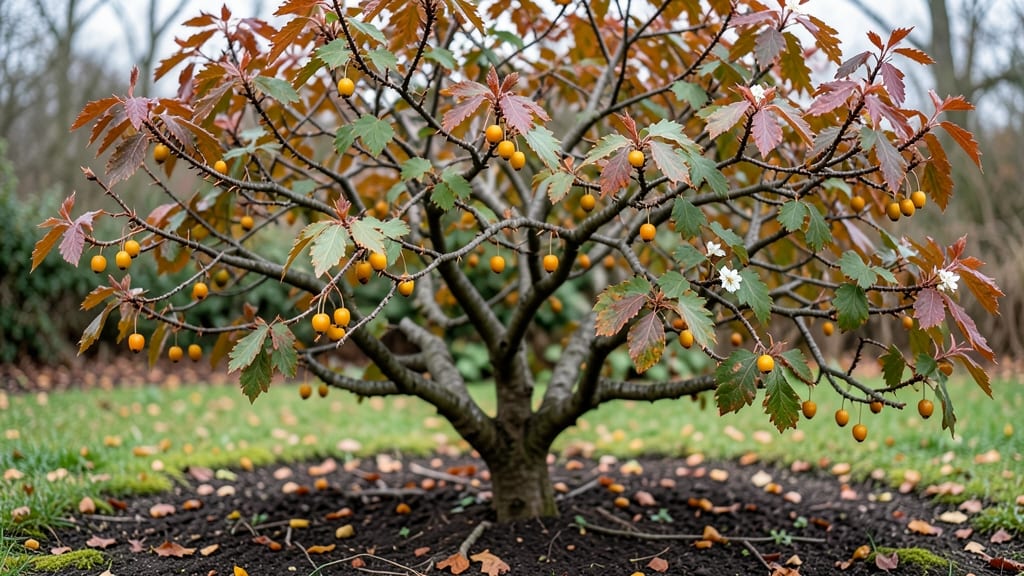
That thorn tree with the yellow fruit on your property isn’t just a striking feature—it’s a rare treasure in any garden. 🌟 I’ve grown Crataegus (hawthorn) and Xanthoceras sorbifolium (yellowhorn), and their bright berries add year-round interest, even when most trees are bare.
The key? Matching their needs to your climate, from full sun to well-draining soil.
These trees thrive in USDA Zones 4-9, making them versatile for cool mountain gardens or mild coastal areas. Plant them in full sun to part shade, and expect 3-5 feet of height (depending on the species).
The thorns might seem intimidating, but they deter pests naturally—no chemicals needed. Just give them space to grow and avoid overwatering.
By late summer, you’ll see clusters of canary-yellow berries that stay on the branches through winter. While not typically edible fresh (some species have mild toxicity), they’re prized for jellies, teas, and decorative arrangements.
The real magic? Their bold color contrasts with evergreens and snow, turning your yard into a living painting.
Start with a young tree from a specialty nursery—avoid big-box stores where species get mislabeled. Prune lightly in late winter to shape the tree and remove dead branches. With patience, you’ll have a low-maintenance, high-impact centerpiece that outshines ordinary shrubs.
Behind The Citrusy Canary Glow
The vibrant yellow fruit of thorn trees—often mistaken for citrus—isn’t just a splash of color; it’s a biological marvel tied to survival, reproduction, and environmental cues. Understanding why these fruits turn a striking canary yellow helps gardeners and nature enthusiasts nurture healthier trees and anticipate their behavior.
Let’s break down the science behind this eye-catching phenomenon.
The yellow hue isn’t random—it’s a genetic survival strategy designed to lure animals (and humans!) into dispersing seeds. Many thorn trees, like the Hawthorn or Pyracantha, produce fruits that ripen to bright yellow or orange as a signal of sugar and nutrient readiness.
Birds, mammals, and even insects are hardwired to seek out these colors because they subconsciously associate them with ripe, edible rewards.
In botanical terms, this is called fruit coloration for zoochory—a fancy way of saying the tree “advertises” itself to animals that will eat the fruit and later deposit seeds elsewhere.
The more visible the fruit, the better the tree’s chances of spreading its lineage. Without this vibrant cue, many thorn tree species would struggle to reproduce efficiently.
Yellow fruit isn’t just about genetics—it’s also a chemical reaction triggered by sunlight. As the fruit matures, its cells undergo chlorophyll degradation, the same process that turns leaves yellow in autumn.
However, in fruit, this breakdown is paired with the production of carotenoids (like beta-carotene), which give the fruit its sunny hue.
Here’s how it works:
- Early stages: Young, unripe fruit may appear green due to chlorophyll masking other pigments.
- Maturation: Sunlight exposure accelerates chlorophyll loss, revealing underlying yellow or orange pigments.
- Peak ripeness: The fruit’s color intensifies as sugars and acids reach their ideal balance for consumption.
Pro tip: 🌡️ If you’re growing a thorn tree and the fruit isn’t turning yellow, check sunlight exposure—partial shade can delay pigment changes. Most citrusy-thorn trees thrive in full sun (6+ hours daily) to trigger this natural color shift.
The yellow transformation isn’t just visual—it’s a metabolic shift that makes the fruit palatable. As the fruit ripens, starches convert into simple sugars (glucose, fructose), while acids like citric acid decrease. This sweet-tart balance is what makes the fruit irresistible to wildlife (and humans!).
Key changes during ripening:
Component
Unripe State
Ripe State
Chlorophyll
High (green)
Low (broken down)
Carotenoids
Present but masked
Dominant (yellow/orange)
Sugars
Low (starchy)
High (sweet)
Acidity
High (tart)
Moderate (balanced)
For gardeners, this means patience is key—yellow fruit won’t develop if the tree lacks proper nutrients (like potassium or nitrogen) or if temperatures fluctuate too much. A consistent 60–80°F range during fruit development encourages even ripening.
Not all yellow fruit is a sign of healthy ripening. In some cases, an unnatural yellowing (or even premature yellowing) can indicate underlying stress or disease. Here’s how to tell the difference:
- Healthy yellow:
- Gradual color change from green → yellow/orange.
- Fruit is firm, slightly waxy, and smells fragrant.
- Occurs uniformly across the tree.
- Stress-related yellow:
- Sudden yellowing with no green stage.
- Fruit may be soft, mushy, or shriveled.
- Accompanied by leaf drop, wilting, or unusual spots.
- Caused by: overwatering, nutrient deficiency, or fungal infections.
If your thorn tree’s fruit turns yellow too early or looks unhealthy, inspect the leaves and soil. Adjust watering (most thorn trees prefer well-draining soil) and check for pests like aphids or mites, which can sap the tree’s energy.
Revive & Restore Your Citrus Tree
If your thorny tree with vibrant yellow fruit isn’t thriving, don’t let it fade into the background! With the right care, you can bring back its lush foliage, abundant blooms, and those eye-catching golden berries.
Below, we break down common issues and their practical fixes—plus tips to keep your tree healthy for years to come. 🌿✨
Signs: Yellowing leaves, soggy soil, root rot, or fruit dropping prematurely.
Too much water suffocates roots, leading to disease and nutrient loss. Here’s how to fix it:
- 🔥 Drainage First: - Test your soil: Dig a small hole (6 inches deep) and fill it with water. If it doesn’t drain within 2–3 hours, your soil is too compacted. - Amend the soil with perlite, sand, or compost (20–30% mix) to improve aeration.
For container-grown trees, ensure pots have drainage holes and use a well-draining potting mix.
- 🍳 Adjust Your Watering Routine:
- Water deeply but infrequently—only when the top 2–3 inches of soil are dry. Stick your finger in the soil to check!
- Avoid overhead watering (especially in humid climates) to prevent fungal diseases like citrus scab or root rot.
- 👨🍳 Prune Damaged Roots (If Needed):
- If root rot is severe, trim away mushy, black roots with sterilized pruners and repot in fresh, dry soil.
- Apply a fungicide (like copper-based spray) to prevent reinfection.
💡 Prevention Tip: Mulch around the base (2–3 inches of organic mulch like wood chips) to retain moisture without smothering roots. Keep mulch 6 inches away from the trunk to avoid rot.
Signs: Wilting leaves, dry soil, curled or crispy edges, or fruit shriveling.
Citrus trees love moisture but hate soggy or bone-dry conditions. Balance is key!
- 🥘 Hydrate Properly:
- Water slowly and deeply at the base (not the leaves) to encourage deep root growth. Use a drip irrigation system or soaker hose for consistency.
- In extreme heat (above 90°F), water twice a week—morning is best to reduce evaporation.
- 🌡️ Provide Shade & Airflow:
- If your tree is in a hot, dry climate, use light shade cloth (30–50%) during peak sun hours.
- Trim nearby plants or structures to improve air circulation—this reduces heat stress and fungal risks.
- 🎯 Boost Humidity (Indoor Trees):
- Mist leaves daily or place a tray of water near the pot (but avoid sitting roots in water).
- Group plants together to create a microclimate.
✨ Pro Tip: A 5-gallon bucket of water placed near the tree’s drip line can help maintain soil moisture in arid conditions.
Signs: Pale yellow leaves (nitrogen deficiency), small or sparse fruit, leaf drop, or burnt tips (over-fertilizing).
Citrus trees need balanced nutrition—too little or too much throws them off!
- 📊 Diagnose the Deficiency:
- Yellow leaves with green veins? → Likely iron or magnesium deficiency (common in alkaline soil).
- Brown leaf tips? → Over-fertilizing or fluoride toxicity (from tap water).
- No fruit? → Phosphorus or potassium deficiency or lack of pollination.
- 💪 Fertilize Smartly:
- Use a citrus-specific fertilizer (high in nitrogen early in the season, switch to balanced 6-6-6 or 8-3-9 for fruiting).
- Avoid fertilizing in winter—trees rest then! Start in early spring (February–March).
- Slow-release granules (like Osmocote) are better than liquid fertilizers to prevent burns.
- 🥗 Soil & pH Fixes:
- Test your soil’s pH (citrus prefers 6.0–7.0). If alkaline, amend with sulfur or peat moss.
- For micronutrient deficiencies, use chelated iron (like Iron Chelate) or Epsom salt (magnesium sulfate) every 2–3 months.
🔥 Warning: Never fertilize a stressed or newly planted tree—wait until it’s established (6–12 months).
Signs: Holes in leaves, sticky residue (aphids), white cottony growth (mealybugs), or black spots (fungus).
Pests and diseases can drain your tree’s energy faster than you’d think. Act quickly!
- 🔪 Treat Common Pests: - Aphids/Scale/Mealybugs: Spray with neem oil (1 tsp per quart of water) or insecticidal soap.
Repeat every 5–7 days for 2–3 weeks. - Citrus Leaf Miners: Remove infested leaves and apply horticultural oil in early spring. - Ants? They farm pests—use diatomaceous earth around the base to deter them.
- 🌿 Fight Fungal Diseases:
- Citrus Canker or Scab: Prune infected branches sterilize tools with rubbing alcohol, then spray with copper fungicide.
- Root Rot: Improve drainage (see above) and treat with mycorrhizal fungi to boost root health.
🎯 Prevention Tip: Inspect leaves weekly during growing season. Early detection = easier fixes!
Signs: Dormant trees in winter, sudden leaf drop, or no new growth in spring.
Citrus trees have different needs year-round. Tweak your care based on the season!
| Season | Task | Why It Matters |
|---|---|---|
| Spring | Prune dead wood, fertilize | Encourages new growth & fruit set. |
| Summer | Water deeply, mulch, shade if needed | Prevents heat shock and moisture loss. |
| Fall | Reduce watering, avoid fertilizing | Helps tree harden off for winter. |
| Winter | Protect from frost, minimal water | Citrus is semi-dormant—don’t overwater! |
💡 Bonus: If your tree is container-grown, move it to a sheltered spot (like a garage or against a south-facing wall) if temperatures drop below 25°F. Use burlap wraps for extra protection.
With these fixes, your thorny citrus tree should bounce back—producing more yellow fruit, glossier leaves, and stronger branches in no time. 🌟 Keep an eye on it, adjust as needed, and enjoy your year-round tropical beauty!
Frequently asked questions
What are the most common thorn trees with yellow fruit?
The two most popular varieties are Crataegus (common hawthorn) and Xanthoceras sorbifolium (yellowhorn). Hawthorn produces clusters of bright yellow berries in late summer, while yellowhorn has larger, more citrus-scented fruit that ripens to a golden hue. Both thrive in USDA Zones 4-9 and add dramatic winter interest.
Are these yellow fruits edible, or just decorative?
Most yellow-fruited thorn trees aren't typically eaten fresh due to mild toxicity, but they're excellent for preserves, teas, and decorative arrangements. Hawthorn berries have been used traditionally for jellies, while yellowhorn seeds contain edible oil. Always research specific species before consumption—some require special preparation to remove toxins.
How do I prevent the thorns from becoming a nuisance?
Thorns are a natural defense mechanism, but you can manage them by planting these trees in open areas where they won't block pathways. For container growing, choose dwarf varieties like Crataegus phaenopyrum 'Compacta'. Always wear gloves when pruning, and never plant near high-traffic areas. The thorns actually help deter pests naturally!
Can I grow these trees in containers, or do they need garden space?
Yes! Many thorn trees with yellow fruit thrive in containers, especially dwarf varieties. Use a 15-gallon pot minimum with well-draining soil and ensure it has drainage holes. Yellowhorn grows particularly well in containers, while hawthorn varieties can handle slightly larger pots. Just remember to move containers indoors if temperatures drop below 20°F.
Why isn't my thorn tree producing yellow fruit?
Common reasons include insufficient sunlight (6+ hours daily), improper soil pH (most prefer 6.0-7.0), or lack of proper nutrients. Check for potassium deficiency (critical for fruit development) and ensure consistent watering during flowering season. Young trees may take 3-5 years to bear fruit—patience is key!