
Pruning
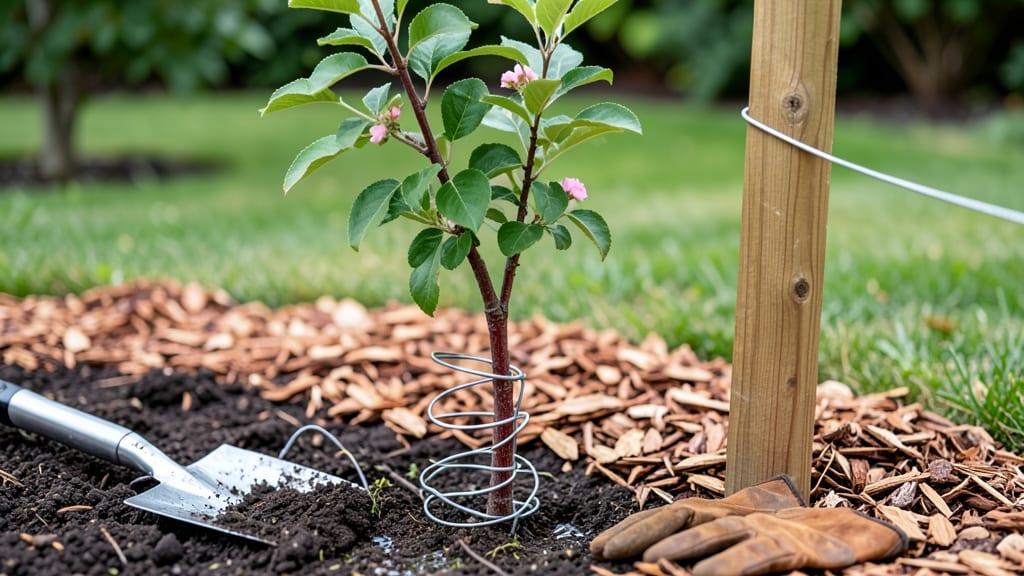
Tree stake wire keeps young trees growing straight without strangling their trunks. 🌳 I learned the hard way that cheap plastic ties or loose twine can girdle bark as trees swell—so I switched to the right wire and technique, and my saplings now stand tall without a scratch.
The secret lies in flexible, galvanized wire (1/8" to 3/16" diameter) that bends with growth, not cuts into bark. You’ll need a mallet, a couple of stakes per tree, and 3-4 feet of wire per tree—enough to loop twice without tension.
Avoid nails or staples; they’ll damage as the tree thickens. Start by driving stakes 6-12 inches from the trunk at a 45-degree angle, then weave the wire in a figure-eight pattern, leaving 2-3 inches of slack to accommodate swelling.
Check every 4-6 weeks and loosen if the wire bites—roots need room to breathe. Remove stakes after 1-2 years when the tree can stand alone. Too-long support trains weak stems. My biggest mistake?
Waiting too long to remove them—now I mark removal dates on my calendar to avoid this common pitfall.
📚 In This Guide
- What you need
- Instructions
- Tips and common mistakes
- Wrapping up and next steps
What you need
- ● Tree stake wire: 10–20 ft roll (gauge 14–16 for flexibility, 18–22 for heavier trees). Pro tip: Galvanized or coated wire lasts longer! 🌡️
- ○ Tree stakes: 2–4 per plant (2–3 ft tall, ½-inch diameter). Optional: Use bamboo or recycled PVC for eco-friendliness. 🌿
- ● Soft plant ties: 3–5 (fabric or rubber straps to avoid wire damage).
- ● Measuring tape or ruler (for precise wire cuts).
- ● Wire cutters (for clean snips—no jagged edges!).
- ● Wire twist ties (to secure wire loops without knots).
- ● Garden gloves (to protect hands from wire prickles).
- ● Spray paint (for marking wire if you’re really organized).
- ● Tree guards (to shield trunks from wire rubbing).
Step-by-Step instructions for using tree stake wire
Here's how to keep your young trees growing straight and strong without tangled messes.
🪴 Step 1: Measure and Cut the Wire to Size
Start by measuring the height of your tree's trunk from the base to where you want the stake to end—typically 1/3 to 1/2 the tree's total height. For a 6-foot sapling, that means a 2- to 3-foot stake. Use wire cutters to trim the tree stake wire to this length, leaving a few extra inches to work with.
I like to cut the wire slightly longer than needed—you can always trim more later. Hold the wire against the tree's trunk to check the fit before making your final cut. If you're supporting multiple trees, cut four pieces at once so they're all uniform in length.
✂️ Step 2: Bend the Wire into a U-Shape
Fold the wire into a loose U-shape with the bottom of the U resting against the tree's trunk. The two vertical legs of the U should extend upward on either side of the tree. This design keeps the stake centered and prevents it from twisting as the tree grows. Leave about 6-8 inches of wire extending above the tree's top—this will help secure the stake later.
Gently bend the wire with pliers or your hands, but don't force it. The goal is a loose, flexible fit that won't damage the bark. If the wire feels too stiff, you can soak it in warm water for a few minutes to make it more pliable.
🌱 Step 3: Position the Stake and Secure the Base
Place the U-shaped wire around the tree's trunk, positioning it so the bottom of the U sits 2-3 inches above the soil line. This prevents moisture from pooling against the bark. Use a small shovel or your hands to dig a shallow trench around the tree, about 6 inches deep, where the stake's base will sit.
Drive a wooden stake into the trench at a slight angle, about 12-18 inches away from the tree. The angle helps distribute tension and prevents the stake from pulling out. Wrap the bottom of the U-shape around the wooden stake and twist the wire ends together tightly to secure it in place.
💧 Step 4: Attach the Wire to the Tree and Stake
Take the two upward-extending legs of the wire and twist them together just above the tree's top. This creates a loop that you can then wrap around the tree's trunk and the wooden stake. Pull the wire snugly but not too tight—you want just enough tension to keep the tree straight without restricting growth.
Use a pair of pliers to twist the wire ends together securely. Test the setup by gently pushing the tree to the side—it should hold firm but still allow some natural movement. If the wire feels too loose, twist it tighter; if it's too tight, loosen it slightly to avoid girdling the trunk.
☀️ Step 5: Check and Adjust as the Tree Grows
Inspect the wire and stake every 4-6 weeks to ensure they're still secure and not digging into the bark. Trees grow quickly, and what fits snugly at planting may become too tight after just a few months. If the wire starts to loosen, twist it tighter or add a few extra turns to maintain support.
Once the tree is established and no longer needs support—usually after 1-2 growing seasons—remove the wire carefully to avoid damaging the bark. I like to leave the wooden stake in place as a marker, but it's not necessary if you're confident the tree will stand on its own.
Tips & tricks for perfect tree stake wire setup
Here's what nobody tells you about keeping your trees straight without the frustration of tangled messes.
Precision Cutting: When measuring your tree stake wire in Step 1, use a tape measure to mark the exact length before cutting. For a 6-foot sapling, aim for 24-36 inches total—this accounts for the slight extra needed when wrapping around the trunk. I've found that pre-marking with a permanent marker prevents over-cutting, which can happen when you're holding the wire against the tree while trying to trim.
The Flexibility Factor: In Step 2, don't be afraid to bend the wire gradually rather than forcing it into shape. The goal is a loose U-shape that can adjust as the tree grows. I've ruined several stakes by over-bending, which makes the wire brittle. Soaking stiff wire in warm water for 2-3 minutes first makes it much more pliable—just be sure to dry it thoroughly before using.
Base Stability: For Step 3, the 6-inch deep trench is your best friend for stability. If your soil is rocky or hard to dig, try using a post hole digger instead of a shovel. The slight angle of the wooden stake (12-18 inches away) is crucial—it distributes pressure better than a straight-up stake. I've seen many setups fail because the stake was placed too close to the tree, creating an unstable triangle.
Growth Monitoring: The 4-6 week check-ins in Step 5 are non-negotiable. Trees grow faster than you think! Use a piece of colored tape on the trunk at the wire's starting point—this visual marker makes it easy to see how much the tree has grown. If the tape is at the top of the wire after just a few weeks, you'll know it's time to adjust before the wire starts to girdle the trunk.
Pro Tips for Tree Stake Wire
- Here's what nobody tells you about keeping your trees straight without the frustration of tangled messes.
- Precision Cutting: When measuring your tree stake wire in Step 1, use a tape measure to mark the exact length before ...
- The Flexibility Factor: In Step 2, don't be afraid to bend the wire gradually rather than forcing it into shape. The ...
Frequently asked questions
Got questions about using tree stake wire to keep your plants upright and thriving? You’re in the right place! Here are answers to the most common queries—from timing to troubleshooting—so you can stake like a pro.
When is the best time to attach tree stake wire to young trees or plants?
Install tree stake wire as soon as you plant—but avoid staking too early if your plant is still floppy from transplant shock. For woody plants (trees/shrubs), wait until they’re 6–12 inches tall and have 2–3 sets of leaves. For herbaceous plants (like tomatoes or peppers), stake when they hit 12–18 inches or show signs of toppling.
Can I reuse tree stake wire from year to year?
Yes! Tree stake wire is durable and reusable for multiple seasons if stored properly. Rinse it with mild soap and water to remove sap or dirt, then dry thoroughly to prevent rust. Avoid leaving it buried in soil over winter, as moisture can weaken the metal. Pro tip: Coil it loosely to prevent kinks and store in a dry place.
How tight should the wire be around the plant stem?
The wire should be snug but not cutting—think of it like a gentle hug. For soft stems (like tomatoes or cucumbers), leave 1–2 inches of wiggle room inside the wire. For woody stems (trees/shrubs), wrap it just tight enough to prevent swaying without restricting growth. Check weekly and loosen if the stem looks bruised.
Are there alternatives to tree stake wire for small plants or containers?
For small plants or containers, try these lightweight options:
- Soft plant ties (fabric or rubberized): Great for delicate stems (e.g., herbs, seedlings).
- Bamboo stakes or spiral ties: Eco-friendly and reusable for medium-sized plants.
- Twist ties or Velcro straps: Adjustable and gentle on young shoots.
- DIY wire cages: Bend galvanized wire into a loose cage around the plant.
My plant’s stem is turning dark where the wire touches—what should I do?
This is a sign of restriction or abrasion. Act fast:
- Loosen the wire immediately and add a soft buffer (e.g., a strip of fabric, foam tube, or pool noodle between the wire and stem).
- If the damage is minor, the plant may recover. For deep grooves or blackened areas, trim the affected section (if it’s a non-woody plant) or prune the wire away and switch to a gentler support.
- Prevent future issues: Avoid wrapping wire directly around new growth—always stake below the leaves.
How long should I leave tree stake wire on a plant?
Remove stakes as soon as the plant can stand alone—usually:
- Annuals/vegetables (tomatoes, peppers, beans): 6–8 weeks after staking or when fruit sets (heavy loads need extra support).
- Young trees/shrubs: 1–2 growing seasons (or until the trunk is pencil-thick).
- Perennials (like asparagus or raspberries): Remove stakes after harvest or in early spring to avoid girdling.
Wrapping up and next steps
Choosing the right tree stake wire can make all the difference in keeping your plants upright and thriving—without the frustration of tangled messes or weak support.
Whether you opt for flexible poly wire, durable steel cables, or eco-friendly alternatives, the key is selecting a solution that matches your plants’ needs while protecting their growth. With the right tools and techniques, you’ll enjoy straighter, sturdier plants that stand tall for seasons to come!
Ready to take your gardening game to the next level? Grab your tree stake wire and get staking! 🌱✨ Experiment with different methods, observe what works best for your garden, and watch your plants flourish with confidence.