
Flowers
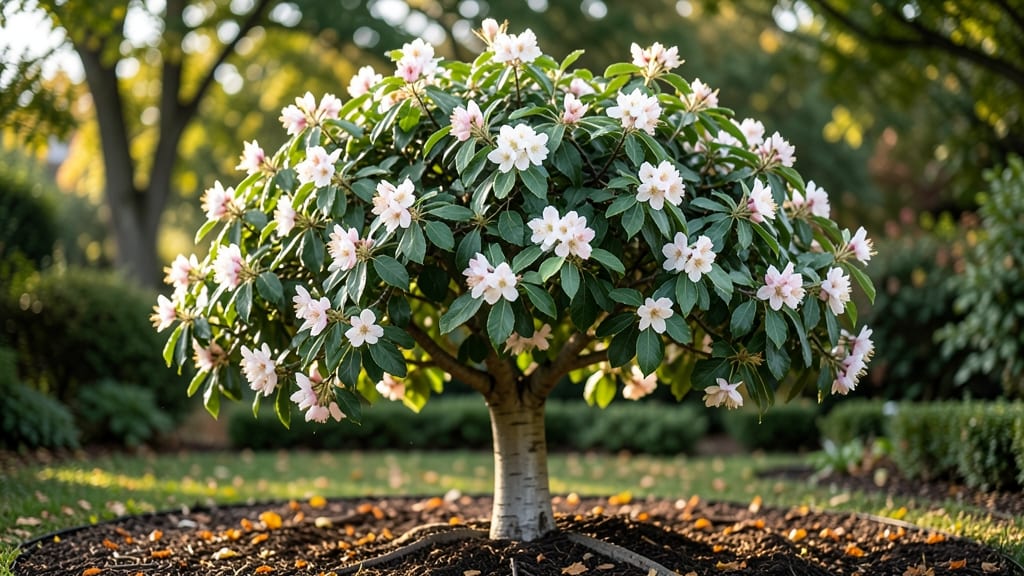
Five-petaled white blooms transform any garden into a dreamy spring canvas. 🌸 These trees—like flowering crabapple, dogwood, or magnolia—bring effortless elegance with their delicate petals and fragrant displays. I’ve used them as focal points, borders, and even underplanting anchors, and the impact is always stunning.
Each variety has its own star moment: crabapples burst with color in early spring, dogwoods offer heart-shaped blooms in late spring, and magnolias perfume the air in early summer. Their white petals contrast beautifully with deep green foliage, while their shapes add architectural interest.
Plant them where you’ll see them daily—they’re the kind of beauty that makes neighbors pause and ask, "What’s that?"
Pair them with shade-loving perennials like hostas or ferns for a lush understory, or let them stand alone as a dramatic centerpiece. Pruning is minimal—just remove dead wood after blooming to keep them looking their best.
The result? A garden that feels like a curated art piece, not just a yard.
Perfect for small urban yards, large estates, or even container plantings (dwarf varieties exist!). These trees grow with you, offering seasonal interest from spring blossoms to fall color. Let’s make your garden the talk of the neighborhood—one petal at a time.
Behind The Scenes Of Five-Petal Blooms
Those delicate, five-petaled white flowers gracing your trees aren’t just a happy accident—they’re the result of a fascinating blend of genetics, environmental cues, and botanical timing. Understanding why these blooms appear the way they do helps you nurture them better (or even identify them with confidence!).
Let’s peel back the layers to see what’s really going on.
Most trees with five-petaled white flowers follow a genetic blueprint hardwired into their species. The number of petals—whether five, four, or more—is often determined by the ABC model of floral organ identity, a set of genes that dictate how flowers develop.
For five-petaled blooms, the C-class genes (like _AGAMOUS_) work in harmony with A-class genes (like _APETALA1_ and _APETALA2_) to create the classic pentamerous (five-part) structure.
💡 Pro Tip: Some trees, like the Crabapple or Dogwood, have this trait locked in, while others (like certain Magnolia hybrids) might produce variations due to selective breeding. If you’re seeing consistent five-petal blooms, you’re likely dealing with a species where this trait is dominant.
Not all trees bloom at the same time, and the timing of five-petaled white flowers often depends on:
- Day length (photoperiodism): Many trees, like Cherry blossoms or Bradford Pear, are long-day plants. They detect increasing daylight in spring and trigger flowering hormones (florigen) to produce buds. Without enough light, blooms may fail to open fully or appear sparse.
- Temperature cues: Cold winters (vernalization) break dormancy in some species (e.g., Apple trees), while others (like Fringe Trees) need warm spells to kickstart blooming. A sudden heatwave after a cold snap can cause aborted flowers or deformed petals.
- Rainfall and humidity: Too little moisture can stress the tree, leading to smaller, underdeveloped flowers. Conversely, excessive rain during bloom can cause petals to bleach or drop prematurely.
🌡️ Actionable Tip: If your tree’s blooms are late or sparse, check its chill hours (the number of hours below 45°F it needs). Some modern cultivars may struggle in warmer climates—consider species like Serviceberry or Eastern Redbud, which adapt better to mild winters.
A tree’s flowers are energy-intensive—they compete with leaves, roots, and fruit for nutrients. If the soil is off-balance, your five-petaled blooms might suffer in subtle (or obvious) ways:
| Nutrient Issue | Symptom in Flowers | How to Fix It |
|---|---|---|
| Nitrogen deficiency | Pale petals, slow bloom opening, or fewer flowers overall. | Apply balanced fertilizer (e.g., 10-10-10) in early spring. Avoid overdoing it—too much nitrogen = more leaves, fewer blooms. |
| Phosphorus shortage | Small, underdeveloped petals or blooms that fail to open. | Use bone meal or rock phosphate in late winter. Test soil pH—ideal range for most flowering trees is 6.0–7.0. |
| Potassium excess | Dark, leathery petals that drop early or develop brown edges. | Flush soil with water to leach excess potassium. Use wood ash sparingly if soil tests show high pH. |
| Micronutrient deficits (e.g., boron, zinc) | Blossoms may split or deform, or petals grow unevenly. | Apply a chelated micronutrient spray or use Epsom salt (for magnesium) if leaves show yellowing between veins. |
✨ Bonus Insight: Some trees, like Hawthorn, are self-pollinating but still need good air circulation to avoid fungal issues (e.g., powdery mildew) that can distort petals. Prune to improve airflow if blooms look mushy or discolored.
Not all five-petaled white flowers are lost to genetics or weather—sometimes, tiny invaders are to blame. Here’s what to watch for:
- Japanese Beetles:
These metallic-green pests skeletonize leaves and chew petals, leaving ragged edges. Heavy infestations can prevent buds from opening.
🔥 Solution: Handpick beetles into soapy water or use neem oil as a deterrent.
- Scale Insects:
These sap-suckers coat stems/buds with sticky honeydew, attracting sooty mold. Infested flowers may fail to bloom or produce stunted petals.
👨🍳 Solution: Scrape off scale with a plastic scraper or apply horticultural oil in dormant season.
- Fire Blight (Bacterium):
Causes blackened, wilted petals and oozing cankers on branches. Common in Crabapple and Pear trees.
🔪 Solution: Prune infected branches 6 inches below the damage and sterilize tools with rubbing alcohol.
- Powdery Mildew (Fungus):
Creates a white, powdery coating on buds/petals, causing them to curl or drop.
🌡️ Solution: Improve airflow, avoid overhead watering, and spray with baking soda mix (1 tsp baking soda + 1 quart water + a drop of soap).
🎯
If your tree with five-petal white flowers isn’t thriving, don’t worry—most issues have simple, effective fixes. Below, we’ll tackle common problems with step-by-step solutions, from quick adjustments to long-term care. Prevention tips are included to keep your tree blooming beautifully for years! Problem: Yellowing leaves, holes, or sticky residue on branches?
Cause: Aphids, spider mites, or fungal infections (like powdery mildew) often target these delicate blooms. How to Treat It: 💡 Prevention Tip: Problem: Drooping leaves, wilting blooms, or brown edges?
Cause: Overwatering (root rot) or underwatering (drought stress) disrupts nutrient uptake. How to Fix It: 💡 Prevention Tip: Problem: Leggy growth, sparse blooms, or pale leaves?
Cause: Too much shade or harsh sun can stress your tree. How to Adjust It: 💡 Prevention Tip: Problem: Slow growth, small flowers, or stunted branches?
Cause: Poor soil quality or nutrient deficiencies (especially nitrogen, phosphorus, or potassium). How to Fertilize: 💡 Prevention Tip: Final Note: Most issues are reversible with patience and consistency. Start with one fix (like watering or pruning) and observe changes over 2–4 weeks before tackling others. Happy gardening! 🌸 Classic options include Flowering Crabapple (Malus spp.), Cornus florida (Dogwood), and Magnolia stellata. Other standouts are Eastern Redbud (Cercis canadensis) and Fringe Tree (Chionanthus virginicus). Each offers slightly different bloom timing—crabapples bloom early spring, dogwoods peak in late spring, and redbuds shine in early spring. This happens due to anthocyanin pigments (natural plant compounds) reacting to light, temperature, or pH. For example, Dogwood flowers may start white but develop pink edges in cooler mornings. The intensity fades as temperatures rise—it’s completely normal and adds visual interest! Dwarf varieties like ‘Centennial’ Crabapple or ‘Royal Purple’ Smokebush thrive in containers (15+ gallon pots). Use well-draining soil and ensure they get 4–6 hours of sunlight daily. For small yards, consider Serviceberry (Amelanchier)—its compact form and white spring blooms make it perfect for tight spaces. Dogwood blooms are heart-shaped with four bracts (modified leaves) that look like petals, while Crabapple flowers have 5 distinct petals clustered in flat-topped sprays. Dogwoods also have smooth bark and red stems, while Crabapples develop small fruit clusters after flowering. Yes! Five-petaled white flowers are bee magnets—especially Crabapple and Magnolia, which produce nectar. Plant them near pollinator-friendly perennials like lavender or coneflowers to create a thriving ecosystem. Just avoid spraying pesticides during bloom time to protect beneficial insects.Revive & Protect Your Blooming Trees
Frequently asked questions
Which trees have white flowers with exactly five petals?
Why do some five-petaled white flowers appear pink or blush-colored?
Can I grow these trees in containers or small spaces?
How do I tell the difference between Dogwood and Crabapple flowers?
Will these trees attract bees or other pollinators?