
Pruning
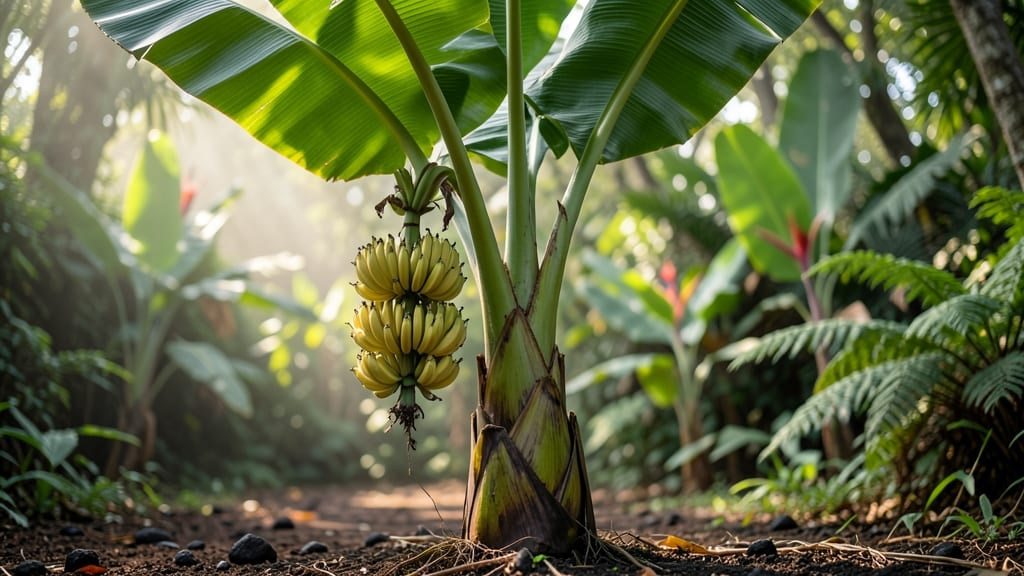
A banana tree is called a Musa plant, belonging to the Musaceae family, though it’s not a true tree—it’s a giant herbaceous flowering plant with a pseudostem made of tightly packed leaves.
A banana tree is actually a Musa plant, not a tree at all—it’s a massive herb with a unique structure. 🌿 The pseudostem, which looks like a trunk, is formed by tightly packed leaf bases that never truly grow into wood.
This classification explains why banana plants grow so quickly and why their "trunks" are hollow inside. Most commercial bananas come from cultivars like Musa acuminata or Musa balbisiana, but there are over 1,000 varieties worldwide, each with distinct growth habits and fruit characteristics.
What many people don’t realize is that the term "banana tree" is a common misnomer—these plants belong to the Musaceae family, which includes both edible bananas and ornamental varieties. The botanical name Musa comes from the Arabic word for the fruit, reflecting its ancient trade routes.
Whether you're growing Cavendish bananas or Lady Finger varieties, understanding this classification helps explain their rapid growth and specific care needs.
💡 In This Article
- Banana Plant Classification: Musa Species and Botanical Facts
- Common Names for Banana Plants: Regional and Cultivar Variations
Banana plant classification: Musa Species and Botanical Facts
The scientific name Musa originates from the Arabic word "mūz," which was adopted by Latin botanists in the 18th century. This genus contains over 70 species, but only a handful—like Musa acuminata and Musa balbisiana—produce edible fruit.
The Musa acuminata species, for example, includes the familiar Cavendish banana, while Musa balbisiana contributes to plantains, which are starchy and less sweet. These species are diploid (2n=22 chromosomes), but most commercial bananas are triploid hybrids (3n=33 chromosomes), which explains their seedlessness.
What truly sets banana plants apart is their classification as giant herbaceous plants rather than trees. Their iconic "trunk" is actually a pseudostem formed by overlapping leaf sheaths that never lignify (harden into wood).
This structure allows the plant to grow up to 25 feet tall in just 9-12 months—a growth rate that would be impossible for a true tree.
The inflorescence (flower cluster) emerges from the pseudostem's base, producing both male and female flowers, with the female flowers developing into bunches of bananas.
The botanical distinction matters because it explains key behaviors, like how the plant's "trunk" collapses after fruiting. Unlike trees, which have woody support structures, banana plants rely entirely on their leaf sheaths for stability. This is why they require staking or support in windy conditions.
The plant's rapid growth also means it has a relatively short lifespan—typically 3-5 years—before it becomes too energy-intensive to maintain its massive leaf structure.
Understanding these botanical traits helps explain why banana plants are so sensitive to environmental conditions. Their pseudostems lack protective bark, making them vulnerable to wind damage, pests, and fungal infections.
The inflorescence, which is the plant's reproductive center, is particularly delicate—any stress during this phase can lead to reduced fruit quality or even complete failure. This is why commercial growers monitor temperature fluctuations, humidity levels, and water stress so carefully during the flowering stage.
Another fascinating aspect is the plant's rhizomatous root system, which spreads horizontally underground. This allows banana plants to reproduce vegetatively through suckers (offshoots) rather than seeds. The mother plant will produce 1-3 suckers per year, each capable of growing into a new plant.
This asexual reproduction ensures genetic consistency, which is why most commercial banana varieties are clones of their parent plants.
For gardeners, knowing these botanical facts translates to better care practices. For instance, pruning should focus on removing dead leaves and flower stalks rather than cutting into the pseudostem, which could introduce pathogens.
The plant's rapid growth also means it requires nutrient-rich soil and regular fertilization to support its massive leaf area. Understanding that bananas are herbs—not trees—helps explain why they thrive in tropical climates where other plants might struggle with their unique growth requirements.