
Pests and Diseases
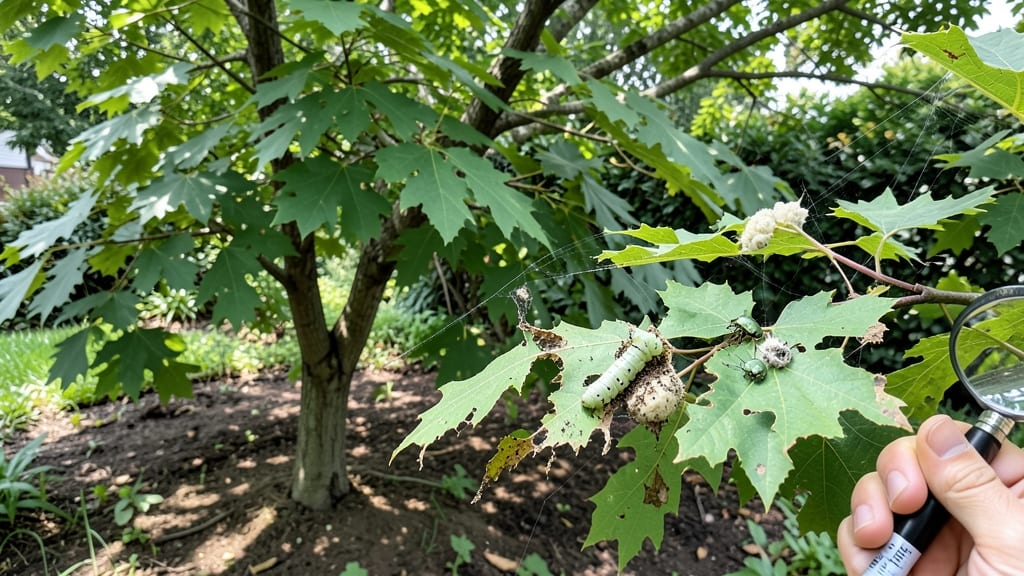
When you notice your tree leaves are being eaten, the culprit is usually one of five common pests—caterpillars, Japanese beetles, aphids, deer, or rabbits—each leaving unique bite marks or damage patterns.
Identifying the exact pest matters because their feeding habits differ dramatically.
Deer and rabbits typically create clean, jagged edges along leaf perimeters, while caterpillars and beetles leave behind irregular holes or skeletonized foliage. 🌿 Japanese beetles, for instance, chew through leaves in a way that creates a lacy pattern, often targeting roses and fruit trees first.
Aphids, on the other hand, rarely chew leaves—they suck sap, leaving sticky residue called honeydew. The key is examining both the damage and any accompanying signs like frass (insect droppings) or chewed stems.
Once you've pinpointed the pest, your next step depends on the severity of the damage.
For caterpillars or beetles, handpicking during early infestations can be surprisingly effective, while aphids often respond well to a strong spray of water. 🐞 Organic solutions like neem oil or insecticidal soap work for most soft-bodied insects, though they require consistent application.
For larger animals like deer or rabbits, physical barriers such as fencing or repellent sprays become essential. The timing of treatment is crucial—spring and summer are peak seasons for most leaf-eating pests, so proactive measures during these months can prevent major damage.
💡 In This Article
- Identifying Tree Leaf Damage Patterns by Pests
- Natural and Chemical Solutions for Leaf-Eating Pests
Identifying tree leaf damage patterns by pests
Caterpillars leave behind one of the most distinctive damage patterns—irregular holes with jagged edges and frass (insect droppings) scattered below.
These larvae often feed on the undersides of leaves, creating skeletonized patterns where only the veins remain. 🌿 Japanese beetles, however, create a signature "windowpane" effect by chewing between leaf veins, leaving a lacy pattern that's easily identifiable.
Their feeding also exposes the leaf's spongy mesophyll layer, giving damaged leaves a translucent appearance.
Aphids rarely chew leaves—they pierce plant tissues with their needle-like mouthparts to suck sap, leaving behind a sticky residue called honeydew. This residue often attracts ants and can lead to sooty mold growth on leaves.
Deer and rabbits, on the other hand, create clean, straight-edge damage along leaf perimeters, often starting from the outer edges and working inward. Their bites are typically 1-2 inches wide and can completely remove entire leaves from young trees.
The location of damage offers key clues too. Caterpillars and beetles often target upper canopy leaves, while aphids prefer tender new growth.
Deer and rabbits typically focus on lower branches within 5-6 feet of the ground, where they can reach without climbing. 🐇 Noticeable differences also appear in the timing of feeding—Japanese beetles are most active during late morning to early afternoon when temperatures exceed 75°F, while caterpillars feed throughout the night.
Another critical distinction lies in the size of the damage. Caterpillar feeding creates holes ranging from 1/8 to 1/2 inch wide, while Japanese beetle damage appears as 1/4 to 3/4 inch notches along leaf edges.
Aphid-infested leaves may appear curled or distorted due to their sap-sucking activity. For deer and rabbit damage, look for cleanly severed stems at 45-degree angles, which these animals create when pulling leaves completely off branches.
Seasonal patterns also help narrow down the culprit. Caterpillars typically appear in late spring to early summer, while Japanese beetles peak in July and August. Aphid infestations often occur in warm, dry conditions during spring and fall.
Deer and rabbit activity increases during dawn and dusk when they're most active feeders. These seasonal clues combined with damage patterns can help you identify the specific pest affecting your tree.
One often-overlooked indicator is the presence of eggs or pupae. Caterpillars often lay eggs in clusters on the undersides of leaves, while Japanese beetle grubs overwinter in soil.
Checking both the foliage and soil around your tree can provide additional confirmation of which pest you're dealing with. 🔍 This multi-sensory approach—examining damage patterns, timing, and physical signs—gives you the most accurate identification possible.