
Pests and Diseases
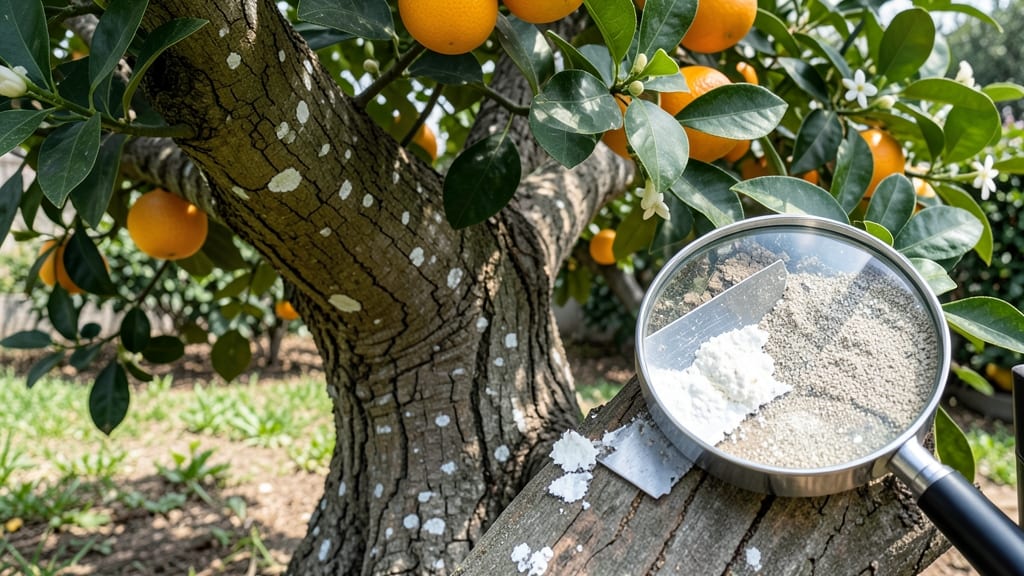
White spots creeping up your orange tree trunk? That powdery film could mean powdery mildew—or worse, a bacterial infection setting in. 🌿 I’ve seen this turn a healthy tree into a sad, spotty mess if ignored, but the good news is most cases respond well to early action.
The first step is figuring out exactly what you’re dealing with, because different causes need different fixes.
Most of the time, those white spots are powdery mildew—a fungal infection that thrives in shady, humid conditions. But scale insects or even a bacterial infection could be the culprit, especially if the spots are crusty or oozing.
The key is checking for texture: powdery mildew feels like flour dusting the bark, while bacterial spots might look wet or sticky. Once you know the cause, you can tackle it with organic sprays or simple pruning.
With the right treatment, your tree can bounce back to full health in just a few weeks. I’ve restored trees that looked hopeless with a mix of neem oil, sulfur spray, and proper airflow adjustments.
The goal isn’t just to remove the spots—it’s to stop them from coming back, so your orange tree stays strong and productive for years. Let’s get it fixed.
This works for citrus trees, avocados, and even fruit trees in your backyard. The same principles apply whether you’re dealing with a young sapling or a mature tree—just adjust the scale of treatment. Here’s how to diagnose and cure it for good.
Root Causes Of Trunk Spots
White spots on your orange tree trunk aren’t just cosmetic—they’re often a warning sign from nature. Understanding the underlying causes helps you address the issue before it spreads. Below, we break down the most common reasons these spots appear, backed by science and actionable insights.
Fungi thrive in warm, humid conditions, making citrus trees prime targets. The most common culprits include: - **Citrus Canker (Xanthomonas citri): This bacterial infection (often misdiagnosed as fungal) creates raised, oily spots that can ooze and spread rapidly.
It weakens the tree’s vascular system, blocking nutrient flow. - Anthracnose (Colletotrichum spp.): Thrives in wet weather, producing sunken, white-to-gray spots with dark borders.
It attacks both leaves and bark, compromising the tree’s structural integrity. - Powdery Mildew (Oidium spp.): While more common on leaves, severe cases can coat the trunk with a white, powdery film. It clogs stomata (pores), stunting growth and reducing fruit yield.
Why it happens**: Fungi spores lurk in soil, water, or old plant debris. When conditions align—high humidity (above 75%), poor airflow, or wounds from pruning—they germinate and infect the bark. Weakened trees (due to stress, poor nutrition, or drought) are especially vulnerable.
Insects like scale, aphids, or citrus leaf miners don’t just feed on sap—they leave behind sticky residue (honeydew) that attracts sooty mold (Capnodium spp.). This black, fuzzy growth often appears alongside white or grayish spots, masking the true pest problem.
Why it happens:
- Scale insects (e.g., Citrus red scale) attach to bark, injecting toxins that kill bark cells, creating white or yellowish patches.
- Aphids cluster in crevices, excreting honeydew that ferments into a white, crusty substance when mixed with mold spores.
- Citrus psylla (Diaphorina citri) spreads greening disease, which causes corky, white bark lesions as the tree’s immune system overreacts.
Red flag: Check for tiny bumps, webs, or ants (they farm aphids) near the spots.
Extreme conditions—whether too hot, too cold, or too wet—can trigger physiological responses that manifest as white spots. These aren’t infectious but signal distress that opens doors for pathogens.
Why it happens:
- Sun scald: Prolonged afternoon sun on thin-barked trees causes white or silver patches (similar to sunburn). Common in young trees or those recovering from pruning.
- Frost or freeze damage: Ice crystals rupture bark cells, leaving white, dead patches. Ever seen a tree with "frost rings"? That’s nature’s way of showing where the cold burned it.
- Water stress: Overwatering or drought weakens the bark’s protective layer, making it susceptible to splitting or fungal invasion. White spots may appear where the bark peels or cracks.
Pro tip: 🌡️ Monitor your tree’s microclimate. Use shade cloth in summer or mulch to regulate soil temperature and moisture.
Overzealous pruning, improper pesticide use, or even well-meaning fertilizers can leave chemical burns that look like white spots. These injuries are sterile (non-infectious) but create entry points for diseases.
Why it happens:
- Pruning wounds: Jagged cuts expose fresh wood, which dries into white, dead tissue. If not sealed with pruning paste, fungi like Botryosphaeria move in.
- Herbicide drift: Glyphosate or other broadleaf herbicides can bleach bark if they spray-drift onto the trunk.
- Salt buildup: Over-fertilizing with synthetic salts (e.g., urea) or using brackish water for irrigation causes white, crusty deposits that disrupt nutrient uptake.
Action step: Always use sharp, sterilized tools when pruning and flush the trunk with water after applying chemicals.
Some white spots are simply part of the tree’s life cycle. Older citrus trees develop graft union reactions (where the rootstock meets the scion) or lenticel discoloration—tiny white or gray spots where the bark breathes.
Why it happens:
- Lenticels: These porous spots allow gas exchange but can turn white or gray as the tree ages or in response to drought.
- Graft unions: If the rootstock and scion are incompatible, the junction may develop white, corky growths as the tree compensates for stress.
- Citrus variegation: Rarely, viral infections (e.g., Citrus tristeza virus) cause mosaic patterns on bark, including white streaks or spots.
When to worry: If spots are spreading, oozing, or accompanied by leaf drop, it’s likely a disease—not just aging.
Fixing White Spots on Tree Bark
Now that you’ve identified the culprit behind those pesky white spots on your orange tree trunk, it’s time to take action! The right approach depends on the cause—whether it’s a fungal infection, scale insects, or environmental stress.
Below are practical, organic solutions tailored to each issue, plus prevention tips to keep your tree thriving.
If the white spots are fuzzy, powdery, or spreading like a blanket, you’re likely dealing with a fungal infection. These pathogens thrive in humid conditions and can weaken your tree over time.
Step-by-Step Treatment
🔥 Prune Infected Areas
- Use sterilized pruning shears (wipe with rubbing alcohol between cuts) to remove branches with heavy white spots.
- Dispose of clippings in the trash (not compost) to prevent reinfection.
🍳 Apply Organic Fungicide
- Mix 1 tablespoon of baking soda + 1 teaspoon of horticultural oil + 1 quart of water in a spray bottle.
- Add a drop of dish soap (like Dawn) to help the solution stick.
- Spray thoroughly on the trunk, branches, and undersides of leaves in the early morning or evening (avoid direct sunlight).
- Reapply every 7–10 days until the spots disappear.
👨🍳 Boost Tree Immunity
- Neem oil spray (1% solution) is a natural fungicide and insect repellent. Spray every 2 weeks during active growth.
- Compost tea (homemade or store-bought) strengthens the tree’s defenses. Apply as a soil drench or foliar spray.
🌡️ Improve Airflow & Light
- Thin out dense foliage to reduce humidity near the trunk.
- Avoid overhead watering—water at the base instead to keep leaves dry.
💡 Pro Tip: If the infection persists, try a copper fungicide spray (like Bonide Copper Fungicide), which is effective against stubborn fungal growth.
If the white spots are sticky, waxy, or crawling, you’re likely dealing with sap-sucking pests like scale or mealybugs. These insects excrete honeydew, which attracts sooty mold (another white, fuzzy culprit).
Step-by-Step Treatment
🔪 Knock Off Pests Physically
- Blast off pests with a strong stream of water from a hose (early morning works best).
- For stubborn infestations, wrap the trunk in sticky tree bands (like Tanglefoot) to trap crawling insects.
🥘 Diatomaceous Earth (DE) Dust
- Sprinkle food-grade DE around the base of the tree and on branches.
- Reapply after rain—DE works by dehydrating pests but loses effectiveness when wet.
🍎 Homemade Pest Spray
- Mix 1 liter of water + 1 tablespoon of neem oil + 1 tablespoon of rubbing alcohol + 1 teaspoon of dish soap.
- Shake well and spray directly on infested areas (especially crevices and leaf undersides).
- Repeat every 5–7 days until pests are gone.
🎯 Encourage Natural Predators
- Ladybugs, lacewings, and parasitic wasps eat scale and mealybugs. Attract them with native plants like dill, fennel, or marigolds.
✨ Pro Tip: If honeydew is present, wipe it off with a damp cloth to prevent sooty mold buildup.
If the white spots are chalky, dry, or flaky (not fuzzy or sticky), they could be lime deposits from hard water or sun scald from temperature fluctuations.
Step-by-Step Treatment
💧 Adjust Watering Practices
- If your water is hard (high in calcium), collect rainwater for irrigation.
- Flush the soil with distilled or filtered water to reduce mineral buildup.
🌿 Protect from Sunburn
- Wrap the trunk with tree wrap (available at garden centers) during extreme heat or cold snaps.
- Mulch heavily (3–4 inches of organic mulch) to regulate soil temperature.
🔥 Gentle Scrubbing (For Lime Deposits)
- Use a soft brush and warm, soapy water to gently scrub the trunk.
- Rinse with vinegar water (1:1 ratio) to dissolve mineral deposits, then rinse with clean water.
💡 Pro Tip: If the bark is peeling or cracked, avoid scrubbing—focus on improving moisture retention with proper mulching.
Once your tree is spot-free, keep it that way with these easy maintenance habits:
✅ Regular Inspections – Check the trunk and leaves monthly for early signs of pests or fungi. ✅ Proper Pruning – Remove dead or crowded branches to improve airflow. ✅ Balanced Fertilizing – Use organic citrus fertilizer (like alfalfa meal or fish emulsion) to avoid nutrient imbalances. ✅ Seasonal Cleanup – Rake and dispose of fallen leaves to reduce fungal spores. ✅ Avoid Overwatering – Water deeply but infrequently to prevent fungal growth.
By tackling the root cause and following these simple, organic methods, your orange tree should bounce back with healthier bark and happier fruit in no time! 🍊✨
Frequently asked questions
Are white spots on my orange tree trunk always dangerous?
Not necessarily! While many white spots signal fungal infections or pests, some are harmless. Tiny white lenticels (pores for gas exchange) or natural bark variations are normal. Only worry if spots are spreading, oozing, or accompanied by leaf drop—these are red flags for diseases like citrus canker or anthracnose.
How do I tell if my tree has powdery mildew vs. scale insects?
Check the texture: powdery mildew feels like flour dusting the bark, while scale insects create waxy bumps. For mildew, use a magnifying glass—you’ll see fuzzy white webbing. For scale, look for tiny brown or white crusts that don’t brush off easily. Both leave sticky residue (honeydew), but mildew spreads faster in humid conditions.
Can I use store-bought fungicides on citrus trees?
Yes, but choose organic options first! Copper fungicides (like Bonide) work well for stubborn infections, while neem oil or potassium bicarbonate sprays are safer for edible trees. Always follow label instructions—overuse can harm beneficial insects. For severe cases, consult a local extension service for citrus-specific recommendations.
Will pruning help if my tree already has white spots?
Prune infected branches below the spots with sterilized tools to prevent spread. Remove any dead or crowded branches to improve airflow—this reduces humidity near the trunk, which fungi love. Dispose of clippings in the trash (not compost) to avoid reinfection. Thin foliage by 20-30% for best results.
How often should I check my orange tree for these spots?
Inspect your tree monthly during growing seasons (spring-fall). After heavy rains or humid spells, check sooner—these conditions trigger outbreaks. Pay special attention to the undersides of leaves and the base of branches where moisture lingers. Early detection makes treatments much easier!