
Pruning
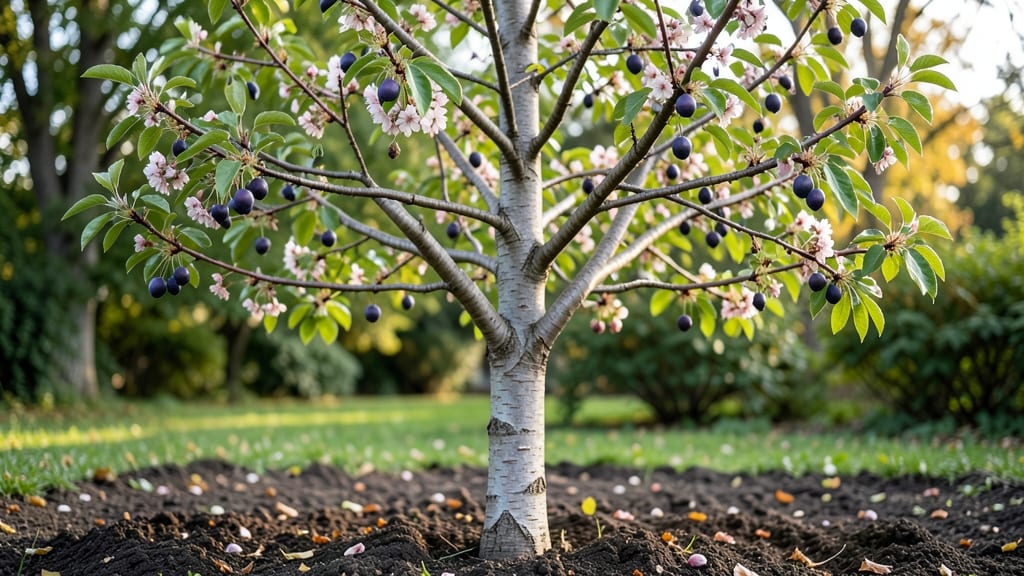
Your American plum tree's bark tells a story—rough and peeling in spring, then smoothing into a smooth, fungal-resistant shield by summer. 🌳 The trick to keeping it healthy lies in understanding its natural rhythms and when to step in with your pruners.
I've learned the hard way that ignoring bark issues leads to cracks that invite disease, but with the right care, your tree's trunk stays strong and resilient year-round.
Healthy American plum bark starts rough and textured, almost like sun-baked clay, but matures into a smooth, reddish-brown surface over time. Watch for dark streaks or oozing sap—these are red flags for fungal infections or pest damage.
The key is year-round inspections, especially after storms or extreme temperature swings, when bark is most vulnerable. A quick rub with your fingers can reveal whether the bark is firm or crumbly, a dead giveaway for trouble beneath the surface.
Pruning isn't just about shaping branches—it's about protecting that bark. Thin out crowded limbs in late winter to improve airflow, and remove any dead or diseased wood immediately. This keeps the trunk dry and reduces hiding spots for pests.
With consistent care, you'll end up with a tree that looks sturdy and vibrant, not just from the leaves down but all the way to the roots.
This method works for both young saplings and mature trees, though larger trunks may need occasional thinning of lower branches to prevent moisture buildup. The payoff? A tree that stands tall, disease-free, and ready to produce plums for decades.
Start with these basics, and you'll be amazed at how much difference a little attention makes.
📚 In This Guide
- What you need
- Instructions
- Tips and common mistakes
- Wrapping up and next steps
What you need
- ● American plum tree bark (or freshly pruned branches) – Focus on mature trees with thick, rough bark (ideal for grafting or mulching).
- ● Pruning shears or loppers – Sharp, bypass-style (for clean cuts) or anvil-style (for thicker branches). Size: 6–10" blades for small branches, 12–16" for larger limbs.
- ● Pruning saw – For branches 2+ inches thick. Look for a curved-tooth design to prevent bark tearing.
- ● Disinfectant (70% isopropyl alcohol or bleach solution) – 1 part bleach to 9 parts water to sterilize tools between cuts and prevent fungal spread.
- ○ Pruning sealant (optional but recommended) – Tree wound paint or pruning paste to seal cuts larger than ½ inch and reduce disease risk.
- ● Gloves – Heavy-duty, cut-resistant to protect hands from thorns and rough bark.
- ● Safety glasses – ANSI-rated to shield eyes from debris.
- ● Grafting knife or peeling tool – For harvesting bark strips (if using for grafting or mulch). Width: ¼–½ inch for clean peeling.
- ● Tarp or drop cloth – To collect bark debris and keep your workspace clean.
- ● Wheelbarrow or bucket – 5+ gallon capacity for hauling pruned bark/mulch.
- ○ Shovel or spade – For amending soil with bark mulch (optional but great for long-term tree health!).
- ● ✨ Timing matters: Prune dormant season (late winter/early spring) for best fungal resistance, but light maintenance can happen year-round.
- ● 🌡️ Tool care: Sharpen blades before pruning to avoid crushing bark—dull tools cause jagged cuts that invite disease.
- ● 🎯 Bark harvest: Peel bark from healthy, disease-free branches only. Avoid bark with cracks or oozing sap.
How to prune American plum trees for healthy bark year-round
Here's my foolproof method for keeping those branches tidy and the trunk fungus-free—no special tools needed.
🌿 Step 1: Inspect and Mark Branches for Removal
Start in late winter or early spring before buds swell. Look for branches that cross, rub against each other, or grow inward—they'll eventually create wounds where fungi like silver leaf can take hold. I also mark any dead, diseased, or broken branches with a small piece of masking tape.
Use your fingers to gently test branch flexibility. Healthy wood bends slightly; brittle or hollow branches snap easily and need removal. Pay special attention to the trunk's lower 6 feet—this is where fungal infections often start due to moisture buildup.
✂️ Step 2: Prune at the Right Angle and Time
Make cuts just outside the branch collar—the swollen area where the branch meets the trunk. I angle my pruners downward at a 45-degree angle, cutting cleanly without tearing the bark. For larger branches over ½ inch thick, I make a second cut 6-12 inches out from the trunk to avoid bark stripping.
Prune on a dry day when the tree isn't stressed. Avoid rainy periods—wet bark stays damp too long, inviting fungal spores. After each cut, I wipe my pruners with rubbing alcohol to prevent spreading any hidden diseases between branches.
🪴 Step 3: Smooth Rough Edges and Apply Protective Sealant
Use a small pruning knife to smooth any jagged edges left after cutting. The goal is to create a clean, rounded edge that won't collect moisture. For larger wounds, I apply a thin layer of pruning sealant (like Tanglefoot Tree Wound Pruning Sealant) to protect against fungal entry.
Don't overdo the sealant—just enough to cover the wound. Too much creates a barrier that can trap moisture. I focus on cuts over ½ inch wide, as smaller wounds heal naturally. This step is especially important for American plums, which are prone to silver leaf fungus.
☀️ Step 4: Monitor and Maintain Through the Seasons
After the main pruning, check the tree every 4-6 weeks for new growth or signs of stress. Remove any "water sprouts"—those fast-growing vertical shoots that pop up along the trunk. They're weak points where fungi can enter and don't contribute to fruit production.
In late summer, do a light cleanup of any dead leaves or twigs that might harbor fungal spores over winter. I also make sure the base of the tree has good airflow by keeping surrounding grass or mulch 3-4 inches away from the trunk. Proper spacing prevents moisture buildup that leads to bark rot.
Tips & tricks for pruning American plum trees the right way
Here's what I learned after years of watching plum trees thrive—and others struggle with fungal infections.
Timing is Everything: The late winter/early spring window before buds swell is critical because the tree isn't actively growing yet. This minimizes stress and allows wounds to heal faster. I've seen trees pruned in summer develop fungal infections within weeks because the sap flow creates perfect conditions for spores.
Tool Sanitation Secret: After each cut, I wipe my pruners with rubbing alcohol—not just between trees, but between branches on the same tree. I keep a small bottle in my tool belt. This prevents spreading latent infections that might be hiding in the bark crevices. Think of it like hand sanitizer for your pruning tools.
Branch Collar Respect: Never cut flush with the trunk—always leave that swollen branch collar intact. It's the tree's natural healing tissue, and cutting into it creates wounds that take years to close. I use a small piece of masking tape on my pruners as a visual guide to stop exactly where the collar begins.
Seasonal Maintenance Hack: The 4-6 week monitoring schedule works best if you mark your calendar with seasonal reminders. I use my phone's "Notes" app to schedule checks for late spring, summer, and fall. This prevents those water sprouts from growing unnoticed—those vertical shoots are silent fungal invitations.
Pro Tips for American Plum Tree Bark
- Here's what I learned after years of watching plum trees thrive—and others struggle with fungal infections.
- Timing is Everything: The late winter/early spring window before buds swell is critical because the tree isn't actively growing yet.
- Tool Sanitation Secret: After each cut, I wipe my pruners with rubbing alcohol—not just between trees, but between branches on the same tree.
Frequently asked questions
Got questions about pruning American plum tree bark for a smooth, fungal-resistant trunk? Here are some answers to help you navigate the process like a pro!
When is the best time to prune American plum tree bark?
The ideal time is late winter to early spring (before buds swell) or summer after harvest. Avoid pruning in fall—it can stress the tree and invite fungal infections. If you must prune in summer, do it after fruit harvest to reduce stress.
How do I know if I’m pruning too much?
Never remove more than 25% of the tree’s canopy in one season. Over-pruning weakens the tree, making it vulnerable to disease. Look for thin, sparse branches or excessive bark exposure—signs you’ve gone too far. Stick to 3-5 years of growth per cut for healthy bark.
What if my tree’s bark starts showing fungus after pruning?
Fungal spores thrive on fresh cuts, but you can prevent outbreaks by sterilizing tools with rubbing alcohol before/after pruning. If fungus appears, prune out infected areas immediately and apply copper fungicide. Avoid wound dressings—they trap moisture and worsen rot.
Can I use American plum tree bark for mulch or compost?
No—never use diseased or treated bark for mulch or compost. Healthy bark can decompose slowly, but it’s best for mulch in small amounts (1-2 inches thick). For compost, chop it finely and mix with greens to speed up breakdown. Disinfect tools after handling bark to avoid spreading pathogens.
Should I prune American plum trees in cold climates?
Yes, but wait until after the last frost (typically late winter). Cold climates can delay sap flow, so prune on warm, dry days (above 40°F). Avoid heavy pruning in extreme cold—it stresses the tree. If your area has harsh winters, light pruning in summer is safer.
Pro Tip: Always prune at a 45-degree angle just outside the branch collar (the swollen area where the branch meets the trunk). This promotes faster healing and reduces fungal entry points!
Wrapping up and next steps
American plum tree bark thrives with year-round pruning—keeping trunks smooth, disease-resistant, and structurally sound. By following the right techniques and timing, you’ll protect your tree from fungal threats while promoting healthier growth. Now’s the perfect time to grab those pruners and give your tree the care it deserves! 🌳✨
🌱 Your Next Step:
- Schedule a monthly check of your tree’s bark and branches.
- Start with small cuts to avoid stressing the tree.
- Share your progress—tag us in your pruning pics! 📸