
Pests and Diseases
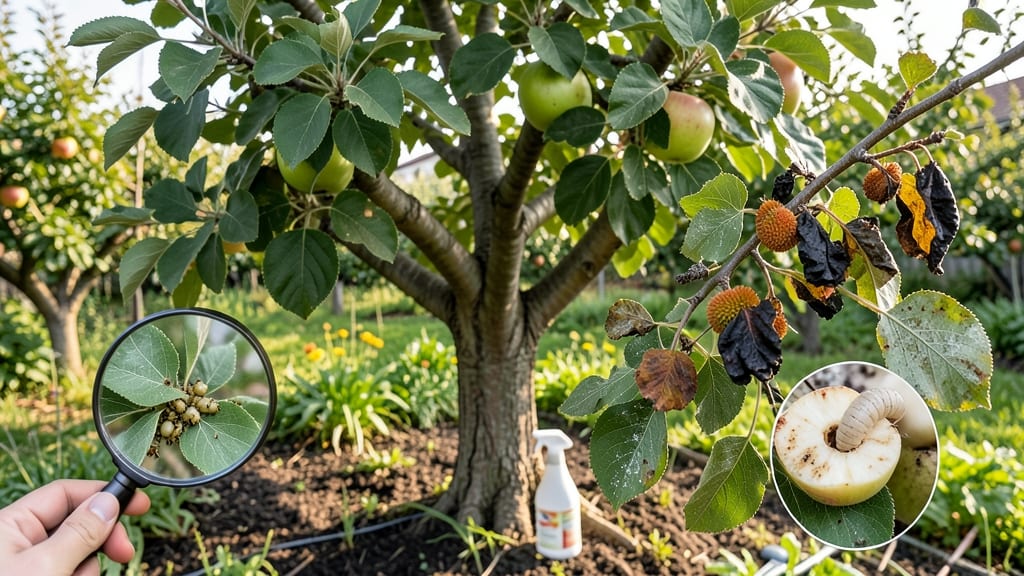
Apple trees fight pests and diseases like codling moths and apple scab every season—until you know these fast-acting organic fixes. 🌱 I’ve saved my own orchard from total collapse using simple, non-toxic methods that stop the spread before it ruins your harvest.
The key? Acting early with the right treatments, not waiting until the damage is done.
Most problems start with tiny signs—yellowing leaves, tiny worms in fruit, or black spots on bark. Aphids cluster on new growth, codling moths tunnel into apples, and fire blight turns branches into blackened skeletons.
But here’s the good news: organic sprays, pruning, and preventive sprays work faster than you’d think when applied at the right time. No harsh chemicals needed.
You’ll learn to spot each issue before it spreads, use homemade sprays (like neem oil or baking soda mix) that actually work, and prune infected branches to keep your tree healthy. Within 2-4 weeks, you’ll see fewer pests, fewer spots, and fruit that stays blemish-free until harvest.
The best part? These methods protect bees and soil life while keeping your apples safe to eat.
Whether you’re dealing with a first-time infestation or a recurring battle, these strategies adapt to your tree’s needs. Spring, summer, and fall all require different approaches—we’ll cover what to do now, next month, and next year to keep your apple tree thriving without constant struggle.
Root Causes Of Apple Tree Troubles
Understanding why pests and diseases attack apple trees starts with recognizing their natural triggers. These issues rarely happen in isolation—they’re often the result of environmental stress, poor tree health, or ecological imbalances. Let’s break down the key factors that turn your orchard into a pest and pathogen buffet.
---
Apple trees, like all plants, rely on a robust immune system to fend off invaders. When their defenses weaken, pests and diseases move in like uninvited guests at a feast. Here’s why this happens:
- Nutrient Deficiencies 📊 Trees deprived of essential nutrients (like nitrogen, phosphorus, or potassium) struggle to produce strong bark, resilient leaves, and effective chemical defenses.
For example, a magnesium deficiency (often seen as yellowing between leaf veins) weakens cell walls, making trees more susceptible to fungal infections like apple scab (Venturia inaequalis).
- Water Stress 💧 Overwatering or drought both create stress. Too much moisture fosters fungal growth (e.g., root rot), while drought weakens the tree’s ability to produce protective compounds like phenolics, which repel insects like codling moths (Cydia pomonella).
- Physical Damage ⚔️ Injuries from pruning cuts, hail, or animal scratches create entry points for bacteria (e.g., fire blight, caused by Erwinia amylovora) and pests like borers (Scolytus spp.), which lay eggs in wounded wood.
---
Pests and diseases thrive when the environment suits their needs. Apple trees in the wrong place or at the wrong time become easy targets:
- Humidity & Rain ☔ Fungal diseases like powdery mildew (Podosphaera leucotricha) and apple scab spread explosively in wet, humid conditions. Spores splash from leaf to leaf during rain, while high humidity slows leaf drying—perfect for fungal growth.
- Warm Temperatures 🌡️ Many pests, such as apple maggot flies (Rhagoletis pomonella), are cold-blooded and become more active in warm weather (above 70°F/21°C). Similarly, fire blight spreads faster in temperatures between 77–95°F (25–35°C).
- Poor Air Circulation 🌬️ Dense foliage or overcrowded trees trap moisture and reduce airflow, creating a greenhouse effect. This traps spores and pests, leading to outbreaks of sooty mold (a fungal hitchhiker on aphid honeydew) or san Jose scale (Quadraspidiotus perniciosus).
---
Nature’s balance often keeps pests in check—but human activity can disrupt it:
- Lack Of Natural Predators 🦋 Overuse of broad-spectrum pesticides kills beneficial insects like ladybugs (which eat aphids) or parasitic wasps (which control codling moths). Without these allies, pest populations explode.
- Monoculture Planting 🌳 Planting only apple trees removes biodiversity, which would otherwise attract predator species. A diverse orchard with companion plants (e.g., chives, which repel apple maggots) helps maintain balance.
- Overwintering Havens ❄️ Pests like apple aphids (Aphis pomi) and spotted lanternfly (Lycorma delicatula) survive winter in tree bark, leaf litter, or nearby weeds. If these refuges aren’t managed, they rebound aggressively in spring.
--- Sometimes, the problem isn’t nature—it’s us. Common human errors invite trouble:
- Delayed Pruning ✂️ Leaving dead or diseased branches creates hiding spots for pests like apple sawfly larvae (Hoplocampa testudinea) and fungal spores. Prune in late winter to remove infected wood before spores spread.
- Ignoring Sanitation 🧹 Fallen leaves, mummified fruit, and pruning debris harbor overwintering pests and pathogens. Failing to clean up debris in autumn means reinfesting your trees next season.
- Using Contaminated Tools 🔪 Pruners, saws, or loppers carrying fire blight bacteria or apple canker (Nectria galligena) can spread disease from tree to tree. Disinfect tools with 70% rubbing alcohol or bleach between cuts.
--- Where you live matters. Some regions are hotspots for specific problems:
- Southern States (Humid Climates) 🌞 Brown rot (Monilinia fructicola) and anthracnose thrive in heat and humidity, while citrus rust mite (Phyllocoptruta oleivora) can cross-pollinate to apple trees in mixed orchards.
- Pacific Northwest (Cool, Wet) 🌧️ Apple scab and cedar apple rust (Gymnosporangium juniperi-virginianae) are rampant due to frequent rain and nearby cedar trees (which host the rust fungus).
- Arid Regions (Low Rainfall) 🏜️ Drought-stressed trees attract psylla (Cacopsylla mali) and scale insects, which feed on sap from water-deprived wood.
--- Many issues start subtly. Watch for: - Wilting leaves (possible fungal root rot or bacterial infection). - Holes in fruit (codling moth larvae). - Sticky residue (aphids or scale insects). - Blackened branches (fire blight or canker).
Act fast—prevention is cheaper than cure! 🚀
Quick Fixes For Common Apple Tree Troubles
Now that you know what’s attacking your apple tree, it’s time to act! The good news? Most pests and diseases can be managed—even organically—with the right approach.
Below, we’ve mapped out practical, step-by-step solutions for the most common issues, plus prevention tips to keep your tree thriving long-term. No harsh chemicals needed!
---
🔥 Cause: Venturia inaequalis (a fungus that thrives in wet, humid conditions) 🍳 Fix: 1. Prune for airflow 🌬️ - Remove crossing branches and overcrowded limbs to improve sunlight and air circulation. Aim for an open canopy—this dries leaves faster, reducing fungal growth. - Pro tip: ✨ Prune in late winter or early spring (before buds swell) to avoid spreading spores.
2. Copper-based sprays 🛡️ - Apply a copper fungicide (like copper sulfate or copper hydroxide) before bud break (pink bud stage) and again after harvest. - How to mix: Follow label instructions (typically 1–2 tbsp per gallon of water). - Alternative: Baking soda spray (1 tbsp baking soda + 1 tbsp vegetable oil + 1 tsp dish soap per gallon of water) works for mild cases.
3. Clean up debris 🧹 - Rake and remove fallen leaves (where fungus overwinters) from under the tree. Compost them separately or burn them (if allowed).
4. Resistant varieties 🌱 - If scab is recurrent, plant resistant cultivars like Liberty, Enterprise, or GoldRush.
💡 Prevention: - Water in the morning (avoid evening watering to let foliage dry). - Space trees 15–20 ft apart for better airflow. - Mulch with straw (not wood chips) to reduce soil moisture near the trunk.
---
🔥 Cause: Cydia pomonella (larvae burrow into fruit, making it inedible) 👨🍳 Fix: 1. Pheromone traps 🕷️ - Hang codling moth traps (with mating disruptor pheromones) in early spring (before adults emerge). - Where to place: Tree canopy level, 1 trap per 10–15 trees. - Replenish lures every 4–6 weeks.
2. Kaolin clay spray 🏺 - Apply kaolin clay (Surround WP) at petal fall and again 2 weeks later. - How it works: Creates a physical barrier that moths can’t penetrate to lay eggs. - Bonus: Also deters apple maggots and Japanese beetles.
3. Handpick & destroy 🔪 - Check fruit weekly for small holes or frass (sawdust-like droppings). - Drop infested apples into a soapy water bucket (don’t compost them!).
4. Netting 🪡 - Cover trees with fine mesh netting (1/4-inch holes) before moths emerge (check local bloom times). - When to remove: After harvest (or leave on if birds are a problem).
⏰ Timing is key! - First spray/trap should happen right after petal fall (when moths start laying eggs). - Second treatment 2 weeks later (covers the second generation of moths).
💡 Prevention: - Remove wild apples (crabapples, hawthorns) nearby—they’re moth magnets. - Plant trap crops like pears (moths prefer them over apples).
---
🔥 Cause: Rhagoletis pomonella (larvae tunnel into fruit from the bottom up) 🍳 Fix: 1. Yellow sticky traps 🎨 - Hang yellow sticky cards in late spring (when adults emerge). - Where: Tree canopy level and ground level (maggots lay eggs near fruit).
2. Spinosad spray 🌿 - Use organic spinosad (like Captain Jack’s) at petal fall and again in 2 weeks. - Why it works: Targets adult flies without harming bees (apply after bees finish pollinating).
3. Row covers 🛡️ - Cover young trees with floating row fabric in early spring until bloom ends. - Remove after petals fall to allow pollination.
4. Drop cloths 🧺 - Lay blue or red tarps under trees to trap emerging flies (they’re attracted to the color). - How: Shake trees gently to knock flies onto the tarp, then dispose of them.
💡 Prevention: - Harvest promptly—maggots enter fruit 4–6 weeks after petal fall. - Store apples in cool, dry places (maggots thrive in warm, humid conditions).
---
🔥 Cause: Podosphaera leucotricha (fungus that coats leaves in white powder) 👨🍳 Fix: 1. Neem oil spray 🌿 - Mix 1 tbsp neem oil + 1 tsp mild soap per gallon of water. - Spray every 7–10 days until new growth emerges (usually late spring to early summer). - Best time: Early morning or evening (avoid direct sun).
2. Sulfur dust 🏺 - Apply elemental sulfur (follow label rates) before symptoms appear. - Warning: Avoid if temps exceed 90°F (can burn leaves).
3. Prune & thin ✂️ - Remove heavily infected leaves and thin fruit to reduce humidity in the canopy. - Goal: 1 apple per cluster (less shade = less mildew).
💡 Prevention: - Water at the base (avoid wetting leaves). - Choose resistant varieties like Granny Smith or Liberty. - Space trees 15+ ft apart for airflow.
---
🔥 Cause: Sap-sucking insects that weaken trees and spread viruses 🍳 Fix: 1. Blast with water 💦 - Use a hose nozzle to knock off aphids (especially on new shoots). - Best time: Early morning (insects are sluggish).
2. Insecticidal soap 🧼 - Spray homemade soap spray (1 tbsp castile soap + 1 quart water) on both sides of leaves. - Reapply every 5–7 days until gone.
3. Ladybugs & lacewings 🐞🕷️ - Introduce beneficial insects (buy from garden centers). - How: Release in early morning when temps are below 85°F.
4. Horticultural oil 🛡️ - For scale insects, use dormant oil in late winter (before buds swell). - For active infestations: Summer oil spray (apply when temps are below 85°F).
💡 Prevention: - Avoid over-fertilizing with nitrogen (aphids love tender new growth). - Plant companion flowers like marigolds or yarrow to attract predators.
--- 🔥 Cause: Erwinia amylovora (bacterial infection that blackens and wilts branches) **
Frequently asked questions about apple tree pests and diseases
How do I tell if my apple tree has apple scab versus powdery mildew?
Apple scab creates dark olive-green or black spots on leaves that turn yellow and may ooze when wet. Powdery mildew, however, covers leaves with a white, powdery coating that looks like flour dust. Check the undersides of leaves—scab spots are usually raised, while mildew appears fuzzy.
Can I use the same organic spray for both codling moths and apple maggots?
No, they need different approaches. For codling moths, use kaolin clay or pheromone traps, while apple maggots respond best to spinosad sprays or yellow sticky traps. Mixing treatments can reduce effectiveness—stick to the right solution for each pest.
Is fire blight contagious between apple trees?
Yes, fire blight spreads extremely easily through rain, insects, and contaminated pruning tools. Remove infected branches 6 inches below the blackened area and disinfect tools with 70% rubbing alcohol. Keep newly pruned areas dry to prevent further spread.
When should I prune my apple tree to prevent pests and diseases?
Prune in late winter or early spring (before buds swell) to remove diseased wood. Avoid pruning during wet weather, as open wounds attract bacteria like fire blight. Always sterilize tools between cuts to prevent cross-contamination.
Will companion plants really help repel apple pests?
Plant chives, garlic, or marigolds near your apple tree—they repel codling moths and aphids naturally. Nasturtiums also attract beneficial insects like ladybugs, which eat pests. Just keep them 10–15 feet away from the tree to avoid competition.