
Diseases
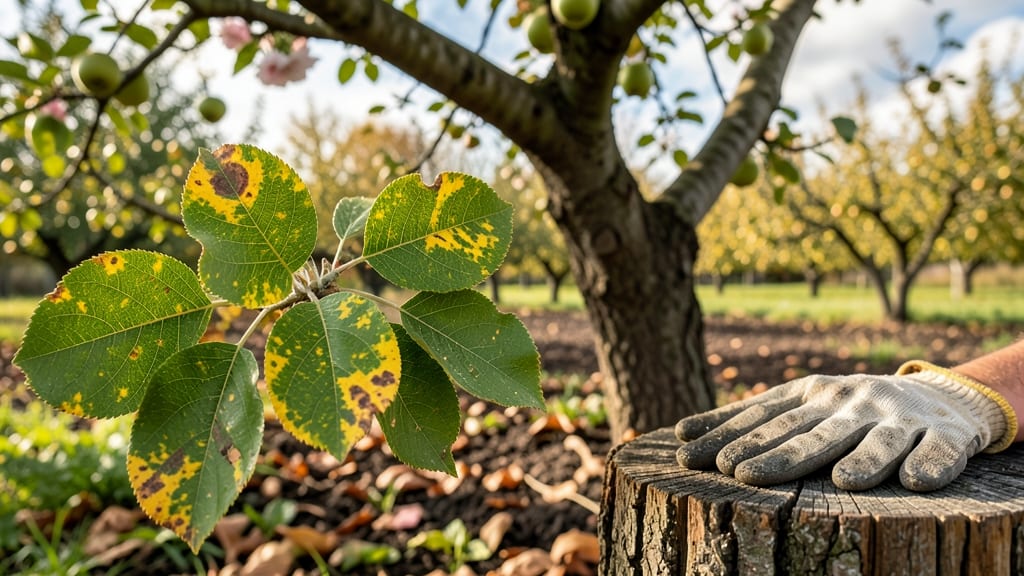
Yellow spots on apple tree 🍎 leaves are often a sign of fungal diseases that can spread quickly if you don’t act fast.
Waking up to your once-vibrant tree now looking like it’s fighting for its life? Those yellow patches aren’t just cosmetic—they could be apple scab, powdery mildew, or another fungal infection, and ignoring them risks weakening your tree’s health or even killing it.
But here’s the good news: with the right identification and early action, you can stop the spread and restore your tree’s strength.
Below, I’ll walk you through the top 5 fungal diseases causing these spots, how to tell them apart, and the organic treatments that work best for saving your harvest.
You’ll also learn how to prevent future outbreaks so your apple tree stays healthy, productive, and free of those unsightly (and harmful) yellow spots.
5 Common fungal diseases causing yellow spots on apple tree leaves
Discovering yellow spots on apple tree leaves can feel like a panic attack for any gardener. These spots rarely appear without cause, and in most cases, they’re a clear signal that a fungal disease has taken root.
Left untreated, these diseases can defoliate your tree, reduce fruit quality, and even kill it over time. The key to saving your apple tree lies in early identification and action.
Fungal diseases thrive in moist, warm conditions, making spring and early summer the most critical times for monitoring. The five most destructive culprits—apple scab, powdery mildew, cedar apple rust, black spot, and alternaria leaf spot—each leave their own unique mark on your tree’s foliage.
Learning to distinguish them is your first line of defense against these silent killers.
Below, I’ll break down each disease’s visual symptoms, seasonal patterns, and progression so you can diagnose the problem quickly. Some diseases appear early in the season, while others strike later, so timing is everything.
Let’s start with the most aggressive: apple scab, which can turn your tree’s leaves into a crinkled, yellow mess if ignored.
| Disease | Key Symptoms | Seasonal Peak | Leaf Damage Pattern | Early Warning Sign |
|---|---|---|---|---|
| Apple Scab | Olive-green/yellow spots, velvety texture; leaves curl and drop early | Spring (April-May) | Spots appear on upper leaf surface, often with yellow halos | Tiny olive spots on new leaves (3-5 weeks after bud break) |
| Powdery Mildew | White/gray powdery coating; yellow spots form underneath | Late spring to summer (June-July) | Spots appear on lower leaf surface; powder on upper surface | White fuzzy patches on young leaves (high humidity triggers) |
| Cedar Apple Rust | Orange-yellow spots with raised pustules; leaves yellow and drop | Late spring to early summer (May-June) | Spots appear on both surfaces; orange pustules form | Bright orange spots on leaves (requires cedar trees nearby) |
| Black Spot | Dark brown/black spots with yellow rings; leaves turn yellow and fall | Summer (July-August) | Spots appear on upper surface; black centers with yellow borders | Small dark spots with yellow halos (high humidity accelerates) |
| Alternaria Leaf Spot | Dark brown spots with concentric rings; leaves yellow and drop | Late summer (August-September) | Spots appear on both surfaces; target-like rings | Small dark spots with gray centers (warm, wet weather triggers) |
The progression patterns of these diseases are just as important as their initial symptoms. For example, apple scab starts with tiny olive spots but quickly spreads into large yellow patches that cause leaves to curl and drop prematurely.
Meanwhile, powdery mildew may begin with a light white dusting but eventually leads to stunted growth and reduced fruit quality.
One of the easiest ways to distinguish these diseases is by examining the leaf surface where the spots appear. Apple scab and black spot primarily attack the upper leaf surface, while powdery mildew and cedar apple rust often show symptoms on both sides.
Pay close attention to the color and texture of the spots—raised pustules indicate cedar apple rust, while <
Organic treatment methods for yellow spot fungal diseases
When you spot yellow spots on apple tree leaves, your first instinct might be to reach for chemical fungicides—but organic solutions can work just as effectively while keeping your fruit safe to eat.
The key is acting quickly and combining multiple organic treatment methods for maximum impact. I’ve ranked these solutions by effectiveness, starting with the most powerful and working my way to supportive strategies.
Before diving into treatments, always identify the disease (like apple scab or powdery mildew) and remove heavily infected leaves to prevent spread. Organic methods are safer for edible trees, but they require consistency.
Let’s start with the top copper-based fungicides, which are the gold standard for fungal control in organic orchards.
Step-by-Step Organic Treatment Plan
-
1. Apply Copper Fungicide
Use copper sulfate or copper hydroxide (like Bordeaux mixture) every 7-14 days during wet seasons. Mix 1 tbsp copper sulfate per gallon of water or follow label instructions. Spray upper and lower leaf surfaces and fruit clusters in the early morning to avoid leaf burn from UV exposure. -
2. Neem Oil Spray
Combine 1 tsp neem oil, 1 tsp mild soap, and 1 quart water. Spray thoroughly on leaves and stems, focusing on new growth. Reapply every 7-10 days until symptoms disappear. Neem oil smothers fungal spores and disrupts their life cycle. -
3. Sulfur Spray (For Powdery Mildew)
Use wettable sulfur (2 lbs per 100 gallons of water) on dry leaves only. Apply in the evening to prevent leaf burn. Sulfur works best when humidity is low and temperatures are below 85°F. Avoid using sulfur if rain is forecasted within 24 hours. -
4. Prune Infected Branches
Remove and dispose of (don’t compost) branches with yellow spots or lesions. Sterilize pruners with 70% rubbing alcohol between cuts. Prune during dry weather to minimize spore spread. Focus on thinning dense foliage to improve airflow. -
5. Soil Amendments
Add compost or well-rotted manure around the tree’s drip line to boost beneficial microbes. Mix in mycorrhizal fungi to strengthen root health. Avoid over-fertilizing with nitrogen, which promotes leafy growth but weakens disease resistance. -
6. Baking Soda Solution (Preventative)
Mix 1 tbsp baking soda, 1 tbsp vegetable oil, and 1 gallon water. Spray on leaves every 10-14 days to create an alkaline environment that inhibits fungal growth. Ideal for early spring prevention before spores activate.
Timing is critical with organic treatments. Start applying copper fungicides or neem oil as soon as you spot the first yellow spots on leaves, and continue treatments every 7-14 days until the tree shows new growth.
For severe infections, combine copper sprays with sulfur (but never mix them—apply separately). Always wear gloves and long sleeves when handling copper or sulfur to protect your skin.
After treating, monitor your tree’s progress. Healthy new leaves should emerge within 2-3 weeks if the disease is caught early. If yellow spots persist, consider testing soil pH (ideal range: 6.0-7.0) and adjusting with lime or sulfur if needed.
A balanced organic fertilizer can also help restore tree vigor naturally.
Remember, prevention is just as important as treatment. After resolving the issue, focus on improving airflow, reducing overhead watering, and mulching properly to keep your apple tree thriving and resistant to future fungal attacks. With patience and consistency, your tree can bounce back stronger than ever.