
Pruning
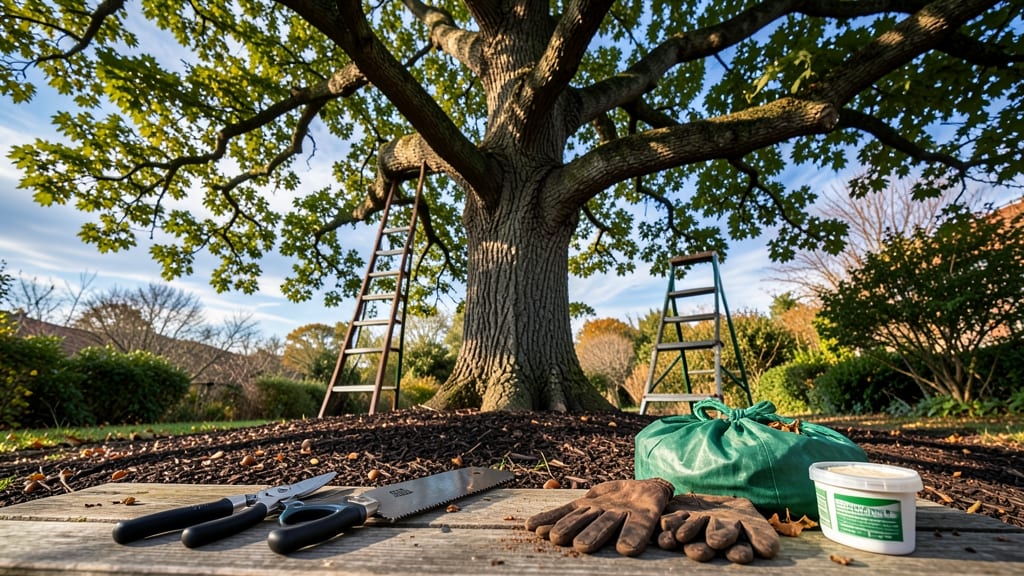
Pruning big trees isn't just about cutting branches—it's about extending their life while keeping your property safe. ✂️ I've seen firsthand how strategic cuts can transform a weak, storm-prone tree into a sturdy, long-lived centerpiece of the landscape.
The key lies in understanding when to prune, which branches to remove, and how to heal those wounds properly.
You'll need the right tools—a sharp pruning saw for thick branches, loppers for medium-sized limbs, and gloves for protection—plus some basic knowledge of tree biology.
Most importantly, timing matters: dormant season pruning (late fall to early spring) reduces stress and disease risk, while summer pruning should focus only on safety hazards and shaping.
When you make the right cuts—removing deadwood, thinning crowded branches, and reducing weight—you'll see healthier growth and fewer risks of storm damage. The tree's wounds will seal faster with proper techniques, and you'll avoid the common mistakes that lead to weak regrowth or disease.
For trees over 50 feet tall or those near power lines, calling a professional arborist is the safest choice. But for most backyard giants, following these steps will give you confidence and results that last for decades. Let's get those branches under control the right way.
📚 In This Guide
- What you need
- Instructions
- Tips and common mistakes
- Wrapping up and next steps
What you need
- ● Pruning saws: 1x bow saw (for medium branches, 20–24" blade)
- ● 1x pruning saw (for thicker branches, 24–30" blade)
- ● 1x chain saw (for large branches/diameter >4", 14–18" bar)
- ● Loppers: 1x bypass lopper (for branches ¾"–2" thick, 20–24" handle)
- ● Pole saw: 1x extendable pole saw (for high branches, 6–12' reach)
- ● Pruners: 1x bypass pruners (for small cuts, sharp and ergonomic)
- ● Safety gear: 1x hard hat (ANSI-rated)
- ● 1x safety glasses (impact-resistant)
- ● 1x hearing protection (for chain saw use)
- ● 1x gloves (cut-resistant, 12–14" length)
- ● 1x steel-toe boots (slip-resistant, rated for tree work)
- ● Cleaning supplies: 1x disinfectant spray (70% isopropyl alcohol or tree wound dressing)
- ● 1x shop rag (for wiping tools)
- ● Work aids: 1x ladder (extension ladder, 24–32' height, rated for 300+ lbs)
- ● 1x rope (100' static rope, ½" diameter, for branch lowering)
- ● 1x tarps or drop cloths (to protect property from debris)
- ○ Optional (but helpful): 1x stump grinder (for large stumps post-pruning)
- ● 1x chipper/shredder (to process branches)
- ● 1x tree climbing spikes (if climbing is required)
- ● 1x first-aid kit (with trauma supplies)
- ● Check local tree pruning regulations (some areas require permits for large trees).
- ● Confirm power line proximity—call 811 to mark underground utilities.
- ● Assess tree health (avoid pruning during active disease or pest outbreaks).
- ● Have a spotter for high-risk cuts or climbing.
- ● Plan for weather delays (avoid pruning in wet or windy conditions).
Step-by-Step guide to pruning large trees safely
Here's how I approach pruning mature trees—focused on health, safety, and long-term growth.
✂️ Step 1: Assess the Tree and Plan Your Cuts
Start by examining the tree from all angles, looking for dead, diseased, or crossing branches. I use a 10x binoculars to spot issues high up—never climb without proper gear. Focus first on removing branches that pose immediate hazards: those touching power lines, overhanging structures, or showing signs of decay (like hollow spots or fungal growth). Mark these with flagging tape for reference.
Next, identify branches that cross or rub against each other—they'll eventually create wounds that invite pests. Prune these first, as they're the most urgent. For structural cuts, prioritize branches that grow back toward the trunk (inward) or upward (vertical) over those that spread outward (horizontal). This ensures the tree maintains its natural shape while reducing future maintenance.
🪴 Step 2: Gather Tools and Set Up Safely
For large trees, you'll need a polesaw (for branches 2-4 inches thick) and a chainsaw (for anything thicker). Always wear gloves, safety glasses, and steel-toe boots—I've seen too many pruners cut their hands when branches snap unexpectedly. Set up a stable ladder or use a tree climbing harness if working above 20 feet. Never stand on the ground and try to cut upward; the recoil can throw you off balance.
Check the weather—prune on a cool, overcast day to reduce stress on the tree. Avoid pruning during drought or extreme heat, as the tree will struggle to heal. Keep a first-aid kit and water nearby, and work with a partner if possible. I always communicate hand signals before making cuts to avoid surprises.
✂️ Step 3: Make Precision Cuts Using the Three-Cut Method
For branches thicker than 2 inches, use the three-cut method to avoid tearing the bark. First, make an undercut about 12-18 inches out from the trunk, angled slightly upward. This prevents the branch from splitting as you remove it. Next, make a top cut about 6 inches farther out, angled downward. The branch will now hang by a small strip of bark—this is where you'll make your final cut.
For the final cut, slice just outside the branch collar (the swollen area at the base of the branch). Never leave a stub—this creates a weak spot where decay can set in. If the branch is very large, you may need to notch the top cut slightly to control its fall. Always step back and check your angles before making the final cut to ensure the branch falls safely away from people and property.
🌿 Step 4: Clean Wounds and Monitor Healing
After removing branches, inspect the wounds for any ragged edges or torn bark. Smooth these with a pruning saw or pruning shears to create clean, flat surfaces. Avoid painting wounds with sealants—research shows they don’t improve healing and can trap moisture, leading to rot. Instead, let the tree seal itself naturally over time. For large wounds, the tree will form callus tissue within a few months.
Water the tree deeply after pruning to help it recover, especially if the season is dry. Monitor the pruned areas over the next few weeks for signs of stress, like yellowing leaves or oozing sap. If you notice fungal growth or pests, treat it promptly with a copper-based fungicide or horticultural oil. Properly pruned trees should show new growth within a few weeks—this is your sign that the cuts were successful.
⏰ Step 5: Schedule Seasonal Follow-Ups
Large trees benefit from light pruning in late winter or early spring (just before buds swell) to encourage strong new growth. Avoid heavy pruning in fall, as it leaves the tree vulnerable to winter stress. If you removed significant branches (over 20% of the canopy), consider a two-stage pruning approach: remove half now and the rest next year. This reduces shock to the tree.
Keep a pruning journal to track which branches you removed and why. This helps you spot patterns, like recurring issues in certain parts of the tree, and ensures you don’t accidentally remove too much in one session. Over time, you’ll learn which branches to prioritize and how the tree responds to different cuts. A well-maintained tree can live for decades—your pruning today shapes its future.
Tips & tricks for perfect big tree pruning
Here's what I've learned from years of pruning mature trees without causing long-term damage.
Safety First: I can't stress this enough—never work alone when pruning large branches. The three-cut method in Step 3 is your best defense against accidents, but even then, branches can fall unpredictably. Always have a spotter nearby who can communicate clearly with hand signals. I've seen too many close calls where someone thought they were safe, only to have a branch snap back unexpectedly.
Branch Collar Matters: The branch collar (that swollen area where the branch meets the trunk) is your guide for clean cuts. In Step 3, when making your final cut just outside this collar, you're preserving the tree's natural healing response. I've noticed that trees pruned with stubs left behind often develop fungal infections because the collar is what produces callus tissue. Think of it as the tree's built-in bandage.
Seasonal Timing: Step 5 mentions late winter or early spring as ideal, but there's more to it. If you're dealing with a tree that's already stressed (like one recovering from drought), avoid pruning entirely until it shows signs of recovery. I once pruned a stressed oak in summer and watched it struggle for years to regain its health. When in doubt, wait until the tree is actively growing—you'll see new buds forming as your cue.
Tool Maintenance: Your chainsaw and polesaw are only as good as their sharpness. Dull blades tear bark and create jagged wounds that heal poorly. I sharpen my blades before every major pruning session and check for proper tension on chains. A well-maintained tool makes cleaner cuts that heal faster—a small investment that pays off in tree health. Remember, a clean cut is half the battle in preventing disease.
Pro Tips for Big Tree Pruning
- Here's what I've learned from years of pruning mature trees without causing long-term damage.
- Safety First: I can't stress this enough—never work alone when pruning large branches.
- Branch Collar Matters: The branch collar (that swollen area where the branch meets the trunk) is your guide for clean cuts.
Frequently asked questions
Got questions about big tree pruning? You’re not alone—these towering giants require careful attention! Below, we’ve tackled the most common concerns to help you prune like a pro while keeping your trees (and property) safe.
When is the best time of year to prune a big tree?
The ideal window is late winter to early spring (just before new growth starts). This minimizes stress on the tree and reduces disease risks. Avoid pruning during extreme heat or drought—wait for mild, dry weather. Pro tip: If your tree has pests or diseases, prune immediately to contain the issue, but do so carefully to avoid spreading spores.
Can I prune a big tree myself, or should I hire a professional?
For small branches or minor shaping, DIY pruning is doable with the right tools (like a pole saw or harness system). However, for large limbs, mature trees, or work near power lines, hire an ISA-certified arborist. Big trees often require heavy equipment, and improper cuts can harm the tree—or you! Safety first!
What’s the difference between “thinning” and “topping” a big tree?
Thinning removes selective branches to improve airflow and light penetration, promoting healthy growth. Topping (cutting branches back to stubs) is never recommended—it creates weak, hazardous regrowth and stresses the tree. Think of thinning as a haircut and topping as a buzz cut gone wrong.
How do I know if my tree’s wounds will heal properly?
Big trees heal best when cuts are made at the branch collar (the swollen area where the branch meets the trunk). Avoid stripping bark or leaving stubs—these invite disease. Small wounds (under 2 inches) will callus over in time, but larger cuts may need proper pruning techniques or even wound dressing in extreme cases. Monitor for oozing sap or fungal growth; if it persists, consult an arborist.
Will pruning my big tree save me money on insurance or property taxes?
Possibly! Many insurance companies offer discounts for maintaining healthy trees (especially near homes), as overgrown limbs are a top cause of claims. As for taxes, some localities provide rebates for tree care that boosts curb appeal or reduces storm risks. Keep records of pruning work—it’s a smart investment for your wallet and your tree’s future!
Wrapping up and next steps
Big tree pruning isn’t just about aesthetics—it’s a critical investment in your tree’s health, safety, and longevity.
By mastering the right techniques, timing, and tools, you can transform potential hazards into thriving, resilient giants that stand strong for decades. Now’s the time to roll up your sleeves and give those towering beauties the care they deserve!
Ready to take action? Start small—assess your trees, gather your gear, and tackle one branch at a time. For complex jobs, don’t hesitate to call a certified arborist. Your trees (and your peace of mind) will thank you! 🌳✨