
Advice
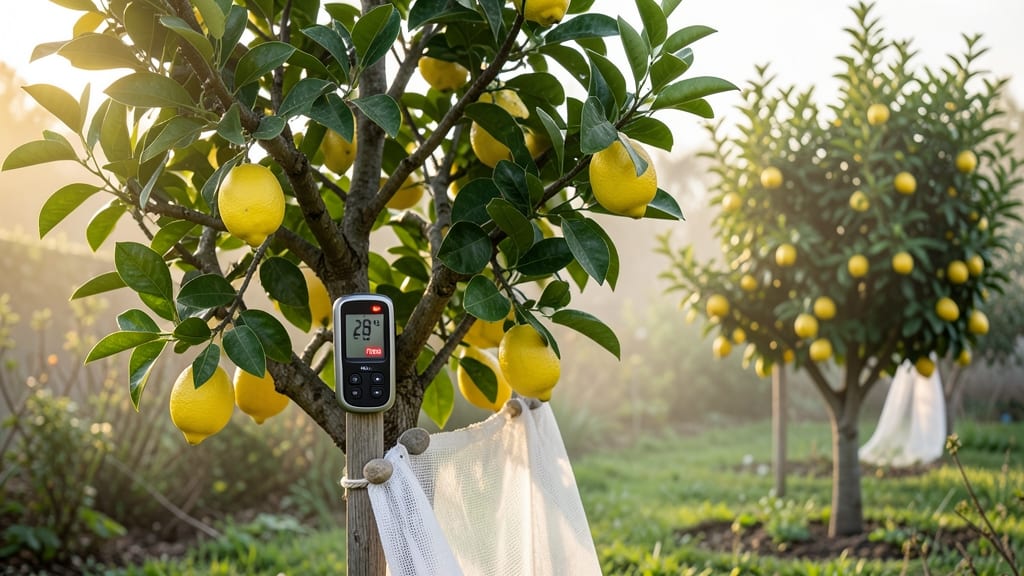
Can a lemon tree survive a freeze? Only if temperatures stay above 25°F (-4°C) for short periods, as prolonged exposure below 20°F (-7°C) typically kills the plant. Young trees are more vulnerable than mature ones, and proper protection like mulching or wrapping can improve survival odds.
A lemon tree's ability to endure cold depends on how long the freeze lasts and how young the tree is. 🌱 At 25°F (-4°C), most lemon trees can handle brief exposure without severe damage, but anything below 20°F (-7°C) starts causing irreversible harm to the plant's cells.
Young trees, especially those under 3 years old, are particularly at risk because their root systems aren't fully developed to withstand stress.
Even mature trees can suffer if the cold persists for more than a few hours, which is why I always recommend monitoring weather forecasts and preparing protective measures well in advance.
Protective strategies like wrapping the trunk with burlap or covering the entire plant with frost cloth can make a significant difference. The key is to act before the freeze hits—once temperatures drop, it's too late to save the tree.
After a freeze, inspect the branches for signs of damage, like brown or brittle wood, and prune those areas carefully to encourage new growth. Patience is crucial here, as recovery can take weeks or even months, depending on how severe the cold was.
💡 In This Article
- Lemon Tree Freeze Damage Thresholds by Temperature
- Protecting Lemon Trees from Freezing Temperatures
Lemon tree freeze damage thresholds by temperature
The critical threshold for lemon tree survival begins at 25°F (-4°C), where most varieties can endure brief exposure without permanent harm. At this temperature, the plant's cells experience osmotic stress—water inside the cells starts crystallizing, but the damage remains reversible if the freeze doesn't linger.
However, when temperatures drop to 20°F (-7°C) for more than a few hours, the cell membranes rupture from ice formation, causing irreversible damage. This is why a 24-hour freeze at 20°F (-7°C) can kill even mature trees, while a 3-hour dip at 25°F (-4°C) might only cause superficial leaf burn.
Young lemon trees are far more vulnerable because their root systems lack the depth and density to regulate moisture and nutrients during cold stress.
A 1-year-old tree might survive a 28°F (-2°C) freeze for 4 hours, while a 5-year-old tree could tolerate 25°F (-4°C) for 6 hours without fatal damage. The difference lies in the tree's ability to produce antifreeze proteins—compounds that lower the freezing point of cell fluids.
Mature trees produce these proteins in higher concentrations, giving them a natural advantage in cold resistance.
Below 15°F (-9°C), even the hardiest lemon trees face severe damage. At this point, the plant's vascular system—responsible for transporting water and nutrients—begins to fail as ice blocks the xylem vessels. The bark can split from rapid freezing and thawing cycles, creating entry points for pests and diseases.
You'll often see blackened leaves and brittle branches after such extreme cold, signaling irreversible damage. This is why gardeners in USDA Zones 9-11 (where lemon trees thrive) must take proactive measures during unexpected cold snaps.
Another critical factor is the rate of temperature drop. A sudden plunge from 50°F (10°C) to 20°F (-7°C) in 2 hours causes more damage than a gradual decline over 12 hours, because the plant's cells don't have time to adjust.
This is why monitoring weather forecasts and preparing protective measures 24-48 hours in advance can mean the difference between survival and loss. The slower the cooling, the better the tree's chance of adapting its metabolic processes to conserve energy and protect its cells.
Consider this real-world example: In 2011, a sudden Arctic blast dropped Florida's temperatures to 18°F (-8°C) for 3 days, killing thousands of lemon trees. While mature trees in protected microclimates survived, young trees and those in exposed areas suffered 90% mortality.
The lesson? Even in warm climates, lemon trees need protection when temperatures flirt with 25°F (-4°C), and the stakes get higher the colder it gets.
What most people don't realize is that root damage is often the silent killer. Even if the above-ground parts of the tree look intact after a freeze, the roots may have suffered irreversible harm.
This is why post-freeze recovery should always include a thorough inspection of the root zone—look for mushy, discolored roots or soil that smells foul, which indicate rot from frozen ground. 💫