
Pests and Diseases
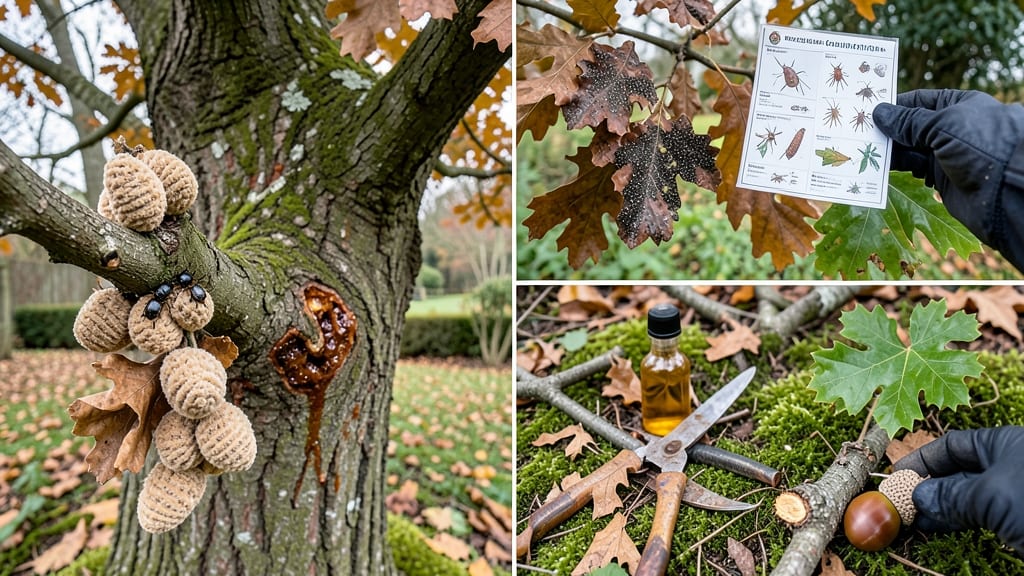
Tree pests and diseases turn your backyard oasis into a battleground before you even notice. 🌳 I’ve watched healthy oaks, maples, and fruit trees decline from silent invaders—until I learned to spot the early warning signs before they spread.
The key isn’t just treating problems; it’s catching them when a single leaf or bark crease reveals the truth.
Think of it like a health check for your trees: wilting leaves, sawdust-like frass on branches, or oozing sap are red flags most gardeners miss until it’s too late. Bark beetles, scale insects, and fungal cankers don’t announce themselves—they sneak in through cracks, weak spots, or stressed roots.
But once you know what to look for, you can act fast with organic sprays, pruning, or even a simple soil fix.
By the time you finish this guide, you’ll recognize the difference between a harmless aphid and a destructive borer, or spot the early stages of powdery mildew before it chokes your tree.
Prevention isn’t just about sprays—it’s about giving your trees the right conditions to fight back naturally. A little vigilance now saves years of frustration (and costly replacements) later.
Whether you’re dealing with a single infected branch or a full-blown infestation, the solutions here work for home gardeners without breaking the bank. Let’s get your trees back to thriving—before the pests do more damage.
The Hidden Triggers Behind Tree Struggles
Trees don’t just fall victim to pests and diseases by chance—these problems are often the result of a perfect storm of environmental, biological, and human factors. Understanding why these issues arise is the first step in preventing them.
Below, we break down the key causes, from natural vulnerabilities to human mistakes, so you can protect your trees before problems take root.
Healthy trees have strong immune systems, but stress weakens their ability to fight off invaders. When trees are under pressure, pests and pathogens move in like vultures to a weakened animal. Here’s what makes trees susceptible:
- 🌡️ Environmental Stress
- Drought or Waterlogging: Too little or too much water disrupts a tree’s nutrient uptake and root function. Example: Oak wilt fungus thrives in drought-stressed oaks because their vascular system becomes compromised.
- 🌡️ Extreme Temperatures: Sudden freezes or heatwaves shock trees, making them easier targets for bark beetles (which attack stressed pine trees) or fungal spores (like anthracnose, which loves wet, cool conditions).
- 🌬️ Poor Soil Quality: Compacted, nutrient-deficient, or acidic soil starves roots, leaving trees malnourished and defenseless. Pro Tip: Test your soil every 2–3 years to monitor pH and organic matter levels.
- 🪓 Physical Damage
- 🔪 Wounds from Pruning or Storms: Open cuts create entry points for fungi (e.g., Armillaria, the "honey mushroom") and borers. Key Fact: Improper pruning cuts—like leaving stubs—are like inviting pests to move in.
- 🐛 Root Disturbances: Construction, compacted soil, or even aggressive lawn mowing can sever roots, reducing a tree’s ability to transport water and nutrients. Result: Trees become prime targets for root-rotting fungi like Phytophthora.
- 🌿 Overcrowding & Competition
- Trees in tight spaces compete for sunlight, water, and nutrients, weakening their overall health. Example: Maple trees in dense forests are more prone to tar spot fungus because their leaves stay damp longer due to poor air circulation.
Pests don’t randomly attack trees—they’re drawn by specific signs of weakness or abundance. Here’s how they exploit trees:
- 🍃 Food Availability
- Sap-Sucking Insects (e.g., Aphids, Scale): These pests target trees under stress because their sap is easier to access. Why? Stressed trees produce more sugars in their phloem (the "food pipeline" of the tree), making them a tasty buffet.
- 🌲 Bark Beetles: They detect trees with low resin production (a natural defense) due to drought or disease. Case Study: The mountain pine beetle epidemic in the West was fueled by decades of drought-stressed pines.
- 🏡 Shelter & Moisture
- 🪵 Dead or Dying Wood: Wood-boring beetles (like the emerald ash borer) lay eggs in cracked bark or weak branches, where larvae can safely develop.
- 💧 High Humidity: Fungal spores (e.g., Ceratocystis, which causes oak wilt) spread faster in damp conditions. Solution: Prune during dry weather to reduce spore splash.
- 🌍 Human Activity
- 📦 Imported Firewood: Invasive pests like the Asian longhorned beetle hitchhike on untreated wood, jumping from nursery to forest. Rule of Thumb: Burn or buy local firewood to prevent spreading pests.
- 🌿 Planting Non-Native Species: Exotic trees lack natural predators, so pests like the sudden oak death pathogen (Phytophthora ramorum) devastate them without checks and balances.
Unlike pests, diseases are often invisible until it’s too late. They thrive when trees are already compromised:
- 💦 Water-Related Pathogens
- 🍂 Fungal Leaf Spots (e.g., Anthracnose): These fungi splash from soil to leaves during rain, especially on trees with poor air circulation (like overcrowded shade trees).
- 🌊 Root Rots (e.g., Armillaria): Excess moisture in poorly drained soil creates the perfect breeding ground for fungi that girdle roots, cutting off water supply.
- 🔥 Vascular Blockages
- 🌳 Dutch Elm Disease: The Ophiostoma fungus clogs a tree’s water-conducting vessels, causing wilting even when roots are wet. Spread: Beetles carry the fungus from tree to tree.
- 🍁 Verticillium Wilt: This soil-borne fungus invades through root wounds, blocking xylem (water pipes) in maples, oaks, and elms. Trigger: Stress from construction or drought makes trees vulnerable.
- 🌡️ Temperature & Seasonal Cycles
- 🍄 Snow Molds & Winter Injury: Cold snaps followed by rapid thaws can kill bark, allowing fungi like Nectria to infect wounds.
- 🌞 Heat Stress: High temperatures weaken trees, making them susceptible to Botryosphaeria canker, which thrives in sun-scalded bark.
Remember: Most tree problems start with a single stressor—whether it’s drought, poor pruning, or an invasive pest. By addressing these root causes, you can fortify your trees’ defenses before pests and diseases get a foothold. Stay vigilant!
Fixing Tree Problems Step by Step
Now that you’ve identified the issue, it’s time to take action! Early intervention is key to saving your trees from pests and diseases. Below, we’ve mapped out practical solutions for common threats, along with prevention tips to keep your trees healthy long-term.
1.
Aphids, Scale, or Mealybugs: Sucking the Life Out 🔥 How to Treat It: - Blast them off with a strong stream of water from a hose (especially for aphids). - Apply insecticidal soap (like neem oil or horticultural oil) to smother pests—reapply every 5–7 days. - Introduce natural predators: Ladybugs, lacewings, or parasitic wasps (buy them online or at garden centers).
💡 Prevention Tips:
- Encourage beneficial insects by planting marigolds, dill, or yarrow nearby.
- Prune infected branches in late winter or early spring to remove overwintering pests.
- Avoid over-fertilizing—soft new growth attracts aphids like a buffet!
2.
Bark Beetles: Wood-Boring Menace 🔪 *How to Treat It: - Remove and destroy heavily infested branches or trees (burn or chip them—don’t compost!). - Apply tree band traps (sticky bands around the trunk to catch beetles). - Use systemic insecticides (like imidacloprid) if the tree is valuable—apply in early spring.
🌡️ Prevention Tips:
- Keep trees healthy with proper watering and mulching (stressed trees are beetle magnets).
- Thin out dense canopies to improve airflow and reduce moisture buildup.
- Monitor for fresh sawdust-like frass near the base—this is a red flag!
3.
Gypsy Moths: Defoliating Devastation 🍳 *How to Treat It: - Handpick egg masses in late fall/winter (they look like wads of gray foam). - Use Bt (Bacillus thuringiensis) spray—a natural bacteria that kills caterpillars without harming other wildlife. - Prune and dispose of heavily damaged foliage to reduce egg-laying sites.
✨ Prevention Tips:
- Plant trap trees (like oak or birch) away from your prized trees to lure moths elsewhere.
- Encourage bird habitats—robins and blue jays love munching gypsy moth caterpillars!
- Avoid broad-spectrum pesticides—they can kill natural predators.
1.
Powdery Mildew: The White Fuzzy Threat 👨🍳 *How to Treat It: - Spray with a mix of baking soda, water, and a few drops of dish soap (1 tsp baking soda + 1 quart water + ½ tsp soap). - Apply fungicides (like neem oil or sulfur-based sprays) in early morning to avoid burning leaves. - Remove and destroy severely infected leaves to stop spores from spreading.
🎯 Prevention Tips:
- Space trees properly for good airflow (crowding = mildew paradise).
- Water at the base (not overhead) to keep foliage dry.
- Choose resistant varieties—some trees (like lilacs or serviceberries) handle mildew better.
2.
Root Rot: Silent Killer in the Soil ⏰ *How to Treat It: - Improve drainage by amending soil with compost or sand (avoid heavy clay). - Reduce watering—let the top 2–3 inches of soil dry out between waterings. - Consider fungal treatments (like Mycorrhizal fungi) to boost root health.
💡 Prevention Tips:
- Avoid over-mulching—keep mulch 2–4 inches away from the trunk.
- Plant trees in well-draining soil—test your soil’s composition before planting.
- Prune to open the canopy so sunlight reaches the base and dries moisture.
3.
Dutch Elm Disease: Fatal Vascular Attack 🚨 *How to Treat It: - Remove infected trees IMMEDIATELY—this disease spreads fast and is often fatal. - Inject systemic fungicides (like propiconazole) into healthy elms as a preventative measure. - Prune only in late winter/early spring to avoid attracting elm bark beetles (the disease carriers).
🌡️ Prevention Tips:
- Plant resistant elm varieties (like ‘Valley Forge’ or ‘Sapporo Autumn’).
- Inspect firewood—never bring in untreated wood near your trees.
- Encourage woodpeckers—they prey on bark beetles!
- Inspect regularly: Check for signs of stress, unusual spots, or pest activity every 2–4 weeks.
- Proper pruning: Remove dead or crossing branches to improve airflow and light penetration.
- Mulch correctly: Use 2–4 inches of organic mulch, but keep it away from the trunk.
- Water deeply but infrequently: Trees need 1–1.5 inches of water per week (more in extreme heat).
🔥 Remember: The best cure is prevention! Healthy trees are resilient trees. If in doubt, consult a certified arborist—they can provide tailored advice for your specific situation. Your trees will thank you! 🌳💚
Frequently asked questions
How can I tell if my tree has pests or just seasonal stress?
Look for specific signs: pests often leave visible damage like holes in bark (borers), sticky residue (aphids), or sawdust-like frass. Seasonal stress usually shows as uniform yellowing or wilting without these clues. Check for tiny crawling insects or eggs under leaves—this confirms pests rather than environmental factors.
Are there organic treatments that actually work for tree diseases?
Yes! For fungal issues like powdery mildew, mix 1 tablespoon baking soda with 1 quart water and a drop of dish soap—spray in early morning. Neem oil works against many pests and some diseases when applied every 7-10 days. Always test small areas first to avoid leaf burn.
When should I call an arborist instead of trying DIY fixes?
If you see large canopy dieback, oozing sap from cracks, or if the tree leans dangerously, it’s time to call. Infestations like emerald ash borer or diseases such as Dutch elm disease often require professional intervention—don’t wait until the tree is 50% compromised.
Can I save a tree if the trunk shows signs of canker disease?
Early-stage canker (raised, sunken lesions) can sometimes be managed by pruning infected branches 12 inches below the lesion and sterilizing tools between cuts. For advanced cases, consult an arborist—they may recommend fungicide injections or removal if the tree is a safety hazard.
How often should I inspect my trees for problems?
Check your trees every 2-4 weeks during growing season (spring-fall), focusing on new growth and bark. In winter, look for egg masses or wintering pests. Regular inspections catch issues before they spread—think of it as a quick health check for your trees!