
Propagation
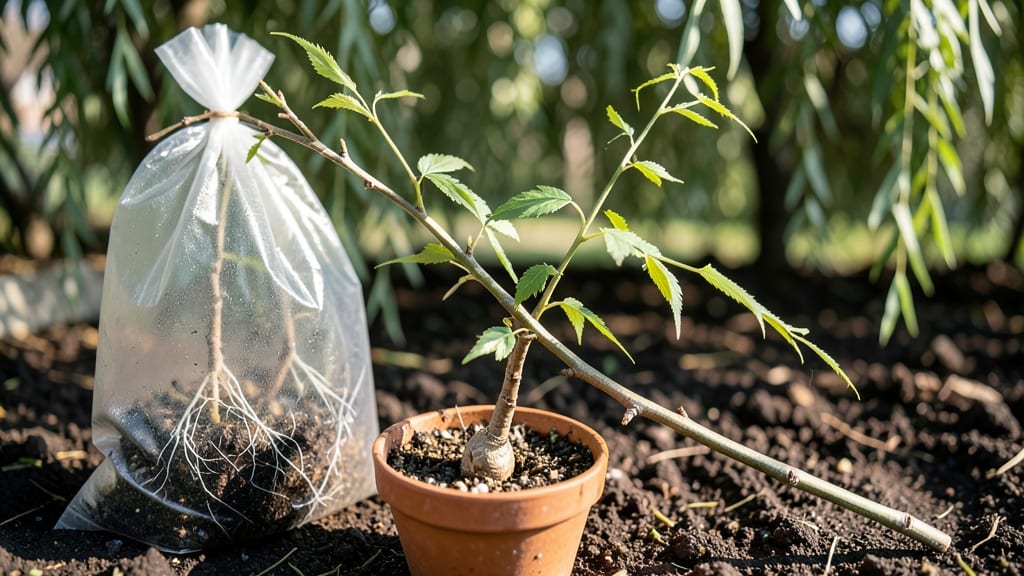
Yes, tree branches can grow roots when exposed to soil and moisture through layering or air layering, but success depends on species, branch health, and proper technique. Not all branches root naturally, and some require hormonal treatments or grafting for success.
This natural process, called adventitious root formation, happens when a branch develops roots at a point that isn't normally expected—like where it meets the soil or when intentionally wounded. 🌱 The key factors are moisture, light exposure, and the right balance of plant hormones, particularly auxin.
Some trees, like willow or maple, root more easily than others, while species like oak or pine often need extra help. I've found that younger, flexible branches with healthy bark tend to root best when given the right conditions.
What's fascinating is how this process mimics how trees naturally reproduce. When a branch touches the ground, it can form roots and eventually become a new plant—this is how many trees spread over time.
The challenge lies in replicating these conditions artificially, which is where techniques like air layering come into play. Understanding your tree species and its natural tendencies can make all the difference in whether your propagation attempt succeeds.
💡 In This Article
- How Tree Branches Develop Roots: Biology and Conditions
- Step-by-Step Methods to Encourage Branch Rooting
How tree branches develop roots: biology and conditions
When a tree branch encounters the right conditions, it can trigger a biological process called adventitious root formation. This occurs when new roots grow from unexpected places—like stems, leaves, or even wounds—rather than just the root system.
The magic happens when a hormone called auxin (produced in the branch's growing tips) signals nearby cells to differentiate into root-forming tissues. Think of auxin as the branch's internal "root-growing switch," activated by environmental cues like moisture and light exposure. 🌿
The process begins when a branch makes contact with soil or is intentionally wounded (like in air layering). Within 4-8 weeks, you'll often see small root hairs emerging from the wound site, especially if the branch is partially buried or kept consistently moist.
Species like willow, which naturally root from cuttings, can produce roots in as little as 2-3 weeks under ideal conditions, while slower-rooting trees like maple may take 8-12 weeks.
The bark's thickness plays a role too—thinner bark (common in younger branches) allows moisture and oxygen to reach the cambium layer more easily, where root formation begins.
Moisture is non-negotiable. Roots need constant hydration to grow, which is why techniques like air layering wrap the wound site with damp sphagnum moss. Without proper moisture, the branch risks drying out before roots form, or worse, developing rot if the wound stays too wet.
Light exposure also matters—branches need moderate sunlight (4-6 hours daily) to produce enough auxin, but too much direct sun can dry them out. This is why shade-loving species like dogwood root better in partial shade than full sun.
Not all branches are created equal. Fast-rooting species like willow, poplar, or birch produce roots easily because they evolved to spread via waterways (their branches often fall into moist soil).
Slow-rooting species like oak or pine require extra steps—such as using rooting hormone (a synthetic auxin) or grafting—to compensate for their natural resistance. Even within a species, branch health matters: younger, flexible branches with vibrant green leaves root better than old, woody ones.
A branch with 1/4-inch diameter or thicker often has the best success rate.
Here's what's happening under the bark: When you wound a branch, you're essentially creating a stress point that triggers the tree's survival instincts. The cambium layer (the growth layer between bark and wood) becomes hyperactive, producing new cells that differentiate into root tissues.
This is why a clean, shallow cut (about 1/3 of the way through) works better than a deep gash—it exposes the cambium without killing the branch. The wound also attracts beneficial microbes that help break down cells into root-forming tissues. 🌱
Temperature plays a subtle but critical role. Most rooting happens best between 60-75°F, which is why spring and early summer are ideal seasons. Below 50°F, root growth slows dramatically, and above 85°F, branches risk overheating.
This is why air layering in summer often requires shading the moss wrap with aluminum foil to maintain the right temperature. The combination of moisture, auxin production, and stable temperatures creates the perfect storm for root formation.