
Trees
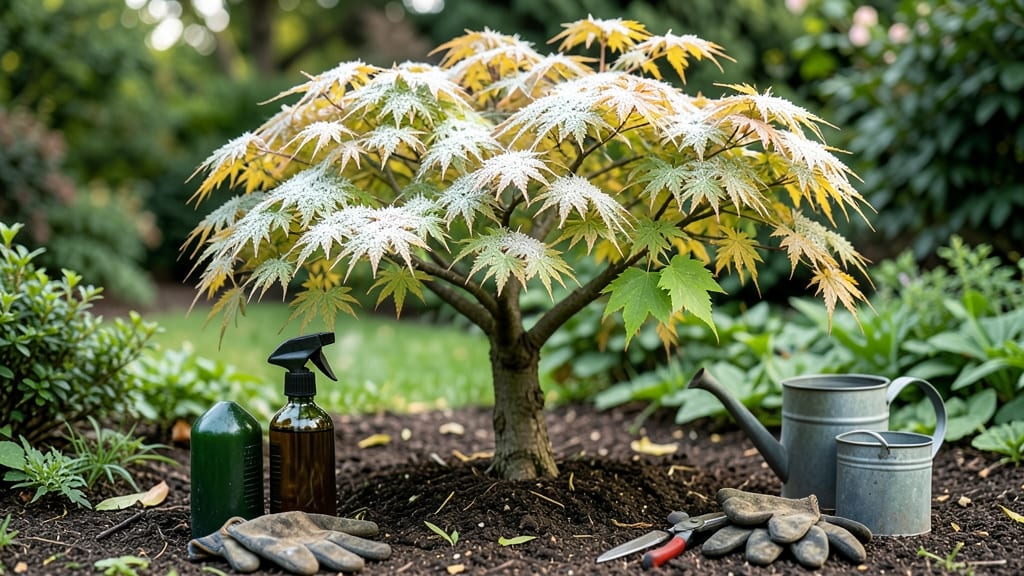
That white, powdery coating on your maple leaves isn’t just unsightly—it’s powdery mildew, a stubborn fungal foe that weakens trees over time. ✨ I’ve battled this exact problem on my sugar maple, and the key is catching it early with the right treatments before it spreads to every leaf.
The fungus thrives in shady, humid conditions, so proper spacing and airflow are your first line of defense. But when you spot those telltale white spots, a mix of neem oil, baking soda, or horticultural oil can stop it in its tracks—without harsh chemicals that harm beneficial insects.
By mid-summer, your maple will bounce back with vibrant green leaves and stronger growth. The secret is consistency: treat every 7–10 days until new leaves emerge free of that chalky dust. Works for all maple varieties, from towering silver maples to compact Japanese maples.
Let’s get that tree looking healthy again!
Root Causes Of Fungal Spread
Powdery mildew isn’t just a random nuisance—it thrives because of specific conditions that create the perfect storm for fungal growth. Understanding these triggers is the first step to stopping the spread on your maple trees. Let’s break down the science behind why this fungal foe shows up in your yard.
🌱 Poor Air Circulation & Dense Foliage
Fungi like Erysiphe and Podosphaera (the usual suspects behind powdery mildew) love stagnant, humid air. When maple leaves grow too closely together—especially in thick canopies or shaded areas—the air struggles to flow freely. This creates a microclimate where moisture lingers, giving spores a cozy environment to germinate.
💡 Why it matters: Dense foliage traps humidity, and poor airflow slows evaporation. The result? Leaves stay damp longer, and fungal spores get a 24/7 buffet of organic material to feast on.
🌿 Actionable fix: Prune your maple tree to open up the canopy, allowing sunlight and air to circulate. Aim for a 20% reduction in branch density to improve airflow without stressing the tree.
💦 Excessive Moisture From Overwatering
Powdery mildew isn’t picky—it doesn’t need standing water, but it does love leaves that stay damp. Overwatering or frequent light rains keep foliage wet for extended periods, creating ideal conditions for spores to land and infect.
📊 Key stats:
- Spores germinate within 4–6 hours of landing on wet leaves.
- Leaves need to dry within 6–8 hours to prevent infection.
💡 Why it matters: If your soil stays soggy or you water at dawn (when humidity is high), you’re basically inviting mildew to throw a party on your maple’s leaves.
🚰 Actionable fix:
- Water deeply but infrequently—aim for 1–1.5 inches per week (adjust for clay soil).
- Avoid overhead watering; use drip irrigation or soaker hoses to keep foliage dry.
- Water in the early morning so leaves dry by afternoon.
🍃 Nutrient Imbalances & Weakened Trees
Healthy trees resist fungal attacks better than stressed ones. Maple trees deprived of key nutrients—especially nitrogen, phosphorus, and potassium—produce weaker leaves that are easier targets for powdery mildew.
🔬 Science behind it:
- Low nitrogen = Pale, thin leaves (fungi’s favorite snack).
- Phosphorus deficiency = Stunted root growth = less energy to fight pathogens.
- Potassium deficiency = Poor cell wall strength = easier fungal penetration.
💡 Why it matters: A malnourished maple is like an open invitation to fungi. Even if you fix other issues, weak trees will keep getting reinfected.
🌱 Actionable fix:
- Test your soil (pH 6.0–7.0 is ideal for maples).
- Apply a balanced fertilizer (10-10-10) in early spring.
- Add compost or organic matter to improve soil structure and nutrient retention.
🌡️ Ideal Fungal Weather Conditions
Powdery mildew isn’t a year-round pest—it’s a seasonal opportunist that peaks when temperatures and humidity align just right. The sweet spot for fungal growth?
60–80°F (15–27°C) with high humidity (70%+) and short dry periods.
🌦️ Why it matters: Cool nights and warm days create condensation on leaves, mimicking a greenhouse effect. If your area has spring or fall rains followed by sunny days, you’re in the danger zone.
⚠️ Actionable fix:
- Monitor weather forecasts and treat preventatively before mildew appears (e.g., when humidity exceeds 70% for 3+ days).
- Use mulch (2–4 inches) to regulate soil temperature and reduce evaporation.
- Choose resistant maple varieties (like Norway maple or Silver maple) if you’re in a high-risk climate.
By tackling these root causes, you’re not just treating symptoms—you’re disrupting the fungal lifecycle before it even starts. Next, we’ll dive into natural remedies to kick powdery mildew out of your maple tree for good.
Natural Fixes For Fungal Fungus
Powdery mildew on maple trees is a stubborn but beatable foe—especially when you tackle it with targeted, eco-friendly solutions. The key is matching the right treatment to the root cause (poor airflow, overwatering, stress, etc.).
Below, we break down practical fixes for each common trigger, plus prevention tips to keep your maple thriving.
---
Cause: Poor airflow traps humidity, giving mildew a cozy home. Solution: - Prune strategically 🔪: Thin out dense branches to improve airflow. Focus on inner growth where leaves overlap. - Space trees properly 📏: If planting new maples, give them 15–20 feet of clearance from structures or other trees. - Use fans (for potted maples) 💨: A gentle oscillating fan on low setting can disrupt mildew spores mid-growth.
Pro Tip: 💡 Prune in late winter or early spring (before mildew season peaks) to avoid stressing the tree.
---
Cause: Overwatering or wet foliage encourages fungal growth. Solution: - Water at the base 🌱: Aim for deep, infrequent watering (1–2 inches per week) instead of frequent light sprinkles. - Water early ⏰: Soak the soil before 10 AM so leaves dry by evening. - Improve drainage 🏗️: Amend heavy clay soil with compost or sand to prevent soggy roots.
Warning: ⚠️ Avoid overhead watering (like sprinklers) during mildew outbreaks—it spreads spores like wildfire.
---
Cause: Existing mildew needs direct treatment to stop its spread. Solution: Mix one of these sprays and apply every 7–10 days until new growth appears:
| Recipe | How to Use | Best For | |--------------------------|----------------------------------------|----------------------------| | Baking soda spray | 1 tbsp baking soda + 1 tsp dish soap + 1 gallon water | Early-stage mildew | | Neem oil mix | 1 tbsp neem oil + 1 tsp horticultural oil + 1 quart water | Severe infestations | | Milk spray | 1 part milk + 9 parts water (no soap) | Organic, preventative |
Application Tips: - Spray both sides of leaves and stems until glistening. - Reapply after rain (fungicides wash off). - Add a drop of dish soap (not detergent) to help the spray stick.
Pro Tip: 🌡️ Apply fungicides when temps are 60–80°F—too hot/cold reduces effectiveness.
---
Cause: Weak or stressed trees are mildew magnets. Solution: - Fertilize lightly 🌱: Use a balanced, slow-release fertilizer (10-10-10) in early spring to avoid overfeeding. - Mulch properly 🍂: Spread 2–4 inches of organic mulch (wood chips, bark) around the base (keep it 6 inches from the trunk). - Encourage beneficial insects 🐞: Ladybugs and lacewings prey on mildew spores—plant dill, fennel, or marigolds nearby.
Warning: ⚠️ Avoid high-nitrogen fertilizers—they promote soft, mildew-loving growth.
---
Cause: Mildew often returns if conditions aren’t addressed. Solution: - Monitor humidity 🌡️: Aim for 40–60% humidity—use a hygrometer if indoors. - Clean up debris 🧹: Remove fallen leaves and mulch twice a year (spring/fall) to starve spores. - Plant resistant varieties 🌳: If replanting, choose ‘Autumn Blaze’ or ‘October Glory’ maples—they’re less prone to mildew.
Pro Tip: ✨ Copper fungicide sprays (like Bonide Copper Fungicide) can be used preventatively in early spring for high-risk trees.
--- Remember: Consistency is key—mildew won’t vanish overnight, but diligent care will restore your maple’s glory. Start with one fix (like pruning or spraying), then layer in prevention strategies for long-term protection.
Frequently asked questions
What does early-stage powdery mildew look like on maple leaves?
Start with tiny, white or gray powdery spots on the upper leaf surface, often near the edges or midrib. As it spreads, the spots merge into a chalky coating that looks like flour dust. Check the undersides of leaves too—this is where mildew often starts.
Can I use household vinegar to treat powdery mildew on maples?
Not directly—vinegar’s acidity can harm your tree. However, you can make a 1% vinegar solution (1 part vinegar to 99 parts water) for preventative spraying on non-leaf surfaces. For leaves, stick to baking soda or neem oil mixes instead.
How often should I spray my maple tree with fungicide?
Apply fungicides every 7–10 days during active mildew season (spring to early fall). For prevention, monthly sprays during humid periods work well. Always spray in the early morning so leaves dry quickly—this prevents reinfection.
Will pruning alone eliminate powdery mildew?
No, pruning improves airflow but won’t cure existing mildew. Combine it with fungicide sprays for best results. Focus on removing crossing branches and inner growth where leaves overlap—this reduces humidity traps where spores thrive.
Are there maple varieties that naturally resist powdery mildew?
Yes! Norway maples and ‘Autumn Blaze’ varieties show better resistance. Japanese maples are also less prone, though no variety is completely immune. For high-risk areas, choose these types when planting new trees.