
Watering
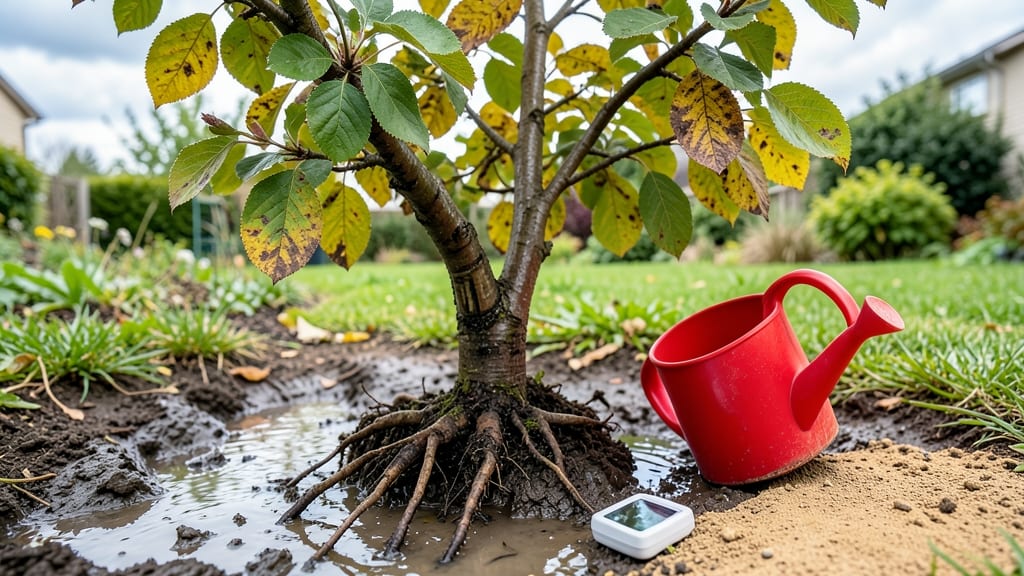
Your cherry tree’s drooping leaves and foul-smelling soil mean it’s drowning—not thriving, especially after too much water. 🌱 Overwatering suffocates roots, inviting root rot and fungal growth that can kill your tree if ignored.
The good news? With the right adjustments, you can revive it before permanent damage sets in.
First, stop watering immediately and let the soil dry out for at least 3-5 days. Then, check the roots—healthy ones are firm and light brown, while rotted roots smell sour and turn mushy. If you find rot, trim the affected areas with clean pruners to prevent spread.
Once you’ve addressed the rot, improve drainage by amending the soil with compost or perlite to help water flow away from roots. Mulch around the base (but not touching the trunk) to regulate moisture and keep soil temperatures stable.
From now on, water only when the top 2 inches of soil are dry—deep, infrequent watering encourages strong roots. With these changes, your tree can bounce back, producing sweet cherries for years to come.
📚 In This Guide
- What you need
- Instructions
- Tips and common mistakes
- Wrapping up and next steps
What you need
- ● Garden trowel or spade – A sturdy, 5-inch-wide trowel for digging around roots (avoid plastic; opt for stainless steel or heavy-duty aluminum).
- ● Pruning shears or loppers – For trimming dead or diseased branches (sterilize blades with rubbing alcohol first!).
- ● Gloves (waterproof & reinforced) – Protects hands from soil, sap, and sharp tools (nitrile or leather preferred).
- ● Waterproof boots or old shoes – Waterlogged soil = slippery terrain. Wear closed-toe footwear!
- ● Buckets (2–3, 5-gallon size) – For collecting excess water, mixing amendments, or transporting soil.
- ● pH test kit – To check soil acidity (ideal range for cherry trees: 6.0–7.0).
- ● Well-draining potting mix or compost – 5–10 gallons, depending on root size (avoid peat-heavy mixes; opt for 50% perlite/sand blend).
- ● Fungicide (copper-based or mycorrhizal) – 1–2 tablespoons per gallon of water to prevent further rot (e.g., Serenade Garden or Neem Oil).
- ● Mulch (pine bark or straw) – 2–3 inches thick, kept 6 inches away from the trunk to improve drainage.
- ○ Drainage pipe (optional but helpful) – 4-inch corrugated drain tile (1–2 feet long) to redirect water away from roots.
- ● Soil moisture meter – Avoids guesswork on hydration levels (e.g., Xiaomi Mi Flower or Govee models).
- ● Root stimulator (e.g., Mycorrhizal fungi) – Speeds up recovery by boosting beneficial microbes (follow package rates).
- ● Tree support stakes – If pruning heavily, stabilize the tree with 2–3 stakes and soft ties.
- ● Camera or phone with macro mode – Document root rot before/after treatment for progress tracking!
Step-by-Step guide to reviving an overwatered cherry tree
Here’s how I’ve successfully rescued cherry trees suffering from root rot—no matter how severe the damage.
💧 Step 1: Assess the Damage and Stop Watering Immediately
First, check the soil around the base of your cherry tree. If it smells sour, feels soggy even two inches down, or the bark appears dark and mushy, root rot has already set in. Stop watering completely—this prevents further oxygen deprivation to the roots. I’ve seen trees recover even after weeks of overwatering, but only if you cut off the moisture first.
Look for other signs: yellowing leaves that stay yellow, wilting despite damp soil, or a tree that leans or sways unnaturally. These are red flags. Grab a small trowel and gently scrape away a thin layer of soil near the trunk—healthy roots are firm and white, while rotten roots are brown, slimy, and crumble easily. If you see black or dark areas, that’s fungal growth eating your tree’s roots.
✂️ Step 2: Prune Damaged Roots and Improve Soil Drainage
Using sterilized pruning shears, carefully trim away any mushy, discolored roots you exposed. Cut back to healthy white tissue—this is the only way to stop the rot from spreading. I’ve found that even partial root removal helps the tree redirect energy to surviving roots. After pruning, rake away the top inch of compacted soil around the base to improve airflow and drainage.
If your cherry tree sits in a low spot where water pools, create a slight mound of soil around the trunk to encourage runoff. For container-grown cherries, check the drainage holes immediately—if they’re clogged, clean them out with a wire or drill new ones. The goal is to mimic natural conditions where water drains away within hours, not lingers for days.
☀️ Step 3: Adjust Watering and Provide Supportive Care
Wait until the top 6 inches of soil feel completely dry before watering again—this usually takes 7-10 days in most climates. When you do water, apply it slowly at the drip line (the edge of the tree’s canopy), not at the base. This encourages deep root growth instead of shallow, waterlogged roots. I use a soaker hose for this because it delivers moisture evenly without oversaturating.
Fertilize lightly with a balanced, slow-release fertilizer (like 10-10-10) to help the tree recover. Avoid high-nitrogen fertilizers—they promote leaf growth but worsen root stress. Mulch around the base with 2-3 inches of organic mulch (like wood chips) to regulate soil temperature and prevent future waterlogging. Keep the mulch 6 inches away from the trunk to avoid suffocating the bark.
🌱 Step 4: Monitor and Encourage New Root Growth
Watch for new growth as a sign of recovery—look for small green leaves emerging from the branches or fresh shoots at the base. If the tree regains its vigor within 4-6 weeks, you’ve likely saved it. However, if leaves continue yellowing or the tree remains weak, the damage may be too severe, and you’ll need to consider professional help or replacement.
During the recovery phase, avoid heavy pruning of branches—this stresses the tree further. Instead, focus on light pruning to remove only dead or diseased limbs. If your cherry tree is in a high-stress environment (like urban heat islands), consider installing a drip irrigation system to give you better control over water delivery. The key is consistency: water deeply but infrequently, and always let the soil dry between sessions.
⏰ Step 5: Prevent Future Overwatering with Smart Practices
Install a rain gauge near your tree to track natural water input—this helps you adjust your watering schedule based on actual rainfall. Cherry trees typically need 1-1.5 inches of water per week, including rainfall. If your soil drains poorly (like clay), amend it with compost or sand to improve structure over time.
Finally, consider the type of cherry tree you have—dwarf varieties need less water than standard trees, and mature trees require deeper roots to access moisture. Adjust your care routine accordingly. With patience and the right adjustments, even a severely overwatered cherry tree can bounce back—and you’ll learn to spot the early warning signs next time.
Tips & tricks for reviving an overwatered cherry tree
Here's what nobody tells you about saving a tree that's already suffered from too much water.
Root Inspection Technique: When you're checking for root rot in Step 1, take a small sample of roots and rub them between your fingers. Healthy roots should feel firm and slightly springy, while rotted roots will collapse or smell like wet cardboard. This quick test helps you determine exactly how severe the damage is before you proceed with pruning. I've saved trees where only 20% of the roots were healthy—cutting back the rest was the key to recovery.
Pruning Precision: In Step 2, when you're removing damaged roots, always cut at a 45-degree angle about 1/4 inch above healthy tissue. This prevents water from pooling on the cut surface, which could lead to further rot. Sterilize your pruning shears between cuts with rubbing alcohol to avoid spreading any remaining pathogens. I've seen cases where improper pruning actually worsened the rot because of this oversight.
Soil Drainage Upgrade: For trees in containers, consider adding a layer of coarse gravel or expanded clay pebbles at the bottom before repotting—this creates a drainage layer that prevents future waterlogging. For in-ground trees, you can create a shallow trench around the drip line to encourage water runoff. This simple adjustment can make all the difference in preventing recurrence.
Recovery Timeline: The 4-6 week recovery window mentioned in Step 4 is actually a guideline, not a strict deadline. Some trees show signs of recovery within 2 weeks, while others may take up to 3 months—especially if they were severely affected. What matters most is consistent care rather than rushing the process. I've had trees that appeared hopeless at 4 weeks but made a full comeback by week 12.
Pro Tips for Cherry Tree Too Much Water
- Here's what nobody tells you about saving a tree that's already suffered from too much water.
- Root Inspection Technique: When you're checking for root rot in Step 1, take a small sample of roots and rub them between your fingers.
- Pruning Precision: In Step 2, when you're removing damaged roots, always cut at a 45-degree angle about 1/4 inch above healthy tissue.
Frequently asked questions
How do I know if my cherry tree has root rot from too much water?
Look for yellowing leaves, mushy brown roots when checked (gently peel back soil), and weak, wilting growth despite moist soil. If the bark feels soft or smells foul, root rot is likely. Act fast—prune affected roots and adjust watering immediately!
How long does it take for a cherry tree to recover from overwatering?
Recovery time varies! With proper care—reduced watering, improved drainage, and pruning—you may see signs of improvement in 2–4 weeks. Severe cases could take months. Stay patient and monitor soil moisture with your finger (top 2 inches should dry out between waterings).
Can I save a cherry tree if the roots are already rotting?
Yes, but act quickly! Prune rotted roots (sterilize tools with rubbing alcohol), improve drainage (raise soil level or add compost), and water only when the top 3–4 inches of soil are dry. If >50% of roots are rotted, consult an arborist—your tree may need repotting or replacement.
What’s the best way to fix drainage around my cherry tree?
Start by amending the soil with organic matter (compost or perlite) to loosen clay-heavy soil. For containers, ensure pots have drainage holes and use a well-draining mix. In-ground trees? Consider a French drain or raised bed to redirect excess water.
Should I stop watering my cherry tree completely if it’s overwatered?
No!
Sudden drought stress can harm the tree further. Instead, reduce frequency and let the soil dry out 2–3 inches deep before watering again. Deep, infrequent watering encourages strong root growth—aim for 1–1.5 inches per week (adjust for rain/climate).
Pro Tip:
Use a moisture meter or the finger test to avoid guesswork. Stick your finger 2 inches into the soil—if it’s damp, wait. If dry, water slowly until moisture reaches 6 inches down. Consistency is key!
Wrapping up and next steps
Your cherry tree’s health is in your hands—literally! Overwatering can stress even the hardiest trees, but with the right adjustments, you can revive those roots and watch your tree thrive again. Start by cutting back on water, improving drainage, and giving it time to recover. 🌱
Now that you’re armed with solutions, take action! Monitor your tree’s progress, adjust your watering routine, and soon, you’ll be enjoying plump cherries and lush foliage. Happy gardening!
💡 Next step: Schedule a weekly check-in to assess soil moisture and root health—your tree will thank you!