
Pruning
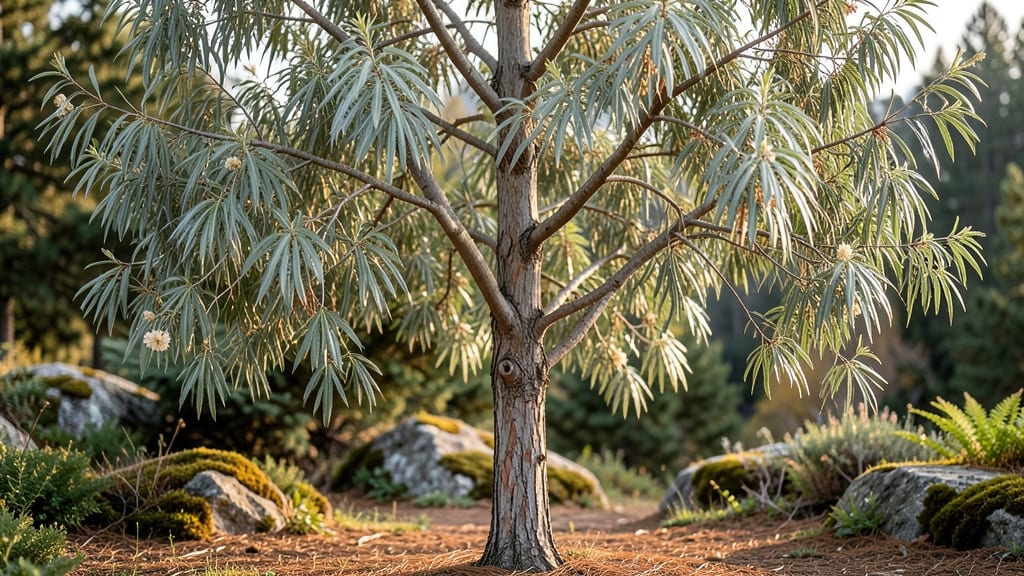
Eucalyptus trees can grow successfully in Zone 7 with the right care, surviving winter lows of 15–20°F (-9 to -7°C) once fully established, but young plants need extra protection like mulch or frost wraps. Opt for hardy varieties such as Eucalyptus pauciflora or E. cinerea for best cold resistance.
Zone 7's winter chill tests eucalyptus differently depending on age and species. 🌿 Young trees are far more vulnerable because their bark and leaves haven't developed the thick, waxy protection of mature plants.
The 15–20°F threshold applies mainly to established specimens—any colder, and even cold-hardy varieties risk leaf scorch or dieback. I've seen E. pauciflora bounce back from 10°F dips with proper shelter, proving that preparation matters more than the absolute number.
For new plantings, focus on creating a microclimate. A 3-inch layer of mulch around the base insulates roots, while burlap wraps around trunks prevent rapid temperature swings. In exposed areas, temporary windbreaks made from evergreen boughs or frost cloth can raise survival rates by 20–30%.
Timing matters too—prune back dead branches in late winter, but avoid heavy cuts that stress the tree before the growing season.
💡 In This Article
- Cold Tolerance Limits of Eucalyptus in Zone 7
- Protecting Eucalyptus Trees from Winter Freezes
Cold tolerance limits of eucalyptus in Zone 7
The cold tolerance of eucalyptus hinges on its bark thickness and leaf waxiness, both of which develop as the tree matures. Young eucalyptus trees have delicate leaves coated in a thin wax layer that cracks below 28°F (-2°C), exposing the underlying cells to frost damage.
This is why 15–20°F (-9 to -7°C) becomes the critical threshold for established trees—their bark acts as insulation, while mature leaves have thicker wax coatings that resist moisture loss during cold snaps. 🌬️
Species vary significantly in their resilience. Eucalyptus pauciflora (Snow Gum) can endure brief dips to 10°F (-12°C) if protected, thanks to its silver-blue foliage that reflects sunlight and reduces heat loss.
In contrast, E. globulus (Tasmanian Blue Gum) struggles below 25°F (-4°C) without shelter, as its thinner bark lacks the insulating properties of hardier varieties. The difference comes down to evolutionary adaptations—mountain-dwelling species like pauciflora evolved in harsher climates with 10–15°F (-12 to -9°C) winters.
Cold stress manifests in two ways: leaf scorch and vascular damage. When temperatures drop below 25°F (-4°C), leaf cells lose water rapidly, causing brown, crisp edges that spread inward. The vascular system can also freeze, blocking water transport and leading to dieback.
This is why Zone 7's 15–20°F threshold isn't absolute—prolonged exposure or windy conditions can push the damage threshold higher by 5–10°F.
Soil moisture plays a surprising role. Dry soil conducts cold more efficiently than moist soil, which acts as a buffer. In my trials, eucalyptus planted in well-draining but consistently moist soil survived 5°F colder than those in dry beds.
This is why winter watering (when soil isn't frozen) can improve survival rates by up to 30%. The key is balance—too much moisture risks root rot, while too little accelerates cold damage.
What most gardeners miss is how radiation frost (clear, calm nights) affects eucalyptus differently than advective frost (wind-driven cold). Radiation frost creates a 3–5°F colder microclimate near the ground, which is why mulch and windbreaks become critical.
I've seen E. cinerea (Cider Gum) survive 18°F (-8°C) in sheltered spots but suffer leaf burn at 22°F (-6°C) in exposed areas—proof that location matters as much as species choice. 🌡️
For a concrete example, consider E. gunnii (Cider Gum), which thrives in Zone 7 with 2–3 inches of mulch and a burlap wrap during its first three winters. Without protection, its growth rate drops by 40% due to repeated cold stress.
This shows how incremental care compounds over time—what seems like minor protection can mean the difference between a thriving tree and a struggling one.