
Companion Plants
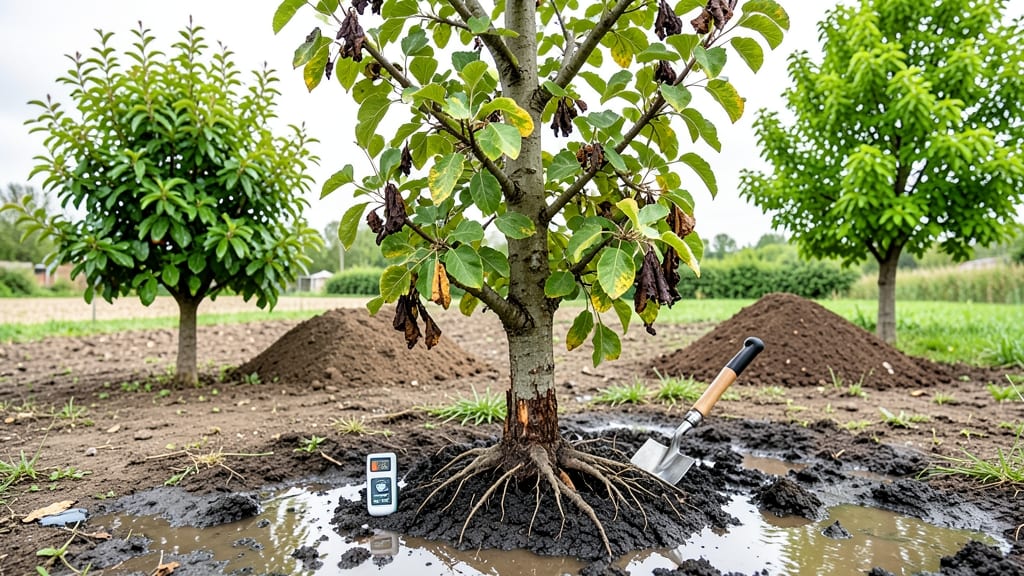
Will an overwatered tree recover? Yes, but only if you act fast—root suffocation and fungal growth can quickly become irreversible. Stop watering immediately, improve drainage, and trim damaged foliage while watching for new growth as your tree's lifeline.
Overwatering creates a double threat: roots suffocate from lack of oxygen while harmful bacteria thrive in waterlogged soil. 🌱 The key is catching signs early—yellowing leaves, foul odors, or mushrooms sprouting at the base.
I've seen trees bounce back when I act within days, but once root rot sets in, even proper care may not save it. Start by letting the soil dry completely between waterings and consider adding organic matter like compost to restore balance.
For container-grown trees, drainage holes become your best friend—if they're missing, repot immediately. 🌿 Deciduous trees handle recovery better than evergreens, which are more sensitive to moisture stress. My rule of thumb? When in doubt, wait another day before watering. Patience and proper soil prep often work wonders.
💡 In This Article
- How Overwatering Damages Tree Roots and What to Watch For
- Step-by-Step Recovery Plan for Overwatered Trees
How overwatering damages tree roots and what to watch for
When you overwater a tree, the roots suffocate because water fills the soil pores, displacing the oxygen they need to respire. This creates an anaerobic environment where harmful bacteria like Pythium and Phytophthora thrive, breaking down root tissue and releasing toxins.
The roots also lose their ability to absorb water and nutrients efficiently, leading to a vicious cycle where the tree can't sustain itself even when soil moisture decreases.
One of the first visible signs is yellowing leaves that start at the bottom and spread upward—a classic symptom of root stress. 🌿 You might also notice a foul, sour smell near the base of the tree, similar to wet newspaper or rotten eggs, which indicates anaerobic bacteria at work.
Another red flag is the sudden appearance of mushrooms or mold growing from the soil, signaling fungal decomposition of organic matter. These signs appear within 3-7 days of chronic overwatering, depending on soil type and tree species.
Coniferous trees like pines and spruces are particularly vulnerable because their shallow root systems can't tolerate waterlogged conditions as well as deeper-rooted deciduous trees. The needle discoloration in evergreens often appears as a dull brown or purple hue rather than the bright yellow seen in broadleaf species.
This color change happens because the tree's vascular system struggles to transport water and nutrients, causing cellular damage in the needles.
Soil texture plays a critical role in how quickly damage occurs. Clay soils hold water for longer than 48 hours without drying, while sandy soils drain faster but still trap excess moisture near the surface.
The key is checking soil moisture with your finger—if it feels damp more than 2 inches down after a watering, you're likely overdoing it. Even well-draining soils can become problematic if water accumulates around the root flare (the swollen base where roots meet the trunk).
What most people don't realize is that overwatering also leaches essential nutrients like nitrogen and potassium from the soil. These nutrients get washed away with excess water, leaving the tree malnourished even if you're providing fertilizer.
The root tips begin to die back first, reducing the tree's ability to anchor itself and absorb moisture—this is why you might see the tree leaning or toppling more easily during recovery attempts.
Consider this comparison: A healthy tree root system has 20-30% air space in the soil, while overwatered soil can drop to 5% air space or less**. This dramatic reduction in oxygen availability forces roots to switch to inefficient fermentation for energy, producing ethanol—a toxic byproduct that further damages cellular structures.
The damage compounds quickly, which is why early intervention is critical.