
Pruning
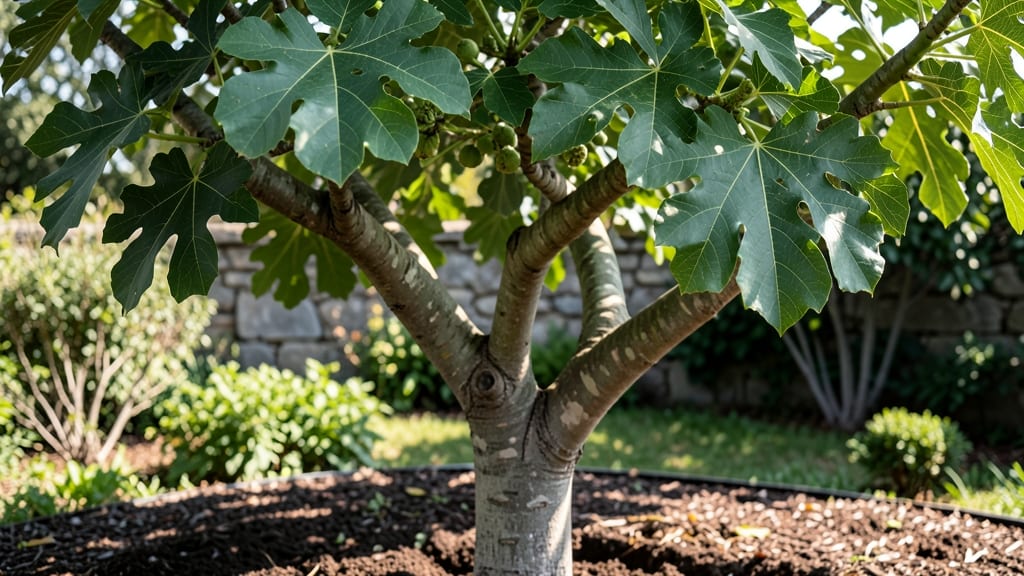
Fig tree spring pruning transforms last year’s tangled mess into a productive framework for heavy fruit. ✂️ I’ve learned the hard way that cutting too late means sacrificing next year’s harvest—so timing is everything.
The key is working while the tree is still dormant but before new growth starts, usually between late February and early April in most climates.
Start by removing dead, diseased, or crossing branches first—these compete with fruit production. Then shape the tree by thinning out crowded growth to improve airflow, which cuts down on fungal issues.
A well-pruned fig tree will reward you with thicker branches and more abundant fruit by summer, plus fewer pests sneaking into the canopy.
After pruning, give your tree a light feeding with balanced fertilizer (10-10-10) to fuel new growth. Water deeply but avoid soggy soil—figs hate wet feet.
If you’re in a frost-prone area, hold off until after the last frost date, or protect young trees with frost cloth for those chilly spring nights.
This is also the perfect time to transplant young fig trees if needed—they establish quickly in spring’s warm soil. Just be patient: it takes about 6-8 weeks for pruned trees to show new growth, but the long-term payoff is worth the wait.
📚 In This Guide
- What you need
- Instructions
- Tips and common mistakes
- Wrapping up and next steps
What you need
- ● Pruning shears – Bypass pruners (sharp, clean, and sterilized with rubbing alcohol or bleach to prevent disease spread).
- ● Loppers – For thicker branches (1–2 inches in diameter). Look for bypass-style to avoid crushing.
- ● Pruning saw – For branches 2+ inches thick (avoid bolt cutters—they damage wood).
- ● Disposable gloves – Nitrile or leather (to protect from thorns and sap).
- ● Rag or paper towels – For wiping tools between cuts (sanitation is key!).
- ○ Sealing wax or pruning paint – Optional but recommended for cuts larger than ½ inch to prevent disease.
- ● Bucket or trash bag – For collecting pruned branches (compost or dispose of them!).
- ● Ladder (if needed) – Sturdy, extendable for tall fig trees (safety first!).
- ● Hand sanitizer – For cleanliness after handling sap.
- ● Sharpie or marker – To label cuts if you’re training the tree.
- ● Hose with nozzle – For rinsing tools post-pruning.
- ● Fertilizer (balanced, 10-10-10) – To nourish the tree after pruning (apply 4–6 weeks later).
Step-by-step guide to pruning your fig tree in spring
Here’s how I approach dormant-season cuts to maximize fruit production and plant health.
✂️ Step 1: Assess the Tree for Dead or Damaged Wood
Start by examining the entire tree for branches that are completely brown, brittle, or showing no signs of green tissue underneath the bark. These are dead and should be removed immediately. I like to make a small vertical cut into the bark first—if the wood inside is dark and crumbly, it’s dead. Healthy wood will have green or white tissue beneath.
Next, look for branches that were damaged by frost, wind, or disease last season. These will often have cracked bark, oozing sap, or unusual growth patterns. Mark these with a small piece of twine or tape so you don’t miss them during pruning. Remember, fig trees are resilient, but removing dead wood now prevents pests and diseases from taking hold.
✂️ Step 2: Remove Crossing or Rubbing Branches
Fig trees grow vigorously, and their branches can easily cross or rub against each other, creating wounds that invite infection. Focus on removing branches that intersect at an angle less than 45 degrees—these are the ones most likely to damage each other over time. Use sharp pruning shears to make a clean cut just outside the branch collar (the swollen area where the branch meets the trunk).
If two branches are rubbing but neither is clearly dominant, remove the smaller one. You’ll know you’re making the right call when the tree’s natural structure starts to look more open and airy. This improves sunlight penetration and air circulation, which directly boosts fruit production. I always step back after this step to visualize the tree’s new shape.
✂️ Step 3: Thin Out Overcrowded Branches
Fig trees produce fruit on both old and new wood, so maintaining an open canopy is critical. Look for clusters of branches growing too close together—these compete for sunlight and nutrients, weakening overall growth. Aim to thin out branches so that light can reach the center of the tree. Start by removing the smallest, least productive branches first, cutting them back to their point of origin.
For larger branches, make your cuts just above a bud that faces outward from the center of the tree. This encourages the tree to grow in a more balanced, outward direction. I usually thin about 20-30% of the tree’s branches in one session—never more than that, as fig trees are sensitive to aggressive pruning. Watch for new shoots emerging from the pruning cuts within a few weeks; these indicate the tree is responding well.
✂️ Step 4: Shape the Tree for Optimal Fruit Production
Fig trees benefit from a slightly open, vase-like shape that allows sunlight to reach as many branches as possible. Start by identifying the main scaffold branches—the thickest, sturdiest branches that form the tree’s structure. These should be spaced about 12-18 inches apart along the trunk. If any scaffold branches are growing too close together, thin one to maintain this spacing.
Next, focus on the smaller branches. Prune back any that are growing inward or downward, as these won’t contribute much to fruit production. Instead, encourage outward and upward growth by cutting just above a bud that points in the desired direction. I like to step back every few minutes to ensure the tree’s shape remains balanced. The goal is a tree that looks like it’s reaching for the sky, not one that’s crowded and suffocating itself.
🌿 Step 5: Clean Up and Apply Protective Measures
Once all the cuts are made, gather up all the pruned branches and dispose of them in a sealed bag or burn them. Never leave pruned wood on the ground, as it can harbor pests and diseases. After cleanup, I like to apply a thin layer of copper fungicide to any large cuts to prevent fungal infections. This is especially important if your tree is in a humid climate or if you’ve noticed signs of disease in the past.
Finally, give the tree a light watering to help it recover from the stress of pruning. Avoid heavy watering immediately after pruning, as it can encourage fungal growth on fresh cuts. Instead, wait a day or two and then water deeply to encourage root growth. You’ll know you’ve done a good job when new leaves begin to appear within 4-6 weeks, signaling that the tree is ready to focus its energy on producing fruit.
Tips & tricks for perfect fig tree spring pruning
These essential strategies will help you prune with confidence and set your fig tree up for a bountiful harvest.
Timing is Everything: The dormant season—late winter to early spring before buds swell—is the ideal time for pruning fig trees. I always aim to finish by early March in most climates, as new growth begins when daytime temperatures consistently rise above 50°F. This timing prevents stressing the tree too early in the season when it's still conserving energy. If you missed the window, wait until after harvest next year rather than pruning during active growth.
Tool Selection Matters: Sharp, clean pruning shears are non-negotiable for making precise cuts that heal properly. I use bypass pruners for branches up to ½-inch thick and a pruning saw for thicker branches. Always disinfect your tools between cuts with rubbing alcohol or a 10% bleach solution to prevent spreading disease. Dull tools crush branches, creating larger wounds that take longer to heal and invite infections.
Visualize the Final Shape: Before making any cuts, step back and visualize your tree's ideal structure. I sketch a rough outline on paper to map out where branches should go. Focus on creating an open center that allows sunlight to reach all branches—fig trees produce fruit on both old and new wood, so every branch should have access to light. This step prevents over-pruning and ensures you're working toward a balanced, productive shape rather than just removing branches randomly.
Post-Pruning Care: After finishing all cuts, don't forget the final steps that make all the difference. Watering lightly right after pruning helps the tree recover, but wait 48 hours before giving a deep watering to encourage root growth. I also apply a thin layer of arborist wound dressing to larger cuts (over ½-inch in diameter) to protect against fungal infections. This simple step can prevent months of struggle with infected branches.
Pro Tips for Fig Tree Spring
- These essential strategies will help you prune with confidence and set your fig tree up for a bountiful harvest.
- Timing is Everything: The dormant season—late winter to early spring before buds swell—is the ideal time for pruning fig trees.
- Tool Selection Matters: Sharp, clean pruning shears are non-negotiable for making precise cuts that heal properly.
Frequently asked questions
Got questions about pruning your fig tree during spring? You’re not alone! Here are some of the most common concerns—and straightforward answers—to help you get it right.
When is the exact best time to prune a fig tree in spring?
The ideal window is right after the last frost but before new leaves emerge—typically late February to early April, depending on your climate zone. In warmer regions (like Zone 8+), prune in January or February to avoid heat stress. Pro tip: Check for sap flow—if it’s running, wait a few weeks!
How much can I cut back a fig tree in spring without harming it?
For mature fig trees, never remove more than 25-30% of the canopy in a single season. Young trees (under 3 years) can handle lighter cuts (10-15%). Focus on dead, crossing, or weak branches first. Warning: Over-pruning stresses the tree and may delay fruit production.
Will pruning my fig tree in spring reduce next year’s fruit?
Not if done correctly! Pruning opens the canopy to sunlight and air, which actually boosts fruit quality and quantity. However, aggressive cuts too late in spring (after buds swell) can stunt growth. Prioritize structural shaping over heavy fruit-bearing branches.
What if my fig tree starts oozing sap after pruning?
Sap bleeding is normal—it’s the tree’s way of sealing wounds. To minimize it, prune on a cool, dry day and use sharp, sterilized tools. Apply pruning sealant (optional) to large cuts, but skip it for small branches. Sap usually stops in 1-2 weeks.
Can I prune a fig tree in spring if I missed the dormant season?
Yes, but wait until after fruiting (late summer/early fall) to avoid stress. Spring pruning is ideal, but if you missed it, lightly shape the tree in early summer—just remove dead wood and thin crowded branches. Note: Figs are forgiving, but never prune during active fruit production.
What’s the difference between pruning a standard fig tree vs. a dwarf variety?
Dwarf figs (like ‘Little Miss Figgy’) need less aggressive pruning—focus on airflow and shape rather than heavy cuts. Standard varieties (e.g., ‘Brown Turkey’) can handle more structural pruning to encourage larger branches. Both benefit from removing suckers at the base!
Wrapping up and next steps
Pruning your fig tree during the dormant season is a game-changer for its health and productivity! By following the right techniques—like removing dead wood, thinning crowded branches, and shaping for airflow—you’ll set the stage for vibrant growth and bigger harvests next spring. 🌱✂️
Ready to give your fig tree the TLC it deserves? Grab your tools, roll up your sleeves, and start pruning today! For extra confidence, revisit our FAQ section or consult a local arborist—your tree will thank you with lush, fruitful branches come summer!