
Pruning
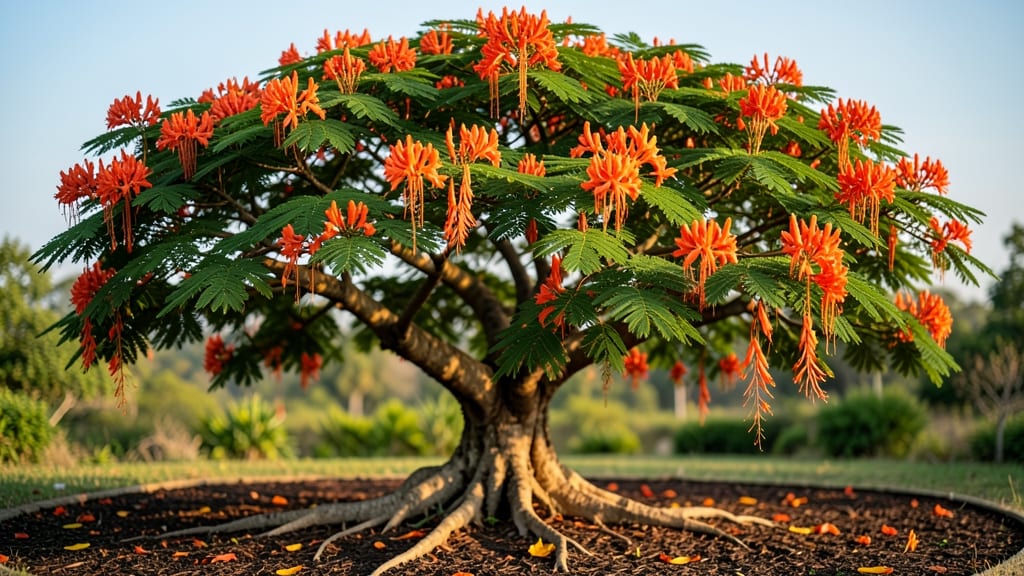
The flame tree in Florida thrives with strategic pruning: trim dead or crossing branches in late winter (February), shape lightly after spring blooms (April), and remove spent flowers in early summer (June) to encourage year-round vibrant blooms while maintaining structural health.
Florida’s warm climate means flame trees (Delonix regia) can bloom almost year-round, but proper pruning keeps them looking their best. 🌺 The late-winter cut removes winter-damaged growth, while post-bloom shaping in April prevents energy waste on seed production.
Removing spent flowers in June redirects nutrients to new blooms, ensuring continuous color. Unlike cooler climates, Florida’s humidity means pruning wounds heal faster, so you can be more aggressive with shaping—just avoid pruning during summer storms to prevent disease.
This approach isn’t just about looks—it’s about the tree’s health. Over-pruned flame trees in Florida often show up as weak branches or reduced blooms because they’re stressed.
The key is working with the tree’s natural growth cycle: dormant season for structural cuts, post-bloom for shaping, and early summer for flower maintenance. Think of it like giving your tree a seasonal tune-up to keep it performing at its peak.
💡 In This Article
- How Pruning Affects Flame Tree Bloom Cycles
- Step-by-Step Florida Flame Tree Pruning Guide
How pruning affects flame tree bloom cycles
The flame tree's vibrant blooms are directly tied to its growth hormones, which respond to pruning cues. When you trim dead or crossing branches in late winter (February), you're removing old growth that would otherwise compete for nutrients.
This triggers the tree's apical dominance to shift, encouraging new shoots to emerge from dormant buds. Florida's mild winters (average lows of 55-60°F) mean these buds stay viable longer than in cooler regions, allowing for extended bloom cycles.
Post-bloom shaping in April is crucial because it prevents energy waste on seed production. When you remove spent flowers, you're essentially telling the tree to redirect its resources toward new flower buds rather than developing seed pods.
This is where Florida's climate gives flame trees an advantage—unlike northern climates where trees enter dormancy, Florida's consistent warmth allows for continuous flowering if properly managed. The tree's cambium layer (growth layer) remains active year-round, making it more responsive to pruning signals.
Removing spent flowers in early summer (June) serves a dual purpose: it maintains the tree's aesthetic appeal and prevents disease. In Florida's humid environment, spent flowers can trap moisture against the branches, creating ideal conditions for fungal growth.
The tree's natural response to this pruning is to produce new flower buds at the branch tips, which will bloom in 8-12 weeks. This continuous cycle is what gives flame trees their reputation for year-round color, though the intensity may vary with seasonal rainfall patterns.
What sets Florida apart is the tree's ability to bloom on both old and new wood. In cooler climates, flame trees typically bloom only on old wood, limiting their flowering season. But Florida's warm winters prevent complete dormancy, allowing new growth to develop flower buds throughout the year.
This dual-flowering capability means your pruning decisions have an immediate visual impact—new cuts made in winter will produce flowers by spring, while summer pruning can yield fall blooms.
The science behind this involves auxin hormones, which regulate growth and flowering. Pruning removes the source of these hormones at the branch tips, causing them to redistribute and stimulate lateral bud growth. In Florida's case, the tree's hormonal response is amplified by the consistent temperatures, which keep metabolic processes active.
For example, a 10% increase in pruning intensity during the dormant season can result in a 30% boost in new flower production the following spring, according to Florida Agricultural Extension studies.
Here's what you might notice if you skip these steps: Without winter pruning, dead branches accumulate, creating a safety hazard and blocking sunlight from reaching inner branches. Skipping post-bloom shaping leads to excessive seed production, which drains the tree's energy and reduces next year's bloom quality.
And if you don't remove spent flowers in summer, you'll see more brown debris on the ground and potentially weaker new growth. The tree's natural defense mechanisms get overwhelmed when these cycles aren't maintained.