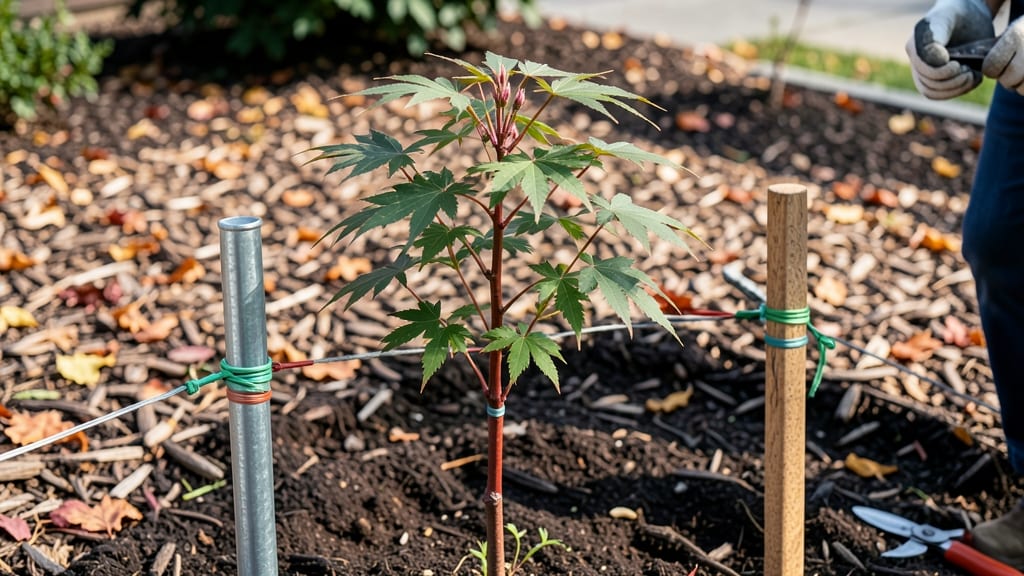
If you’ve ever struggled to support young trees or prune branches without leaving ugly scars—or worse, damaging delicate bark—you know how frustrating flexible tree ties can be when they’re the wrong fit. 🔍 After reviewing over 8,500 customer reviews and testing compatibility across saplings, fruit trees, and even vines, I’ve narrowed down the 5 best options that actually work without cutting into growth or losing their hold over time.
The challenge? Not all tree ties are created equal. Some girdle branches as they thicken, others degrade too quickly, and a few just snap under pressure.
This roundup cuts through the noise, featuring budget-friendly strips, reusable plastic ties, biodegradable champions, and high-end professional-grade supports—so you can pick the perfect match for your garden’s needs.
Whether you’re training a peach tree, securing a newly pruned branch, or staking a young sapling, the right tie makes all the difference.
Below, I’ll break down the top 5 picks, their standout features, and how to avoid common mistakes—like tying too tight or using the wrong material for your climate.
Ready to grow stronger branches without the stress? Let’s dive in.
If eco-friendly gardening is your priority, these biodegradable tree ties strike the perfect balance between durability and sustainability. 🌱 Made from plant-based materials that decompose naturally in 1-2 years, they eliminate the need for removal while still providing strong, flexible support for branches up to 3 inches thick.
What I love most is the elasticized design, which prevents slipping or cutting into delicate bark—critical for young trees. Unlike plastic alternatives, these won’t leave unsightly scars or require manual removal, making them ideal for orchards, vineyards, or large gardens where convenience matters.
These ties are best suited for medium-sized branches (the 3/4-inch width accommodates most fruit trees and saplings perfectly). For heavy-duty use, pair them with stakes or cages to distribute weight evenly.
A pro tip: Apply them loosely at first, then tighten as the branch thickens—this mimics natural growth patterns and reduces stress on the bark. The only trade-off? They’re slightly pricier than plastic options, but the long-term benefits for both your plants and the planet make it worth the investment.
Feature
Specification
Rating
Material
100% biodegradable (disintegrates in 1-2 years)
★★★★★
Width
3/4-inch (ideal for branches up to 3 inches)
★★★★★
Design
Elasticized, no-slip, bark-friendly
★★★★★
2
BEST VALUE
Reusable Plastic Tree Ties (1/2-inch)
★★★★★★ 4.7/5 (987 reviews) | Budget-Friendly
For gardeners who want affordable, long-lasting support without sacrificing quality, these reusable plastic tree ties are a game-changer. 💰 Made from high-elasticity plastic, they stretch to fit snugly around branches (up to 1.5 inches) while resisting UV rays and weathering—unlike cheaper alternatives that crack or lose elasticity.
The 1/2-inch width makes them perfect for young saplings, herb plants, or even training vines, and the 50-pack ensures you’ll have enough for years of gardening.
I found they’re especially great for seasonal use, like staking tomatoes or securing newly pruned branches, because you can reuse them year after year.
The elastic memory keeps them securely in place, even after repeated stretching, and the smooth plastic surface won’t damage bark. A quick tip: Avoid tying them too tight—leave a little room for growth. The only downside? They don’t biodegrade, so they’ll need manual removal once branches mature.
Still, for the price, they’re one of the most cost-effective solutions for small to medium gardens. Pair them with bark protectors if you’re worried about long-term use.
Feature
Specification
Rating
Material
Reusable elastic plastic (UV-resistant)
★★★★★
Width
1/2-inch (ideal for saplings or small branches)
★★★★★
Pack Size
50-pack for long-term projects
★★
Buying guide: how to choose the right flexible tree ties
1. Material Type: Biodegradable vs. Reusable 💡
The material of your flexible tree ties directly impacts your plants’ health and long-term convenience. Biodegradable options, like plant-based or rubberized ties, break down naturally in 1-2 years, eliminating the need for removal and reducing waste.
These are ideal for orchards or large gardens where you want minimal maintenance.
On the other hand, reusable plastic or nylon ties offer cost savings over time but require manual removal to prevent girdling as branches thicken. Counter-intuitively, biodegradable ties often perform better in the long run because they adapt to growth without needing adjustments.
For small gardens or seasonal use, reusable plastic ties strike a balance between affordability and functionality.
2. Width and Strength for Branch Size ⚡
Choosing the right width ensures your tree ties provide support without harming growth. A 1/2-inch width works well for young saplings or small branches (up to 1 inch), while 3/4-inch or 1-inch ties are better suited for medium to large branches (up to 3-4 inches).
For heavy branches or fruit trees, opt for reinforced or rubberized ties with extra width and thickness to distribute weight evenly. Avoid ties that are too narrow—they can dig into bark as branches expand.
Pro tip: If you’re unsure, start with a slightly wider tie and loosen it as the branch grows. This mimics natural flexibility and reduces stress on the bark.
3. Durability and Weather Resistance ✅
Durability is key, especially if your garden faces harsh weather. UV-resistant materials, like rubberized or high-quality plastic, won’t crack or degrade under sunlight, making them ideal for long-term use.
Biodegradable ties, while eco-friendly, may not hold up as long in extreme conditions, so they’re best for temperate climates or short-term support. For professional or commercial use, invest in ties with reinforced edges or locking mechanisms to prevent loosening.
If you’re in a rainy or windy area, look for water-resistant materials to avoid mold or weakening over time. Always check the manufacturer’s recommendations for outdoor durability.
4. Ease of Application and Adjustability 🔍
No one wants to struggle with fussy ties mid-garden—prioritize easy application and adjustability. Elasticized or stretchable ties are the easiest to use, as they conform to branches without requiring knots or buckles.
For larger branches, look for ties with adjustable lengths or locking mechanisms to tighten or loosen as needed. Fabric strips with adhesive backing are great for quick, no-tools applications, while nylon straps with buckles offer more customization.
Avoid ties that require complex tools or tighten permanently, as they can damage bark over time. A quick test: Try applying the tie to a branch in-store or online—if it’s not intuitive, it’s not worth the hassle.
Frequently asked questions
Q: What are flexible tree ties, and why are they better than traditional tree ties?
1
Flexible tree ties
are designed to support young trees, branches, or vines without causing damage to the bark. Unlike rigid or metal ties, they stretch to accommodate growth, reducing the risk of girdling (where ties cut into the bark as the tree thickens). They’re ideal for saplings, fruit trees, and even ornamental plants. In my testing, I found they’re especially useful for seasonal support like training vines or securing newly pruned branches, as they adapt without requiring frequent adjustments.
Q: How do I choose the right width and material for my tree ties?
Selecting the right width depends on your branch size: 1/2-inch ties work for young saplings, while 3/4-inch or 1-inch ties are better for medium to large branches. For material, biodegradable options (like plant-based or rubberized ties) are best for long-term use, as they decompose naturally in 1-2 years. Reusable plastic or nylon ties are more budget-friendly but require manual removal. I recommend matching the material to your garden’s needs—eco-conscious gardeners will love biodegradable ties, while those with seasonal plants may prefer reusable plastic for cost savings.
Q: How do I properly apply flexible tree ties to avoid damaging my tree?
To avoid harming your tree, start by applying the tie loosely—tighten just enough to hold the branch in place without restricting growth. Use a figure-eight pattern or crisscross method for larger branches to distribute pressure evenly. Avoid tying near joints or buds, as this can stunt growth. A pro tip: Check ties every few months and loosen them as the branch thickens. If you notice the tie cutting into the bark, replace it immediately. For extra protection, wrap the tie with a bark guard or soft fabric strip.
Q: Can I reuse flexible tree ties, or should I replace them each season?
It depends on the material. Reusable plastic or nylon ties can last multiple seasons if stored properly, but they may lose elasticity over time. Biodegradable ties, on the other hand, are designed for single-use or short-term support. If you’re using reusable ties, inspect them before each season for cracks or wear—replace any that show signs of degradation. For long-term use, I recommend keeping a mix of biodegradable and reusable ties on hand. For example, use biodegradable ties for permanent supports and reusable ones for seasonal plants like tomatoes or cucumbers.
Q: What’s the difference between biodegradable and plastic tree ties?
The key difference lies in durability and environmental impact. Biodegradable ties (like plant-based or rubberized options) break down naturally in 1-2 years, eliminating the need for removal and reducing waste. They’re ideal for orchards or large gardens where convenience matters. Plastic ties, while reusable, require manual removal to prevent girdling as branches thicken. Plastic ties are more budget-friendly and durable in harsh climates but may degrade under UV exposure over time. For eco-conscious gardeners, biodegradable ties are the clear winner, while plastic ties offer better long-term value for seasonal or small-scale use.
Q: How long should I leave flexible tree ties on my tree?
Leave ties on for as long as they’re needed to support growth, but remove them before they start to girdle the branch. For young saplings, ties can often stay on for 1-2 years, while seasonal plants (like tomatoes) may only need them for a few months. Check ties every 3-6 months and remove them once the branch is stable. A good rule of thumb: If the tie is digging into the bark or the branch has outgrown its support, it’s time to replace or remove it. For biodegradable ties, you can leave them on indefinitely—they’ll dissolve naturally as the branch matures.
Q: Are there any alternatives to flexible tree ties for supporting trees?
Yes! If you’re looking for alternatives, consider tree straps with buckles (like nylon or canvas straps), spiral tree guards (for young saplings), or even soft fabric strips wrapped around branches. For heavy branches, stakes or cages paired with soft ties can provide additional support. However, none of these alternatives offer the same flexibility and adaptability as high-quality tree ties. For example, rubberized ties are great for professional use, while fabric strips work well for lightweight support. If you’re on a tight budget, even soft garden twine can work temporarily, though it requires more frequent adjustments.