
Flowers
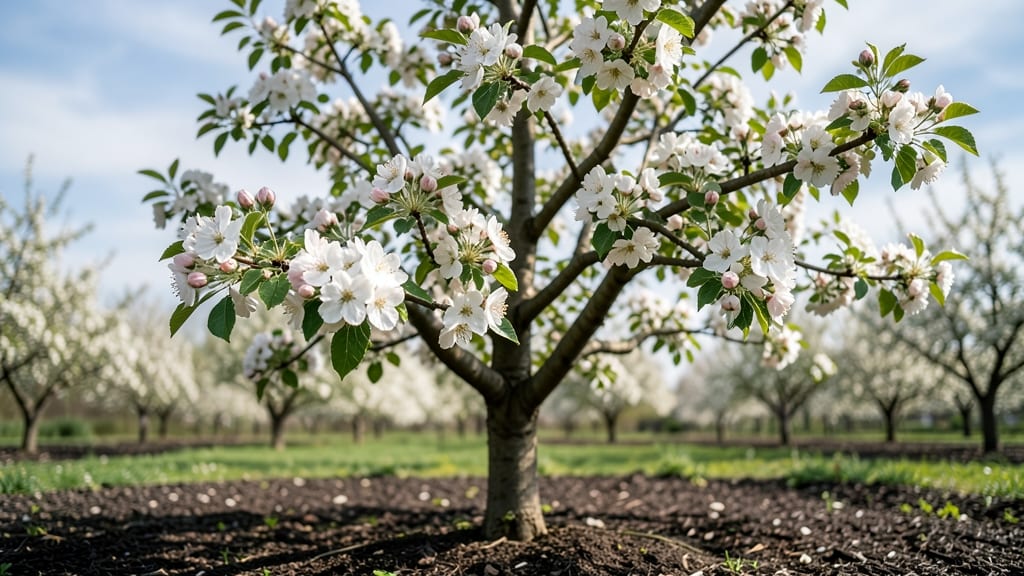
Mastering fruit tree flowers identification isn’t just about admiring spring blooms—it’s your first clue to what’s coming next in your orchard. 🌸 I’ve spent years watching apple blossoms turn into fruit, and cherry flowers signal the sweet harvest ahead.
Knowing these blooms helps you time pruning, spot pollination issues, and even catch early signs of pests before they ruin your crop.
The key is shape and color: apple trees have pink-white clusters, peach trees burst with solitary pink blooms, while citrus trees show off white star-shaped flowers. Each type blooms at different times—apples in early spring, peaches in late winter, and citrus in winter or early spring.
A quick glance at these flowers tells you exactly what to expect from your tree later in the season.
This guide breaks down 20 common fruit tree blooms so you can match them to your own trees. Once you recognize them, you’ll prune at the right time, protect blossoms from frost, and even predict harvests months in advance. No more guessing—just confident gardening based on what you see.
Whether you’re a backyard fruit grower or managing a small orchard, these visual cues will change how you care for your trees. Let’s get started with the easiest blooms to spot first—you’ll be an expert in no time.
The Science Behind Flower Shapes
Identifying fruit tree flowers isn’t just about aesthetics—it’s rooted in evolutionary biology, pollination strategies, and environmental adaptations. The unique shapes, colors, and structures of these blooms serve critical functions, from attracting pollinators to optimizing reproduction.
Here’s why fruit tree flowers develop the way they do, broken down by the key drivers behind their diversity.
Nature has a very specific brief for fruit tree flowers: lure the right pollinator. The shape, scent, and even the timing of blooms are tailored to the creatures that visit them. Here’s how it works:
- Bee-friendly flowers: Tubular or open-faced blooms (like apple or cherry blossoms) expose nectar and pollen directly to bees’ bodies. Their white or pale colors are easy for bees to spot under UV light, which they see as purple or blue. Studies show that bees are drawn to high-contrast patterns, which is why many fruit trees have striped or speckled petals.
- Butterfly magnets: Flat, open flowers (e.g., peach or plum blossoms) with bright pinks, purples, or yellows are perfect for butterflies. These insects have long proboscises (tongues) and prefer landing platforms where they can sip nectar without getting dusted with pollen. The sweet, fruity scents of these flowers are also a butterfly favorite.
- Bird and bat pollinators: Trees like loquat or persimmon produce red or tubular flowers that mimic the colors birds see best. These blooms often open at night to attract bats, which rely on scent and movement rather than color. The trade-off? These flowers don’t produce much fragrance—birds and bats don’t need it!
✨ Pro Tip: If your fruit tree’s flowers aren’t attracting pollinators, check the timing. Some trees bloom early spring (when bees are still dormant), while others wait for warmer weather. Planting companion flowers (like lavender or marigolds) nearby can create a pollinator highway!
Fruit trees didn’t evolve in a vacuum—they adapted to local climates, altitudes, and even soil types. This is why a citrus tree in Florida looks different from a cherry tree in Oregon. Here’s how environment influences flower structure:
| Factor | Effect on Flowers | Example Trees |
|---|---|---|
| Cold climates | Flowers bloom early to take advantage of short growing seasons. Often larger and showier to compensate for limited pollinator activity. | Apple, pear, cherry |
| Warm, humid climates | Flowers may be smaller and more clustered to reduce water loss. Often fragrant to attract pollinators in dense, competitive environments. | Mango, lychee, citrus |
| High altitude | Flowers develop thicker petals or protective buds to shield reproductive parts from wind and UV radiation. | Mountain ash, some apricot varieties |
| Drought-prone areas | Flowers may open at dawn to minimize water loss and often have deep nectar reservoirs to attract pollinators quickly. | Pomegranate, fig |
💡 Key Insight: If you’re growing a fruit tree in an unusual climate for its species (e.g., a peach tree in Alaska), its flowers might struggle to set fruit because pollinators are scarce or the blooms aren’t adapted to local conditions. Consider microclimate adjustments, like windbreaks or irrigation, to mimic its native environment.
Not all fruit tree flowers are identical—even within the same species, you’ll find wild variations due to genetics and selective breeding. Here’s why:
- Natural mutations: Over generations, random genetic changes can alter flower shape, color, or scent. For example, some almond trees produce pink flowers instead of the typical white, a trait that can spread if pollinators favor it.
- Human intervention: Orchardists and botanists have cross-pollinated trees for centuries to create disease-resistant, high-yield, or ornamental varieties. A classic example? The ‘Bing’ cherry was bred to have larger, more vibrant flowers than its wild ancestors to attract more bees.
- Self-pollination vs. cross-pollination:
- Self-pollinating trees (like figs) often have smaller, less showy flowers because they don’t need to “advertise” to pollinators.
- Cross-pollinating trees (like apples) evolve brighter, more complex flowers to ensure they stand out to bees flying between trees.
🔥 Actionable Tip: If you’re growing heirloom or grafted varieties, their flowers might look unexpectedly different from store-bought trees. Always check the parentage or breeding history—this can explain why a ‘Honeycrisp’ apple tree has double-petal blooms while a wild crabapple stays simple.
Understanding these biological and environmental forces helps explain why fruit tree flowers vary so widely—and why some might fail to thrive in your garden. Next up: How to use these traits to ID flowers accurately.
Quick Fixes for Flower ID Confusion
Identifying fruit tree flowers can feel like solving a puzzle—especially when blooms look eerily similar or seasonal changes blur their traits. The good news? Most common issues have straightforward solutions, whether you're dealing with fading petals, mislabeled varieties, or simply not knowing where to start.
Below, we’ll break down practical fixes for the most frustrating flower-ID roadblocks, plus prevention tips to keep your garden (and your confidence) blooming.
Problem: "All my fruit tree flowers look like white or pink blobs—how do I tell them apart?" Fix: Fruit tree flowers often share colors (white, pink, red) but differ in shape, scent, and growth patterns. Use this 3-step cheat sheet to distinguish them:
- 📏 Shape & Structure
- Bell-shaped? Likely cherry or plum (e.g., Prunus species).
- Flat clusters? Apple or pear (e.g., Malus or Pyrus).
- Single, cup-like? Peach or nectarine (Prunus persica).
- Pro tip: 💡 Count the petals! Most fruit tree flowers have 5 petals, but citrus (like lemon or orange) often have 4–6.
- 👃 Scent & Timing
- Strong, sweet fragrance? Apple or pear flowers attract pollinators early.
- Mild or no scent? Could be stone fruits (peach, plum) or pomegranate.
- Timing matters: Cherry blooms first (late winter), while peach flowers after (early spring).
- 🌿 Leaf & Branch Cues
- Serrated leaves? Apple or pear.
- Smooth, oval leaves? Plum or cherry.
- Thorns? Apple or hawthorn (not a fruit tree, but often confused).
Prevention: 🌱 Label your trees at planting with a small tag listing the variety. Snap close-up photos of flowers and leaves during bloom season for future reference.
Problem: "My fruit tree flowers fell off before fruiting—what went wrong?" Fix: Dropping flowers usually signals stress or poor pollination. Here’s how to reverse it:
| Cause | Quick Fix | Prevention |
|---|---|---|
| 🌡️ Late Frost | Cover young trees with frost cloth before 32°F. | Plant late-blooming varieties (e.g., Elberta peach) or choose frost-resistant trees like arctic apple. |
| 💧 Over/Under Watering | Water deeply 1–2x/week (1 inch total). Avoid soggy soil. | Mulch with wood chips (2–3 inches) to retain moisture. |
| 🐝 Poor Pollination | Hand-pollinate with a soft brush or attract bees with native plants (e.g., lavender, borage). | Choose self-pollinating varieties (e.g., Anna apple) or plant 2+ trees of the same type. |
| 🍄 Fungal Disease | Spray with neem oil or baking soda mix (1 tbsp/baking soda + 1 quart water + drop of soap). | Prune for airflow and remove fallen petals to reduce spores. |
| 🌿 Nutrient Deficiency | Fertilize with balanced 10-10-10 in early spring. | Test soil annually and amend with compost or kelp meal. |
Pro Tip: ✨ Shake the branches gently during peak bloom (when bees are active) to boost pollination. Time it for morning hours when dew is present.
Problem: "I don’t have time to memorize every detail—what’s the easiest way to ID?" Fix: Leverage free apps and tools to turn your phone into a flower detective:
- 📲 Best ID Apps: - PictureThis (AI-powered, works offline). - PlantNet (crowdsourced database, great for rare blooms). - iNaturalist (community-driven, tracks bloom times). - 🔍 DIY Cheat Sheet: - Take 3 photos per flower: 1. Full bloom (showing shape/color).
- Close-up of petals/center (stamens, pistils).
- Leaves/branches (texture, arrangement). - Use a magnifying glass to check for hairy stems (common in plums) or glandular dots (some citrus).
Prevention: 📊 Bookmark a visual guide (like this one!) and compare notes with local gardening groups on Facebook or Reddit.
Problem: "I keep mixing up my trees—how do I stay organized?" Fix: Turn identification into a habit with these low-effort strategies:
- 📅 Bloom Calendar Create a simple chart tracking when each tree flowers in your area.
Example: | Tree Type | Bloom Time | Color | Key Feature | |----------------|----------------|-----------|-----------------------| | Cherry | Late Winter | Pink/White| Bell-shaped, fragrant | | Peach | Early Spring | White | Fuzzy leaves | | Apple | Mid-Spring | Pink/Red | Flat clusters |
- 🏷️ Color-Coded Labels Use ribbons or paint to mark branches:
- Red ribbon = Stone fruits (peach, plum).
- Blue ribbon = Pome fruits (apple, pear).
- Yellow ribbon = Citrus (lemon, orange).
- 📸 Seasonal Photo Journal Dedicate 5 minutes every spring to:
- Take labeled photos of each tree’s flowers.
- Note unusual traits (e.g., "this pear has double flowers!").
- Store in a shared album (Google Photos) for future reference.
Pro Tip: 🎯 Invite a friend to help ID flowers—fresh eyes catch details you might miss!
If your tree’s flowers have already dropped, don’t panic.
Focus on recovery and next year’s prep: - 🌱 Prune dead wood to redirect energy to roots. - 💧 Water deeply to encourage root growth. - 🍄 Test for disease (look for spots on leaves) and treat if needed. - 📅 Plan ahead: Order replacement trees or grafting wood for fall planting.
Prevention: 🌱 Plant a "backup" tree of the same variety nearby to ensure cross-pollination next season.
Frequently asked questions
How do I tell the difference between apple and pear blossoms?
Apple blossoms grow in flat clusters of 5-petaled pink-white flowers with a strong sweet fragrance. Pear flowers are similar but often have more rounded petals and appear slightly larger. Look for serrated leaves on apple trees and smoother, glossier leaves on pears.
Why do some fruit tree flowers smell stronger than others?
Strongly fragrant flowers like apple and pear blooms attract bees and butterflies from farther away. Trees that rely on wind pollination (like some cherries) or self-pollination (like figs) often have milder scents since they don’t need to "advertise" as aggressively.
Can I identify fruit trees by their flowers alone?
While flowers provide critical clues, you’ll get the most accurate ID by combining them with leaf shape, branch structure, and fruit type. For example, peach and nectarine flowers look nearly identical, but peaches have fuzzy leaves while nectarines have smooth ones. Always check multiple features!
What should I do if my fruit tree flowers aren’t attracting bees?
Try these quick fixes: Plant pollinator-friendly flowers nearby (like lavender or borage), avoid pesticides during bloom season, and hand-pollinate by gently shaking branches on sunny days. If blooms are too early in spring, bees may still be dormant—wait 2-3 weeks before expecting activity.
Are there any fruit tree flowers that bloom at night?
Yes! Trees like loquat and persimmon produce flowers that open at dusk to attract bats and moths for pollination. These blooms are often white or pale yellow and have a mild, sweet scent that’s strongest after dark. Citrus flowers also open in the evening in some varieties.