
Blooming
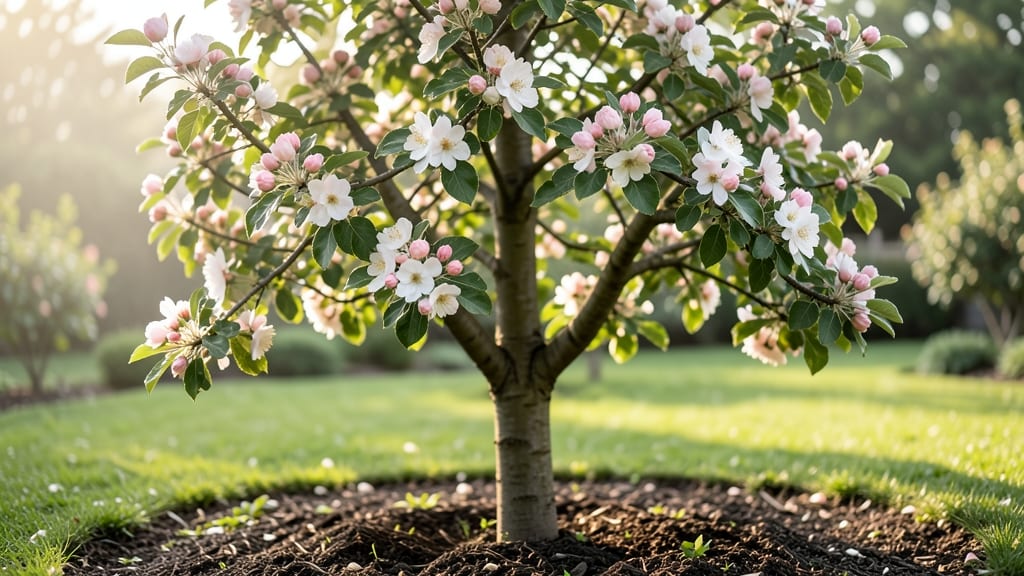
The Gala apple tree's blossoms turn spring into a fragrant, dreamy spectacle—soft pink clouds that drift across your yard like a fairy-tale invitation. 🌸 I’ve watched mine transform a corner of my garden into a living painting, where every breeze carries a whisper of sweetness that lingers for weeks.
These blossoms aren’t just pretty; they’re the stars of early spring, outshining even the boldest tulips with their sheer abundance and delicate charm.
What makes them so special in garden design? Their compact form fits neatly into small yards, while their fragrant, five-petaled blooms create a stunning contrast against deep green leaves.
Pair them with dwarf lilacs for layered color or bleeding hearts to soften the edges—both combinations extend the show from late April through May. The key is positioning them where you’ll admire them daily, like near a patio or along a walking path.
You’ll love how they transform ordinary spaces into a springtime haven, with blossoms that last longer than many ornamentals. The secret to maximizing their beauty? A little strategic pruning in late winter to open the center for better airflow—and more visible blooms.
Even if you’re not growing apples, these trees steal the show as pure ornamentals, their scent alone making them worth the space.
Perfect for cottage gardens, modern landscapes, or even urban courtyards where space is limited. Their low-maintenance elegance makes them a designer’s secret weapon—just plant, admire, and repeat. Here’s how to make them the centerpiece of your spring display.
📚 In This Guide
- What you need
- Instructions
- Tips and common mistakes
- Wrapping up and next steps
What you need
- ● Gala Apple Tree Sapling: 1 dwarf variety (6-8 ft mature height) or standard (12-15 ft) from a reputable nursery (ensure it’s grafted for disease resistance).
- ● Rootstock: Choose M.9 (dwarf) or MM.106 (semi-dwarf) for compact growth.
- ● Planting Site: Full sun (6+ hours/day) in a well-draining location.
- ● Soil: Slightly acidic (pH 6.0–6.5), rich in organic matter (compost or aged manure).
- ● Tools: 1 shovel (for digging)
- ● 1 pruning shears (sterilized)
- ● 1 garden hose or watering can
- ● 1 mulch (2–3 inches of wood chips or straw)
- ● Soil Amendments: 1 5-gallon bucket of balanced fertilizer (10-10-10) for planting.
- ● 1 pH test kit (to adjust soil acidity if needed).
- ● Support: 1 tree stake (for young saplings in windy areas).
- ● 1 tree guard (to protect from pests/deer).
- ● Seasonal Care: 1 sprayer (for fungicide if needed during blossom season).
- ● 1 pruning saw (for larger branches later).
How to cultivate a compact Gala apple tree with stunning blossoms
Here’s how to coax that fragrant spring canopy from a dwarf Gala apple tree—where pruning precision meets seasonal care.
🌱 Step 1: Choose the Right Location and Planting Site
Gala trees thrive in full sun—at least 6-8 hours daily—with well-draining soil that’s slightly acidic (pH 6.0-6.5). I always test my soil first; Gala apples hate soggy roots. Amend heavy clay with 2-3 inches of compost mixed into the top 12 inches of soil before planting.
Dig a hole twice as wide as the root ball but only as deep. The graft union (the swollen area near the base) should sit 2-3 inches above ground level—this prevents rot. If your yard has poor drainage, mound native soil in the hole’s center to create a raised planting bed.
☀️ Step 2: Prune for Airflow and Blossom Structure
Prune in late winter or early spring before buds swell. Remove dead, crossing, or inward-growing branches first—they crowd the canopy and block sunlight. Gala trees bloom best when light reaches every branch. Use clean, sharp pruners to make cuts at a 45-degree angle just above an outward-facing bud.
Thin out overly dense growth to open the center. Aim for an open vase shape—this lets air circulate and prevents fungal diseases like apple scab. I always step back after pruning to check for balance; the tree’s natural shape should guide your cuts.
💧 Step 3: Water Deeply and Mulch to Retain Moisture
Water deeply once a week during the first growing season, soaking the soil to 18 inches deep. Gala trees develop deep roots, and shallow watering encourages weak, surface roots. Check moisture with your finger—top 2 inches should feel dry before watering again.
Apply 3 inches of organic mulch (like wood chips) around the base, keeping it 6 inches away from the trunk. Mulch conserves moisture and regulates soil temperature. Replenish mulch annually in early spring—this protects roots during summer heat and winter frosts.
✂️ Step 4: Fertilize for Blooms and Fruit Development
Feed your Gala tree in early spring with a balanced 10-10-10 fertilizer (or organic equivalent) spread over the root zone. Follow package rates—over-fertilizing leads to excessive leaf growth at the expense of blossoms. I also side-dress with compost tea in late spring to boost microbial activity in the soil.
Watch for thinning flowers if the tree sets too many fruit. Remove every other blossom cluster in early summer to ensure remaining apples get enough energy. This step is crucial—overloaded branches can snap under fruit weight.
🌿 Step 5: Protect Blossoms from Pests and Late Frosts
Cover young trees with frost cloth on nights when temperatures dip below 28°F—Gala blossoms are frost-sensitive. Remove the cloth during the day to prevent overheating. I also spray dormant trees with neem oil in early spring to deter aphids and mites before they infest new growth.
Monitor for apple maggot flies in summer. Use yellow sticky traps near the tree to catch adults before they lay eggs. A healthy canopy with good airflow reduces pest pressure naturally—so keep those pruners handy!
Tips & tricks for perfect Gala apple tree blossoms
Between us, the secret to those fragrant spring blooms starts with the details most gardeners overlook. Here's what nobody tells you about nurturing your compact Gala apple tree for showstopping blossoms.
Soil Science Matters: That pH 6.0-6.5 range isn't just arbitrary—Gala trees need this acidic window to access iron efficiently. I test my soil every spring before planting, and if it's off, I mix in elemental sulfur (¼ cup per 100 sq ft) to lower pH gradually. The key is patience: changing pH takes time, so start testing 3-4 months before planting. For heavy clay soils, I also add perlite to improve drainage without disturbing the soil structure.
Pruning Precision: In Step 2, when you're making those 45-degree cuts, focus on creating a natural "open vase" shape rather than just removing branches. The goal is to let light penetrate to the center where new blossom buds form. I use a small mirror to check for hidden buds before making cuts—this prevents accidentally removing potential blooming sites. And here's my game-changer: mark your pruning cuts with a pencil before making them. This helps visualize the final shape and ensures balanced growth.
Watering Wisdom: Those 18 inches of deep watering in Step 3 might seem excessive, but it's crucial for establishing strong root systems that support heavy blossoms. I use a soil probe to verify moisture depth—if it comes out dry, I water again. For young trees, I set up a simple drip irrigation system on a timer for 20 minutes daily during the first growing season. The consistent moisture prevents root stress that can reduce flowering.
Frost Protection Strategy: When covering with frost cloth at 28°F, I always leave the top edges loose—this prevents heat buildup during the day. I also drape the cloth loosely over the branches rather than pulling it tight, which can damage new growth. For extra protection, I place a small fan on low speed near the tree to circulate air and prevent frost pockets from forming in the center of the canopy.
Pro Tips for Gala Apple Tree Blossom
- Between us, the secret to those fragrant spring blooms starts with the details most gardeners overlook.
- Soil Science Matters: That pH 6.0-6.5 range isn't just arbitrary—Gala trees need this acidic window to access iron efficiently.
- Pruning Precision: In Step 2, when you're making those 45-degree cuts, focus on creating a natural "open vase" shape rather than just removing branches.
Frequently asked questions
Got questions about nurturing your Gala apple tree blossom? You’re not alone! Here are some of the most common queries—plus quick, practical answers to help you grow a stunning, fragrant spring display.
When do Gala apple tree blossoms appear?
Blossoms typically arrive in late spring, around April to early May, depending on your climate zone. Warmer regions may see earlier blooms, while colder areas might delay them until May. Choose a spot with full sun (6+ hours/day) to encourage timely, vibrant blossoms!
How big does a Gala apple tree grow?
Standard Gala apple trees can reach 20–30 feet tall, but dwarf varieties (like those grafted onto M.9 rootstock) stay compact at 8–12 feet. If space is limited, opt for a spindle-bush or columnar cultivar—perfect for patios or small yards!
Can Gala apple blossoms survive frost?
Young blossoms are frost-sensitive. Late frosts (below 28°F) can damage them. Protect your tree with frost cloth or a sprinkler system (running water creates insulation). Prune lightly in late winter to reduce vulnerable buds.
What if my Gala apple tree isn’t blooming?
Common culprits: poor sunlight, over-pruning, or young age (trees <3 years old may wait). Ensure 6+ hours of sun, fertilize with high-nitrogen in early spring, and avoid heavy pruning during dormancy. Patience pays off—some trees bloom by year 4!
Are there fragrant alternatives to Gala apple blossoms?
Yes! Try these scented bloomers:
- Crabapple varieties (e.g., ‘Royalty’ or ‘Adirondack’): Showy pink/white flowers, disease-resistant.
- Magnolia ‘Ann’: Creamy-white, cup-shaped blooms with a sweet fragrance.
- Forsythia: Early yellow blooms (but not edible—great for pollinators!).
Wrapping up and next steps
The Gala apple tree blossom isn’t just a burst of spring color—it’s a fragrant, compact masterpiece that brings joy and beauty to any garden. Whether you’re a seasoned gardener or a beginner, this tree offers low-maintenance elegance and the promise of delicious fruit to come. 🌸
Ready to transform your space? Start by choosing the perfect spot, gathering your supplies, and taking that first step toward a blooming paradise. Your garden’s springtime magic awaits—plant today!