
How To
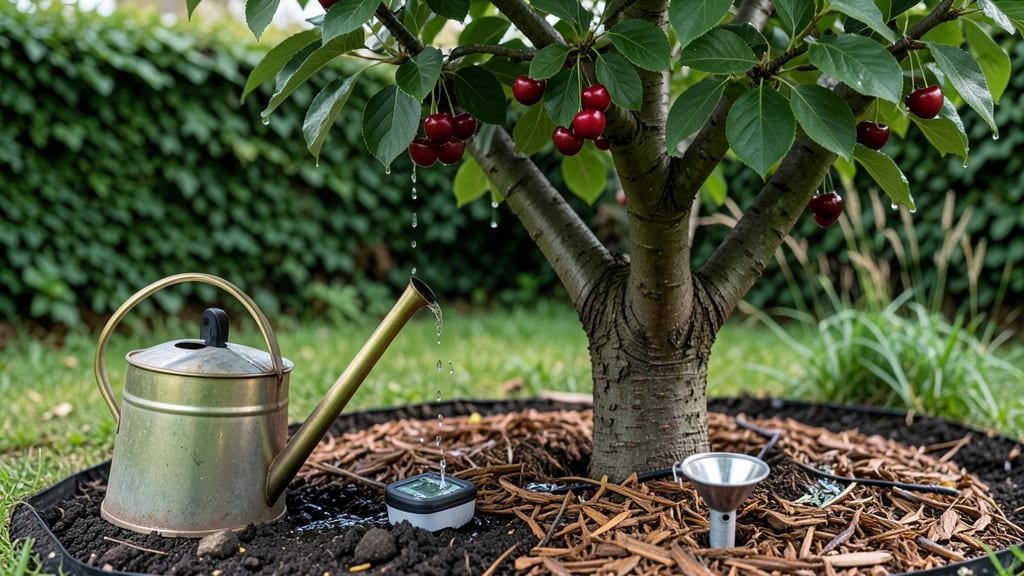
A cherry tree 🍒 needs 1-2 inches of water per week during its growing season to produce sweet fruit and strong roots—more than you might think for a tree that looks so sturdy.
Struggling to keep your cherry tree healthy? Overwatering or underwatering can spell disaster for these delicate fruit trees—discover the exact seasonal watering schedule your cherry tree craves to thrive and bear sweet harvests.
Young trees need more frequent watering, while mature ones can handle deeper, less frequent soaks. The key is consistency: too much water drowns roots, while too little stunts growth and reduces fruit production.
In this guide, I’ll break down month-by-month watering needs, signs of stress, and pro tips to keep your cherry tree lush without wasting a drop.


Seasonal watering schedule for cherry trees: month-by-month requirements
Watering your cherry tree correctly is the key to lush foliage and bountiful fruit. Unlike drought-tolerant plants, cherry trees demand consistent moisture, especially during their growth and fruiting stages. But how much water does a cherry tree need?
The answer changes with the seasons—and the age of your tree. Let’s break it down so you can keep your tree thriving without overdoing it.
Young cherry trees (under 3 years old) need more frequent watering because their root systems are still developing. Mature trees, on the other hand, have deeper roots and can handle slightly longer dry spells.
The goal is to keep the soil moist but not soggy, as cherry trees hate waterlogged roots. Below, I’ve outlined a month-by-month watering schedule tailored to your tree’s needs.
📋 Summary Table: Cherry Tree Watering Requirements
In spring, your cherry tree wakes up from dormancy and needs consistent water to support new growth. Aim to water deeply once a week for young trees and every two weeks for mature ones.
Use a soil moisture meter to check that the top 6-12 inches of soil stay moist. If your region experiences dry spells, increase frequency to prevent stress.
Summer is the most critical time for watering, especially if your tree is bearing fruit. Deep watering 2-3 times per week ensures the roots reach the moisture they need. Mature trees can handle slightly less frequent watering, but always prioritize early morning sessions to reduce evaporation and fungal risks.
Avoid overhead sprinklers, which can damage leaves and attract pests.
As fall approaches, reduce watering gradually to prepare your tree for dormancy. Young trees still need bi-weekly watering, while mature trees can go monthly.
Focus on keeping the soil slightly moist—never soggy. This is also the time to mulch around the base to retain moisture and regulate soil temperature.
Winter watering is minimal, but not zero. If you’re in a region with frozen ground or prolonged drought, give your tree a light drink once a month.
However, avoid watering if the ground is frozen, as this can damage roots. Instead, let natural snow cover act as insulation and moisture reservoir.
Pro tip: Always water at the base of the tree, not the leaves. Use a soaker hose or drip irrigation for efficiency. And remember, clay soil stays wet longer than sandy soil—adjust your schedule accordingly.
With this seasonal guide, your cherry tree will stay hydrated, healthy, and ready to burst with fruit next season! 🍒
Signs your cherry tree is overwatered or underwatered (and how to fix it)
Your cherry tree might look lush, but watering mistakes can silently damage its roots and leaves. Overwatering and underwatering both cause visible stress—yellowing leaves, wilting branches, or even fungal growth.
The key is recognizing these early warning signs before they become irreversible. Let’s decode what your tree is really telling you through its leaves and soil.
First, check the soil moisture by sticking your finger 2-3 inches deep. If it feels soggy, your tree is drowning. If it’s bone-dry, it’s thirsty. Cherry trees need consistent moisture, but their roots hate standing water.
The balance is delicate—too much water suffocates roots, while too little stunts growth and fruit production. Let’s fix this together.
How Much Water Does a Cherry Tree Need?
- ✅ Healthy root growth for nutrient absorption
- ✅ Sweet, plentiful cherries with consistent moisture
- ✅ Disease resistance from balanced soil
- ❌ Root rot from overwatering (smelly, mushy roots)
- ❌ Wilting leaves from underwatering (crispy edges)
- ❌ Poor fruit set due to stress
If your cherry tree leaves are yellowing with brown spots, you’re likely overwatering. These signs mean your tree’s roots are suffocating. Stop watering immediately and let the soil dry out. For severe cases, improve drainage by adding compost or perlite to the top 6 inches of soil.
Always water at the base of the tree, not the leaves, to prevent fungal diseases like powdery mildew.
On the flip side, underwatered cherry trees show crispy, curling leaves that feel dry to the touch. The soil around the roots may pull away from the pot or ground. Deep watering is the fix—soak the soil until water drains out the bottom.
For young trees, this means 10-20 gallons every 7-10 days in dry climates. Mulch with wood chips to retain moisture and protect roots from temperature swings.
For mature cherry trees, focus on slow, deep watering rather than frequent light sprinkles. Use a soaker hose or drip irrigation to deliver water directly to the root zone. Avoid wetting the foliage to prevent diseases.
If your tree is in containers, check moisture daily—potted trees dry out faster and need more frequent watering. A moisture meter can be a game-changer for nailing the right balance.
Remember, cherry trees are resilient once you correct watering habits. Start by adjusting your schedule based on the season—more in summer, less in winter. Pay attention to your tree’s signals, and soon you’ll have a thriving orchard in your backyard. Happy growing!