
How To
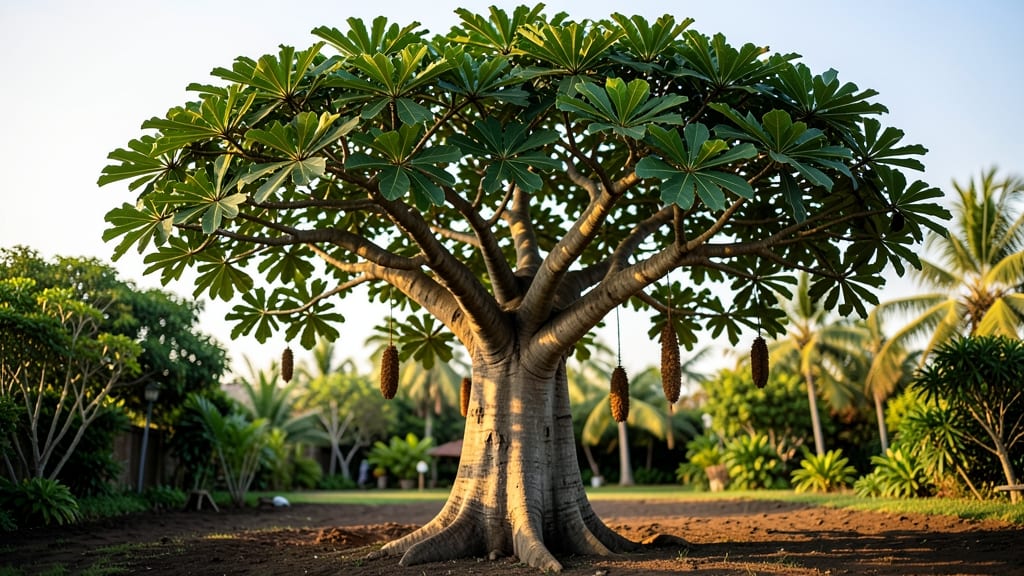
A kapok tree can grow up to 230 feet tall 🌳—taller than a 20-story building—making it one of the fastest-growing giants in the tropics.
Picture this: a towering sentinel in the rainforest, its branches stretching toward the sky like a natural skyscraper. But how does it reach such staggering heights? And could you ever grow one in your own backyard?
The answer lies in its tropical roots. Native to zones 10-12, this tree thrives in warm climates with rich, well-drained soil and plenty of sunlight. Without those conditions, its growth slows dramatically—leaving many gardeners wondering if it’s even possible to cultivate one at home.
Here’s what you need to know about its record-breaking growth, the secrets behind its rapid ascent, and whether your space can support a tree this ambitious.


Kapok tree height records: how tall can it grow?
The kapok tree (Ceiba pentandra) stands as one of nature's most impressive giants, capable of reaching heights that defy imagination. In ideal conditions, these tropical trees can tower over 200 feet, with documented records exceeding 230 feet in their native habitats.
Their rapid vertical growth makes them a fascinating subject for gardeners and botanists alike.
Native to the tropical regions of Central and South America, as well as parts of Africa and Asia, kapok trees thrive where humidity and warmth dominate.
Their ability to grow so tall isn't just about time—it's a combination of genetic potential, environmental factors, and unique adaptations like their hollow trunks and extensive root systems.
| Category | Details |
|---|---|
| Maximum Recorded Height | 230+ feet (wild specimens) |
| Average Mature Height | 100-200 feet |
| Growth Rate (Young Trees) | 3-5 feet per year |
| Regional Variations | Taller in South America, shorter in Asia |
| Trunk Diameter (Mature) | Up to 10 feet |
| Canopy Spread | 50-70 feet wide |
| Lifespan | 50-100+ years |
| Key Growth Factor | High humidity + full sunlight |
What makes the kapok tree's height so remarkable is its growth rate. Young kapok trees can shoot up 3-5 feet per year under optimal conditions, though this slows as they mature.
Their hollow trunks aren't a weakness but an adaptation—providing buoyancy during floods and storage for water and nutrients, which fuels their vertical expansion.
The environmental conditions play a crucial role in determining how tall a kapok tree can grow. In humid tropical climates, like those found in the Amazon basin, these trees reach their maximum potential. High humidity levels (70%+) and consistent rainfall create the perfect environment for their rapid growth.
Even slight deviations, like drier subtropical zones, can limit their height to 100-150 feet.
Soil quality is another critical factor. Kapok trees prefer well-drained, fertile soil with a slightly acidic to neutral pH (6.0-7.0). Poor soil conditions can stunt their growth, while nutrient-rich, loamy soils provide the foundation for their towering stature.
In urban or cultivated settings, gardeners often amend soil with compost or organic matter to mimic these ideal conditions.
Sunlight exposure is non-negotiable for kapok trees. They require full sun (6+ hours daily) to reach their maximum height. In shaded conditions, their growth rate drops significantly, and they may only reach 50-80 feet.
This is why they're rarely found in dense forest understories—they demand the open canopy of savannas or riverbanks to thrive.
Interestingly, human intervention can also influence a kapok tree's height. In cultivated settings, pruning practices can redirect energy toward vertical growth or lateral spread. However, excessive pruning can weaken the tree's structure, making it less likely to reach record heights.
For gardeners aiming to grow a kapok tree, minimal pruning is key to encouraging natural height development.
While kapok trees are not suitable for home gardens due to their massive size, smaller specimens can be grown in tropical greenhouses or large estates.
For those in USDA zones 10-12, providing the right conditions—like high humidity trays and protected microclimates
Understanding the kapok tree's growth potential isn't just about admiring its height—it's about appreciating the delicate balance of nature that allows it to reach such extraordinary proportions. Whether in the wild or a controlled environment, these trees remind us that patience and the right conditions can yield truly breathtaking results. 🌳
Factors influencing kapok tree growth height: what determines its skyward potential?
The kapok tree's vertical growth is a marvel of nature, but it doesn’t happen by accident. In USDA zones 10-12, these trees thrive, reaching 100-200 feet in ideal conditions. The difference between a wild kapok and a cultivated specimen often comes down to just a few key factors.
First, let’s address the elephant in the room: climate zones make or break a kapok tree’s height. Native to tropical rainforests in Central and South America, these trees demand consistent warmth and high humidity.
In subtropical zones, growth slows dramatically, capping heights at 60-80 feet—a far cry from their wild counterparts.
• Unrestricted height (200+ ft)
• Natural adaptations (aerial roots, hollow trunks)
• Faster growth (3-5 ft/year)
• No human control over pruning
• Prone to pests in dense forests
• Limited soil in natural habitats
• Slower growth (1-2 ft/year)
• Height limited by pruning (60-100 ft)
• Soil constraints in urban areas
• Controlled pruning for safety
• Pest-resistant varieties available
• Adaptable soil with amendments
Next up is soil composition, which acts like a foundation for your kapok’s skyward dreams. These trees despise waterlogged soil—their roots need well-drained, nutrient-rich conditions to expand.
In urban gardens, amending soil with compost and sand can mimic their natural forest floor, boosting growth by up to 30%. Without this, roots suffocate, stunting height gains.
Water availability is another game-changer. While kapok trees are drought-tolerant once established, young saplings need deep weekly watering (15-20 gallons) to fuel their rapid ascent. Skimp on water, and you’ll see stunted growth—sometimes as much as 50% slower in the first 3 years. Mulching helps retain moisture and mimics the humid forest floor they crave.
Human interventions like pruning and propagation methods can dramatically alter a kapok’s trajectory. Selective pruning of lower branches encourages vertical growth, while grafting can produce trees that reach marketable heights faster. However, over-pruning weakens the tree’s structural integrity, risking splitting trunks as they grow taller.
Finally, wild vs. cultivated kapoks tell two different stories. Wild trees grow uninhibited, reaching 200+ feet with aerial roots and hollow trunks as natural adaptations. Cultivated trees, however, are often pruned for safety, capping heights at 60-100 feet—a trade-off for urban compatibility.
The choice depends on whether you want a forest giant or a manageable shade provider.
So, if you’re dreaming of a kapok skyscraper in your backyard, focus on climate, soil, water, and pruning. With the right conditions, even a cultivated kapok can surprise you with unexpected height—just don’t expect it to rival the tropical giants of the Amazon. 🌳