
How To
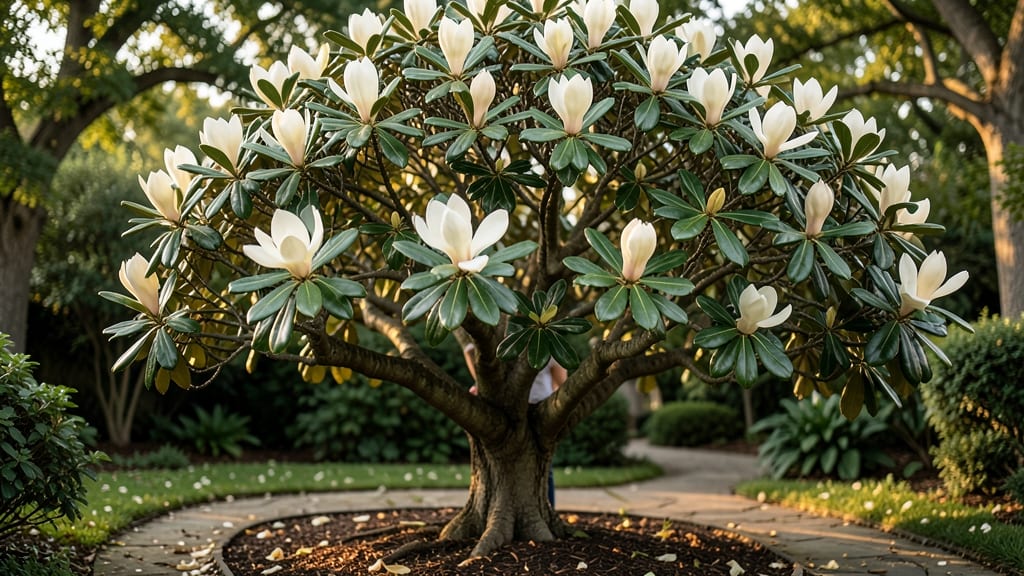
A magnolia tree can grow anywhere from 10 feet to over 100 feet tall, depending on the species and growing conditions—so choosing the right one for your yard is a decision that will last for decades.
Picture this: a towering Southern Magnolia 🌸 casting shade over your entire backyard, its glossy leaves rustling in the breeze, or a delicate little gem magnolia perched neatly in a corner, blooming like clockwork every spring. The difference isn’t just in height—it’s in the whole vibe of your garden.
Some varieties shoot up 3-5 feet per year in ideal conditions, while others creep along at a more manageable pace.
If you’re planning your landscape, knowing these growth rates—and how to control them—could save you from a future pruning nightmare (or a very awkward conversation with your neighbor about "trimming back" a 60-foot tree).
Below, I’ll break down the fastest-growing magnolias, the dwarf varieties that won’t overwhelm your space, and the pruning secrets that keep even the tallest specimens in check—so you can enjoy those fragrant blooms without sacrificing your sanity (or your yard’s layout).


Magnolia tree height by species: from dwarf to towering giants
Choosing a magnolia tree means deciding between a century-old giant or a compact patio beauty—both offer stunning blooms but with wildly different space needs.
The Southern Magnolia (Magnolia grandiflora) can soar to 80-100 feet, while dwarf varieties like 'Little Gem' max out at just 20-30 feet.
Your yard's size and sunlight determine which species thrives best, but growth rates vary too: some add 2 feet per year, while others creep along at 6 inches annually.
Height isn't just about aesthetics—it affects pruning needs, root spread, and even winter hardiness. A towering magnolia needs 30+ feet of clearance for mature branches, while dwarf types fit cozy urban courtyards.
Below, we break down 12+ varieties by height, growth speed, and ideal climates to help you pick the perfect match for your space.
| Variety | Mature Height | Growth Rate | Best For |
|---|---|---|---|
| Southern Magnolia (M. grandiflora) | 80–100 ft | 12–24" per year | Large estates, shade trees |
| Little Gem (M. grandiflora 'Little Gem') | 20–30 ft | 12–18" per year | Small yards, urban gardens |
| Star Magnolia (M. stellata) | 15–25 ft | 6–12" per year | Early spring blooms, small spaces |
| Saucer Magnolia (M. × soulangeana) | 20–30 ft | 12–18" per year | Specimen trees, landscape focal points |
| Ann Magnolia (M. × loebneri 'Ann') | 15–20 ft | 12–24" per year | Fast-growing, cold-hardy |
| Black Tulip (M. campbellii 'Black Tulip') | 15–25 ft | 6–12" per year | Dark foliage, dramatic blooms |
| Yellow Magnolia (M. × brooklynensis) | 20–30 ft | 12–18" per year | Bright spring color, pollinator-friendly |
| Jane Magnolia (M. × loebneri 'Jane') | 15–20 ft | 24–36" per year | Fastest-growing, cold-resistant |
| Sweet Bay (M. virginiana) | 30–50 ft | 12–18" per year | Wet soils, coastal gardens |
| Korean Magnolia (M. kobus) | 30–40 ft | 12–20" per year | Fragrant blooms, woodland gardens |
| Teddy Bear (M. denudata 'Teddy Bear') | 15–20 ft | 6–12" per year | Dwarf, early blooms, cold-hardy |
| Lily Magnolia (M. liliiflora) | 15–25 ft | 12–18" per year | Tropical look, small gardens |
If you're working with limited space, prioritize 'Little Gem' or 'Teddy Bear'—both stay under
How to control Magnolia tree height: pruning tips for small yards
If your magnolia tree is outgrowing its space, don’t panic—strategic pruning can keep it manageable while preserving its health. The key is timing and technique. Prune in late winter or early spring before buds swell, when the tree is dormant but ready to respond.
This timing ensures you won’t disrupt flowering cycles or invite pests. For small yards, focus on structural pruning in the first 3-5 years to shape the tree’s framework.
Never remove more than 25% of the canopy in a single year, or you risk stunting growth permanently. Magnolias are sensitive to over-pruning, and aggressive cuts can weaken the tree’s vigor.
Instead, aim for selective branch removal—targeting only the tallest or overcrowded branches. Use sharp, clean tools to make precise cuts just above outward-facing buds to encourage healthy regrowth.
Here’s your step-by-step guide to pruning magnolias for height control:
- ✂️ Bypass pruners for small branches (<1 inch)
- 🪓 Loppers for branches (1-2 inches)
- 🪴 Pruning saw for thick branches (>2 inches)
- 🧴 Pruning sealant (optional, for cuts >1 inch)
- 🌿 Dead or diseased branches (cut at the base)
- 🌳 Crossing branches (rubbing against each other)
- ⬆️ Vertical "water sprouts" (fast-growing, weak stems)
- 📏 Branches growing inward (block sunlight from center)
- 🔹 Cut just above an outward-facing bud (45-degree angle)
- 🔹 Avoid leaving stubs (prune flush to branch collar)
- 🔹 For large branches, use the 3-cut method to prevent tearing
- 🧹 Remove all debris from the work area
- 🌱 Disinfect tools with rubbing alcohol between cuts
- 📅 Prune again in late winter for ongoing height control
The one pruning mistake that can stunt magnolia growth permanently is topping—cutting the main stem flat to reduce height. This creates ugly regrowth and weakens the tree’s structure. Instead, focus on selective branch removal from the top to gradually reduce height over time.
For example, if your Little Gem magnolia (typically 20-30 ft) is getting too tall, remove 1-2 of the tallest branches each year to encourage a bushier shape.
For large branches that require a ladder, invest in a sturdy step stool and safety harness if working above 6 feet. Always prune during dry weather to avoid spreading fungal diseases.
After pruning, water deeply to help the tree recover. With patience and precision, you can keep even the tallest magnolias in check while maintaining their stunning blooms and lush foliage.
🌿 Remember: Magnolias reward careful pruning with vibrant flowers and dense growth—so treat each cut as an investment in your tree’s long-term health. Happy pruning! ✂️