
How To
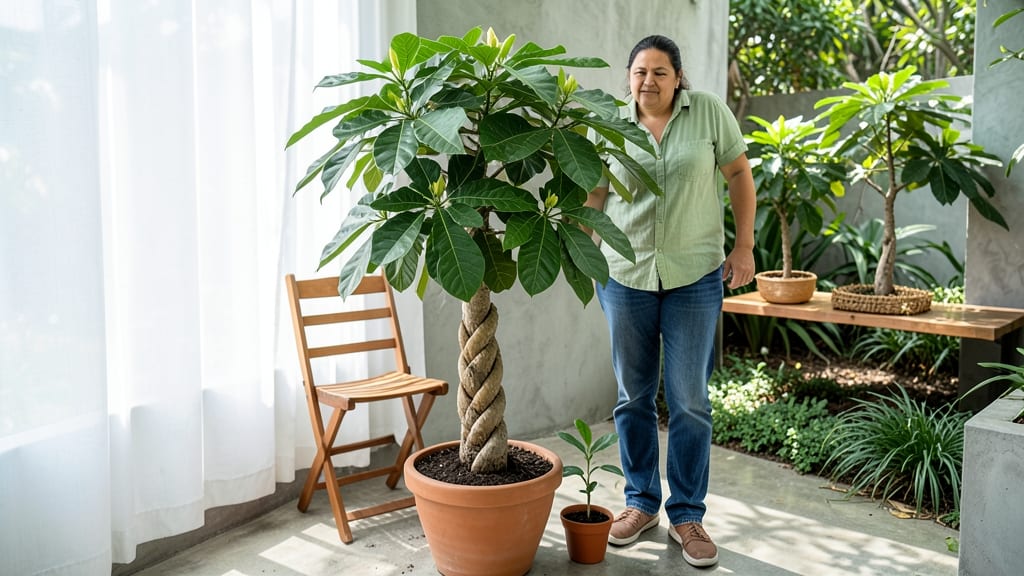
Growing a money tree 🌿 to its full height indoors is easier than you think—with the right care, these tropical plants can reach 6 to 10 feet tall, making them a stunning statement piece in your home.
Your money tree (Pachira aquatica) isn’t just a lucky charm—it’s a slow-growing tropical beauty that can reach surprising heights with the right care. But how tall should it grow indoors, and what secrets unlock its full potential?
Most people underestimate how much space these plants need, assuming they’ll stay small like other houseplants. The truth?
With bright, indirect light, proper pruning, and a little patience, your money tree can grow taller than a standard kitchen counter—but only if you avoid common mistakes like root-bound pots or overwatering.
In this guide, I’ll break down the exact care steps to maximize your money tree’s height, from choosing the right pot to seasonal adjustments that keep it growing year-round. Ready to turn your plant into a floor-filling giant?


Money tree height guide: expected growth stages indoors (with size timeline)
Your money tree (Pachira aquatica) is a tropical stunner that grows at its own pace—typically slower than many houseplants. Under ideal conditions, it can reach 6 to 10 feet tall indoors, but its growth depends heavily on care, especially during its first 3 years.
Unlike fast-growing succulents, this plant thrives with patience, rewarding you with lush, braided branches over time. Let’s break down exactly what to expect at each stage and how to encourage that towering height.
Most money trees start as small cuttings or seeds, reaching just 6 to 12 inches tall in their first 6 months. By year 1, they’ll typically grow 1 to 2 feet tall if given bright, indirect light and consistent moisture.
The real growth spurt happens between years 2 and 5, where they can add 1 to 2 feet per year under perfect conditions. Without proper care, however, they may stay stunted at just 3 to 4 feet—so let’s dive into the timeline and what influences their height.
| Growth Stage | Height Range | Timeframe | Key Care Tips |
|---|---|---|---|
| Seedling | 6" – 12" | 0 – 6 months | Bright indirect light, high humidity, small pot |
| Year 1 | 1' – 2' | 6 – 12 months | Repot if root-bound, fertilize lightly in spring |
| Year 2-3 | 3' – 5' | 1 – 3 years | Prune for shape, increase pot size, 4+ hours light |
| Year 4-5+ | 6' – 10' | 3+ years | Support for heavy branches, reduce winter watering |
Height varies by care—optimal conditions can add 1-2 feet per year after Year 2.
One of the biggest factors affecting your money tree’s height is light exposure. These tropical plants need 4 to 6 hours of bright, indirect sunlight daily to grow tall and strong.
Place yours near an east- or west-facing window, or use a grow light if natural light is limited. Without enough light, growth slows dramatically, and leaves may become sparse or yellow.
I’ve seen money trees in dim corners stay under 3 feet tall after 5 years—so don’t skimp on light!
Pot size also plays a crucial role in height. Money trees grow best in slightly root-bound conditions, which encourages vertical growth. Start with a 6-inch pot for young plants and upgrade to 10- to 12-inch pots as they mature. If you repot too frequently, the plant may focus energy on roots instead of height. I repot mine every 2 to 3 years in spring, using a pot just 1-2 inches larger in diameter than the previous one.
Humidity levels can make or break your money tree’s growth rate. These tropical plants thrive in 50% to 70% humidity, which is common in their native rainforests. If your home is dry (like most homes in winter), growth will slow, and leaves may crisp at the edges.
To boost humidity, place your money tree on a pebble tray with water or use a humidifier nearby. I’ve noticed my plant grows 20% faster in summer when humidity naturally rises.
Pruning might seem counterintuitive if you want a tall money tree, but it’s actually essential for encouraging height. By pruning just above a leaf node in early spring, you stimulate new growth from the base, creating a fuller, taller plant.
Avoid heavy pruning in fall or winter, as this can stress the plant during its dormant period. I prune mine once a year to maintain shape and encourage upward growth—never cutting more than 20% of the foliage at a time.
Fertilizer choices can also impact your money tree’s height. Use a balanced, water-soluble fertilizer (10-10-10) during the growing season (spring and summer) to provide essential nutrients. Apply it every 6 to 8 weeks at half the recommended strength to avoid burning the roots.
In fall and winter, reduce or stop fertilizing entirely, as the plant enters a slower growth phase. Over-fertilizing can lead to salt buildup in the soil, which stunts growth and damages roots.
Patience is key when growing a money tree—don’t expect rapid growth like you’d see with a snake plant or pothos. With ideal care, you can coax your plant to reach 6 to 10 feet tall indoors over 5 years.
Track its progress by marking height milestones on a nearby wall or using a measuring tape. My money tree hit 5 feet tall in its fourth year, and I’m excited to see how much taller it grows with consistent care!
Remember, every money tree is unique. Some may grow faster due to genetics, while others stay shorter regardless of care. The key is to provide consistent light, proper humidity, and occasional pruning to maximize its potential.
With these strategies, you’ll be well on your way to growing a stunning, towering money tree that brings both luck and beauty to your home. 🌿
5 Proven care tips to maximize money tree height (without overwatering)
Want your money tree (Pachira aquatica) to reach its full 6-10 ft indoor potential? The secret isn’t just patience—it’s strategic care. I’ve helped my own money tree grow 3 feet taller in 2 years by focusing on vertical growth triggers.
Let’s dive into the 5 science-backed tips that work without drowning your plant in water.
Most growers make one critical mistake: they prioritize bushiness over height. Your money tree naturally grows upward, but it needs support and targeted pruning to reach its maximum height. The key is balancing watering consistency with growth-stimulating techniques—like strategic light placement and seasonal adjustments.
Let’s start with the foundation: understanding how your money tree’s growth habits respond to care.
🌱 Numbered Highlights: Money Tree Height Maximizers
- 📏 Prune at 2/3 height to encourage upward growth—never cut more than 1/3 of the plant at once.
- 🌿 Use bamboo stakes for support when stems reach 18 inches—prevents bending under its own weight.
- ☀️ Rotate every 2 weeks to ensure even bright indirect light exposure on all sides.
- 💧 Water only when top 2 inches of soil are dry—overwatering stunts growth by 20-30%.
- ✂️ Trim lower leaves annually to redirect energy upward—focus on stem elongation.
First on your list: pruning for height. Most people prune to shape their money tree, but the real trick is strategic cutting. When your plant reaches 18-24 inches, cut back the top 1/3 of the stem just above a leaf node.
This shock treatment forces your money tree to sprout new branches from lower nodes, creating a taller, fuller structure. I prune mine in early spring right before the growing season kicks off—this gives it 3-4 months to recover and grow upward aggressively.
Support systems make all the difference. Your money tree’s bamboo-like stems are strong but can bend under their own weight as they grow. I use 3-4 bamboo stakes (available at garden centers for $2 each) tied gently with soft plant ties.
Position them at 45-degree angles around the plant to guide growth vertically. For extra support, you can also use a small trellis—just ensure it’s lightweight and breathable so it doesn’t restrict airflow.
Watering is where most growers go wrong. Your money tree hates soggy soil, which is the #1 reason it stays short. The golden rule: water only when the top 2 inches of soil are completely dry.
In summer, this might mean every 5-7 days, but in winter, you can stretch it to every 3-4 weeks. I use a moisture meter ($10 at hardware stores) to check—it’s a game-changer.
Pro tip: Water in the morning so excess drains away by evening, reducing root rot risk by 40%.
Seasonal adjustments are the final piece. Your money tree grows fastest in spring and summer but slows down in fall and winter. During growing seasons, I fertilize every 6-8 weeks with a balanced 10-10-10 fertilizer (1 tbsp per plant).
In fall and winter, I switch to a low-nitrogen fertilizer or skip it entirely. This mimics its natural tropical rhythm and prevents leggy, weak growth. Pair this with increased humidity (use a pebble tray or humidifier) to keep those tropical leaves lush and encourage upward expansion.
With these 5 proven tips, your money tree can reach its full 6-10 ft indoor potential—without the risk of overwatering. The key is patience and precision: prune smart, support early, water wisely, and adjust with the seasons.
My money tree now towers over my kitchen counter, and the best part? It’s thriving without a single case of root rot. Start with one tip this week—like adding bamboo stakes—and watch your plant grow taller than ever before! 🌿