
How To
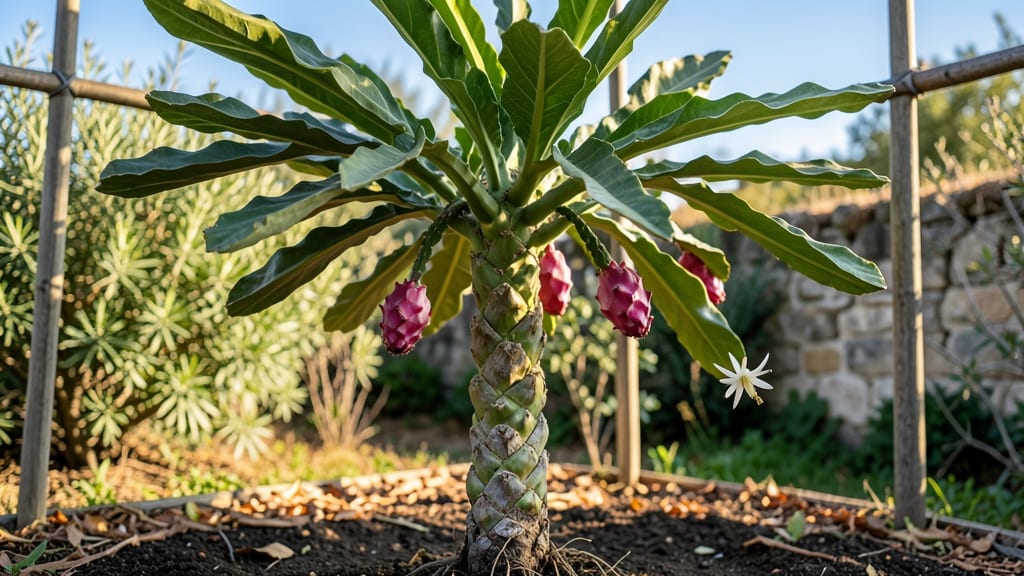
A dragon fruit tree 🐉 can grow anywhere from 10 to 20 feet tall, but the exact height depends on your climate, care, and whether you’re growing it as a climbing vine or a freestanding plant.
Dreaming of harvesting vibrant dragon fruit from your own backyard? Before planting, you need to know one critical detail: the answer varies wildly depending on where you live.
In warm climates like USDA Zone 9b, these tropical beauties can stretch toward the sky, while in cooler regions, they’ll stay more compact. Without proper support, they’ll sprawl like vines, but with a sturdy trellis, you can guide their growth upward.
Below, I’ll break down the height ranges by zone, how to control growth, and why some dwarf varieties (though rare) might be the perfect fit for your space.


Dragon fruit tree height by climate zone: from tropical giants to temperate dwarfs
If you're planning to grow dragon fruit trees in your garden, one of the first questions you'll ask is: how tall does a dragon fruit tree grow? The answer isn't one-size-fits-all—it depends heavily on your USDA climate zone and the specific variety you choose.
In tropical zones like 9-11, these plants can reach 15-30 feet, while in cooler zones 7-9, cold-hardy varieties max out around 6-10 feet. This dramatic difference is why understanding your zone is critical before planting.
Dragon fruit trees (Hylocereus spp.) are native to Central and South America, where they thrive in hot, humid climates with minimal temperature fluctuations. However, modern hybrids and cold-tolerant varieties have expanded their range into temperate regions, though their growth habits differ significantly.
For example, a climbing variety in Florida might grow 25 feet when given a sturdy trellis, while the same plant in Zone 8 might stay under 8 feet without support.
The growth rate of dragon fruit trees also varies by climate and care. In ideal conditions (zones 9-11), these plants can grow 3-5 feet per year, while in cooler zones (7-9), growth slows to 1-2 feet annually.
This slower growth is often offset by denser branching, which can actually increase fruit production per square foot of space. Understanding these patterns helps you plan for support structures and pruning needs from day one.
| USDA Zone | Mature Height (ft) | Growth Rate (ft/year) | Climbing Habit | Best Varieties |
|---|---|---|---|---|
| 9-11 (Tropical) | 15-30 ft | 3-5 ft | Yes (needs trellis) | Hylocereus undatus, Hylocereus costaricensis |
| 8 (Warm Temperate) | 10-15 ft | 2-3 ft | Moderate (supports needed) | Hylocereus megalanthus hybrids |
| 7 (Cool Temperate) | 6-10 ft | 1-2 ft | No (bushy growth) | Cold-hardy hybrids (e.g., 'Missouri Ogden') |
| 6 or lower (Container Only) | 3-6 ft (potted) | 1 ft or less | No (compact growth) | Dwarf hybrids (e.g., 'Baby Dragon') |
Note: Heights vary with pruning and support. Container-grown plants stay smaller but may produce less fruit.
In USDA zones 9-11, dragon fruit trees grow aggressively, often requiring trellises or fences to support their weight. Without support, they can sprawl up to 20 feet wide, making them ideal for large gardens or rural properties.
The Hylocereus undatus variety, for example, can reach 25 feet when given proper climbing structures, while Hylocereus costaricensis (yellow-fleshed dragon fruit) typically maxes out around 18 feet. These tropical giants are perfect for gardeners with space and a warm climate.
When you move into USDA zones 7-8, the story changes dramatically. Here, dragon fruit trees grow more slowly and develop a bushier, compact structure. Varieties like Hylocereus megalanthus hybrids thrive in these zones but rarely exceed 12 feet in height. The trade-off?
They often produce more fruit per square foot because their energy isn't focused on vertical growth. For gardeners in Zone 7, choosing a cold-hardy hybrid like 'Missouri Ogden' ensures survival through brief cold snaps (down to 20°F), though growth halts entirely in winter.
If you're in USDA zone 6 or lower, your options narrow to container gardening with dwarf varieties. These plants typically stay under 6 feet but require overwintering indoors or in a greenhouse.
Varieties like 'Baby Dragon' are bred for compact growth, making them ideal for patios or small balconies. Even in containers, these trees benefit from annual pruning to encourage bushier growth and higher fruit yields.
The key is to choose the right pot size (at least 15-gallon capacity) and use well-draining cactus mix to mimic their natural environment.
One common misconception is that taller dragon fruit trees always produce more fruit. In reality, the structure of the plant matters more than its height. Trees with dense branching (common in cooler zones) often yield just as much—or even more—as their taller tropical counterparts.
For example, a 10-foot tree in Zone 8 might produce 20-30 fruits per year, while a
How to control dragon fruit tree height: pruning, training, and support systems
Dragon fruit trees (Hylocereus spp.) can become 15-20 feet tall if left unchecked, but with the right techniques, you can manage their height to fit your space. Whether you're growing in a container garden or training them vertically, these methods will help you control growth while maximizing fruit production.
The key to managing height lies in pruning, training, and support systems. Unlike many fruit trees, dragon fruit vines thrive when guided along structures, making them ideal candidates for vertical gardening.
By implementing these strategies early, you can prevent unruly growth and create a more manageable and productive plant.
📌 Key Techniques:
- Trellis Training
- Pruning Schedule
- Container Dwarfing <
- Support Structures
- Trellis Training: Use a 6-8 foot tall trellis to guide vines upward. Install it at planting to avoid root disturbance later.
- Pruning Schedule: Prune 2-3 times per year, removing 1/3 of new growth after flowering to encourage bushier, more manageable growth.
- Container Dwarfing: Grow in large containers (15+ gallons) with root pruning to limit height. Choose compact varieties like Hylocereus undatus.
- Support Structures: For outdoor plants, use metal or wooden trellises or chain-link fences as natural supports. Secure vines with soft ties or Velcro straps.
Start training your dragon fruit vine onto a trellis or support structure as soon as it reaches 2-3 feet tall. This encourages vertical growth rather than sprawling vines. Use soft plant ties to gently guide the stems upward, avoiding any damage to the bark.
Regularly check the ties to ensure they aren’t restricting growth or causing bark abrasions.
Pruning is essential for controlling height and shape. The best time to prune is late winter or early spring, just before new growth begins. Remove any dead, diseased, or weak branches first, then cut back overly long vines to maintain your desired height.
For container-grown plants, prune more aggressively to prevent root-bound stress.
If you're growing dragon fruit in containers, choose a large pot with drainage holes to accommodate the plant's sprawling roots. Use a well-draining cactus/succulent mix and fertilize regularly to promote compact growth.
In containers, dragon fruit trees typically stay under 6 feet tall if pruned and trained properly, making them ideal for patios and balconies.
For outdoor gardens, consider installing a permanent trellis system near your planting area. This not only controls height but also makes harvesting fruit easier. Choose a trellis that’s at least 8 feet tall to accommodate mature vines.
You can also use existing structures like pergolas or arbors to support your dragon fruit tree, adding a decorative element to your garden.
Remember, the goal is to balance height control with fruit production. Over-pruning can reduce yields, so always leave enough healthy, flowering stems to ensure a bountiful harvest. With the right techniques, you can enjoy vibrant dragon fruit without sacrificing garden space or aesthetics. 🌱