
How To
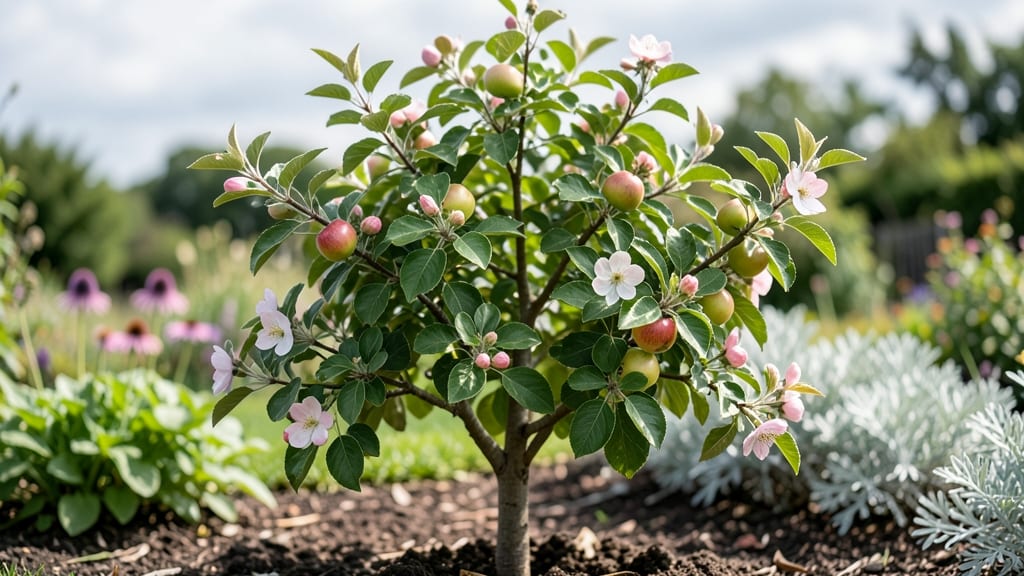
A dwarf apple tree grows anywhere from 6 to 12 feet tall at maturity—making it the perfect fit for small yards, urban balconies, or even large containers.
If you’ve dreamed of growing crisp, juicy apples in your backyard but lack the space for a full-sized tree, dwarf apple varieties are your perfect solution—yet their exact heights can still surprise even experienced gardeners.
These compact trees aren’t just space-savers; they also fruit earlier and more reliably than their taller counterparts. Whether you’re choosing a columnar variety that stays under 8 feet or a standard dwarf reaching 12 feet, knowing the right height helps you plan spacing, pruning, and even container sizes.
Below, I’ll break down the exact mature heights of 5 top dwarf varieties, how to keep them from outgrowing their space, and why they’re the smart choice for small gardens or containers.


Exact height ranges of 5 popular dwarf apple tree varieties (with growth charts)
Choosing a dwarf apple tree for your garden means you can enjoy homegrown fruit without sacrificing space. But how tall do these compact trees actually grow? The answer varies by variety, with some reaching just 6 feet while others max out near 12 feet.
Understanding these height ranges helps you plan spacing, sunlight access, and even container options for urban gardens.
Dwarf apple trees typically mature between 6 to 12 feet, but their growth patterns differ significantly. Some varieties grow vertically while others spread wider, requiring careful placement. For example, columnar varieties stay narrow but tall, while spreading varieties need more horizontal room.
Let's explore the exact heights of five beloved dwarf apple varieties and how they grow over time.
| Variety | Mature Height | Growth Rate (First 3 Years) | Ideal Spacing | Sunlight Needs |
|---|---|---|---|---|
| Honeycrisp | 8-10 ft | 1-2 ft/year | 6-8 ft apart | Full sun (6+ hrs/day) |
| Fuji | 8-11 ft | 1.5-2 ft/year | 7-9 ft apart | Full sun (6+ hrs/day) |
| Granny Smith | 6-9 ft | 1-1.5 ft/year | 5-7 ft apart | Full sun (6+ hrs/day) |
| Pink Lady | 9-12 ft | 2 ft/year | 8-10 ft apart | Full sun (6+ hrs/day) |
| Gala | 7-10 ft | 1.5-2 ft/year | 6-8 ft apart | Full sun (6+ hrs/day) |
The Honeycrisp variety is a crowd favorite, typically reaching 8 to 10 feet at maturity. It grows about 1 to 2 feet per year during its first three years, making it a steady grower that fits well in medium-sized gardens.
Plant two trees 6 to 8 feet apart to ensure proper airflow and sunlight penetration for both.
If you're after a Fuji dwarf apple tree, expect it to grow slightly taller, reaching 8 to 11 feet. This variety grows faster in its early years, adding 1.5 to 2 feet annually during its first three years.
Space these trees 7 to 9 feet apart to prevent overcrowding and ensure healthy fruit production.
For those who love tangy flavors, Granny Smith dwarf apple trees are an excellent choice. These trees mature at a more compact 6 to 9 feet, making them ideal for smaller gardens or even large containers.
Their slower growth rate of 1 to 1.5 feet per year means you can space them 5 to 7 feet apart without worrying about them outgrowing their space quickly.
The Pink Lady variety is one of the taller dwarf apple trees, often reaching 9 to 12 feet. It grows quickly in its early years, adding 2 feet annually during its first three years.
Because of its height and vigor, give these trees plenty of room—8 to 10 feet apart—to ensure they receive adequate sunlight and airflow.
Finally, the Gala dwarf apple tree strikes a balance, typically maturing between 7 to 10 feet. With a growth rate of 1.5 to 2 feet per year in its early years, it’s a versatile choice for gardens of various sizes.
Space these trees 6 to 8 feet apart to allow for optimal growth and fruit production.
When planning your dwarf apple orchard, remember that proper spacing isn’t just about height—it’s also about airflow and sunlight. Trees that are too close can develop fungal diseases or produce smaller fruit due to competition. Always plant in full sun locations with well-draining soil to maximize growth and fruit quality.
With the right variety and spacing, you’ll enjoy a bountiful harvest of homegrown apples in just a few years—without needing a large backyard. Happy planting! 🍎
How to control dwarf apple tree height: pruning tips for compact growth
Even though dwarf apple trees stay significantly shorter than their full-sized cousins, their height can still grow beyond your expectations if not properly managed. The key to keeping them compact lies in strategic pruning—a skill that becomes easier with practice.
I’ve learned that timing, technique, and consistency are everything when shaping these trees to fit your space perfectly.
Most dwarf apple varieties mature between 6 to 12 feet tall, but without regular pruning, they can easily exceed these limits. The good news?
With the right approach, you can maintain a height that works for your garden layout—whether that’s 6 feet for a container or 8 feet for a backyard orchard. Let’s break down the essential techniques to keep your tree in check.
- 📏 Standard Height: 6–12 ft (varies by variety)
- ✂️ Prune in Late Winter: Remove 1/3 of last year’s growth
- 🌿 Summer Thinning: Trim water sprouts and suckers immediately
- 🌳 Shape for Airflow: Open center for sunlight penetration
- 📅 Avoid Fall Pruning: Risk of disease from open wounds
First, understand that dwarf apple trees grow most rapidly in their first 2–3 years. During this time, I recommend pruning twice a year: once in late winter (just before buds swell) and again in summer (after harvest).
Winter pruning focuses on removing dead, crossing, or overcrowded branches, while summer pruning targets water sprouts—those fast-growing vertical shoots that can make your tree look leggy.
The three-cut method is my go-to for removing larger branches. Start by making an under-cut about 6 inches from the branch collar, then a top-cut just outside the branch collar, and finally a final cut to clean up.
This technique prevents tearing and promotes faster healing. For smaller branches, a single clean cut near the branch collar works perfectly. Remember, always prune at a 45-degree angle to encourage water runoff and reduce disease risk.
One common mistake I see is over-pruning in a single session, which stresses the tree and can lead to stunted growth or even death. Another is pruning at the wrong time, like during fall or winter when the tree is dormant.
Instead, focus on light, strategic cuts throughout the growing season. If you’re unsure about your pruning skills, start with just 10–15% of the tree’s canopy in your first session and gradually increase as you gain confidence.
For ultra-compact growth, consider training your dwarf apple tree on a stake or trellis during its first year. This helps direct its growth pattern and keeps it from becoming too wide.
Combine this with regular pruning, and you’ll have a tree that stays within your desired height limits—perfect for small gardens, patios, or even large containers. With patience and practice, you’ll master the art of keeping your dwarf apple tree at just the right height.