
How To
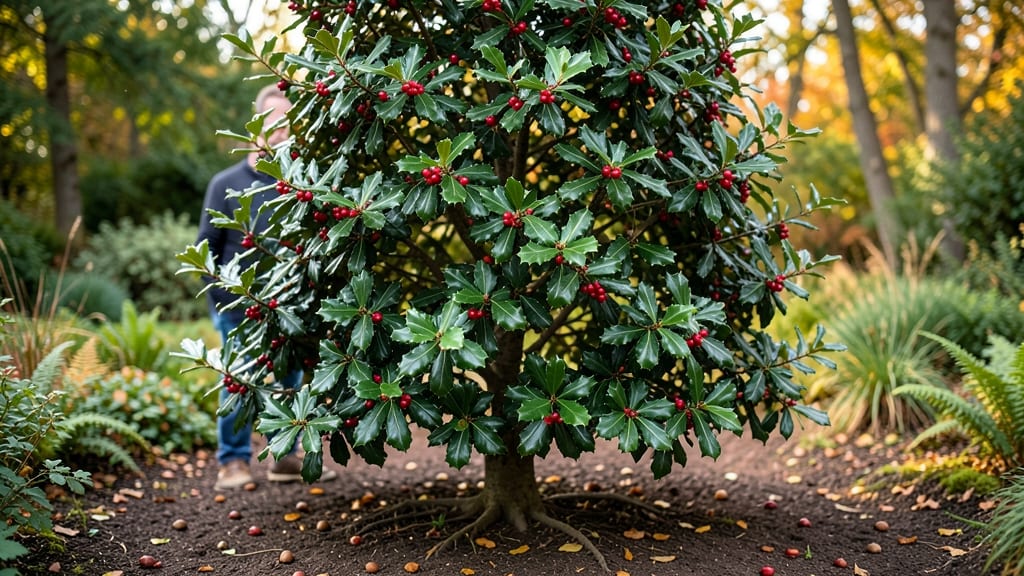
A holly tree grows anywhere from 10 feet to towering 40 feet at maturity—how tall does a holly tree grow depends on the variety and growing conditions 🌳 — and knowing this upfront saves you from planting a giant where a small one fits better.
Picture this: You’ve just added a stunning evergreen to your yard, only to realize in 10 years it’s blocking your neighbor’s view or overshadowing your patio. That’s why understanding height ranges—from dwarf varieties staying under 10 feet to standard types reaching 30+ feet—is the first step to avoiding regrets.
Fast-growing species like American Holly can shoot up 2-4 feet per year in ideal conditions, while slower English Holly varieties mature more gradually.
Sunlight, soil, and pruning all play a role in how tall your holly tree will become, so let’s break down the key factors that influence its growth trajectory.
In this guide, you’ll discover the fastest-growing holly varieties, how to estimate your tree’s future height before planting, and even how to keep a tall holly in check if space is limited. Ready to pick the perfect holly for your landscape?


Holly tree height by fastest-growing varieties: mature size ranges explained
Choosing the right holly tree depends heavily on its mature height, which can range from compact shrubs to towering specimens. The fastest-growing varieties often reach their maximum height within 10-20 years, making them ideal for quick privacy screens or dramatic landscape accents.
For example, American Holly (Ilex opaca) can grow 30-40 feet tall, while English Holly (Ilex aquifolium) typically maxes out around 20-30 feet. Understanding these differences helps you select the perfect tree for your space.
If you're working with a small yard or urban garden, dwarf varieties like 'Sky Pencil' Holly (10-15 feet) or 'Blue Princess' Holly (6-8 feet) are excellent choices.
Meanwhile, large estates or wooded areas can accommodate towering varieties such as 'Southern Magnolia' Holly, which can exceed 40 feet in ideal conditions. The key is matching your holly's growth potential to your available space and design goals.
Here’s a quick reference for the fastest-growing holly varieties and their mature heights to help you plan:
The American Holly stands out as one of the fastest-growing holly varieties, capable of adding 1-2 feet per year under optimal conditions. Its glossy leaves and bright red berries make it a standout in winter landscapes, but its size requires careful planning.
If you're aiming for a quick privacy screen, consider planting multiple trees spaced 10-15 feet apart to fill in gaps faster.
For those with limited space, hybrid varieties like 'Blue Princess' or 'Dwarf Burford' offer the beauty of holly without the height. These compact holly trees grow just 6-12 feet tall and thrive in containers or small garden beds.
Their slower growth rates (4-10 inches per year) make them easier to manage for pruning and shaping.
When selecting a holly tree, consider not just its mature height but also its growth rate and spread. Some varieties, like 'Sky Pencil', grow upright and narrow, making them ideal for tight spaces, while others spread wider and may require more room.
Always check the USDA hardiness zone for your region to ensure the variety you choose will thrive in your climate.
Pruning plays a crucial role in managing a holly tree's height. Regular pruning in late winter or early spring encourages bushier growth and can help control the tree's size. For taller varieties, focus on removing overcrowded branches and shaping the canopy to maintain an open, airy structure.
This not only keeps the tree manageable but also improves airflow, reducing the risk of pests and diseases.
If you're unsure about a holly tree's potential height, start with a smaller variety and monitor its growth for a few years. Many nurseries sell holly trees as 1-2 gallon containers, which are easier to transplant and allow you to assess their growth habits before committing to larger specimens.
This approach is especially useful for urban gardeners or those with limited outdoor space.
In summary, holly trees offer a wide range of heights and growth rates, making them versatile for almost any landscape. Whether you need a towering specimen for a grand estate or a compact shrub for a small patio, there’s a holly variety to fit your needs.
By understanding each variety’s mature size and growth potential, you can make an informed decision that enhances your outdoor space for years to come.
How to estimate your holly tree’s future height before planting
Estimating how tall a holly tree will grow before planting is key to avoiding overcrowded spaces or underutilized yard sections. While mature holly trees can reach 15 to 40 feet, their growth depends on several factors—including your local climate, soil quality, and sunlight exposure.
By assessing these variables, you can predict whether your chosen holly variety will thrive or struggle in your specific environment.
Start by researching the specific holly variety you’re considering. For example, American Holly typically grows 20 to 30 feet, while English Holly can reach 40 feet or taller.
Dwarf varieties, like 'Sky Pencil', stay under 10 feet. Understanding these baseline heights helps narrow down your options based on your yard’s dimensions.
- 🌱 Soil Conditions: Holly trees thrive in well-draining, slightly acidic soil (pH 4.5–6.0). Poor soil slows growth by 20-30%, while rich, organic soil can accelerate growth by 15-25%.
- ☀️ Sunlight Exposure: Full sun (6+ hours/day) boosts growth by 30% compared to shade. Partial shade (4–6 hours) slows growth but preserves foliage health.
- ✂️ Pruning Habits: Regular pruning (annual shaping) keeps trees 10-20% shorter than their natural height. No pruning allows unrestricted vertical growth.
- 🌡️ Climate Zones: Holly trees grow 20-30% faster in USDA Zones 7-9 (mild winters) than in Zones 5-6 (harsh winters), which stunt growth.
Next, evaluate your yard’s available space and surrounding structures. Measure the distance from your holly tree’s planting spot to nearby buildings, fences, or power lines. For instance, a 30-foot holly needs at least 15 feet of clearance on all sides to avoid future obstructions.
Use a sketch or string line to visualize the tree’s mature spread and adjust your planting location if needed.
Consider how water availability and local microclimates might influence growth. Holly trees in dry climates grow 10-15% slower than those in humid regions, where moisture supports faster foliage development. If your area experiences drought, plan for supplemental irrigation during the first 2-3 years to encourage healthy growth.
Finally, create a growth projection checklist to track your holly tree’s development. Record its height annually and compare it to industry growth charts for your specific variety. For example, a 10-foot holly should reach 15 feet in 5 years under ideal conditions.
Adjust care practices—like fertilizer use or pruning frequency—if growth falls behind expectations.
By combining research on your holly variety with practical assessments of your yard’s conditions, you’ll confidently predict its future height and ensure it becomes a stunning, long-lived centerpiece in your landscape. Happy planting! 🌿