
How To
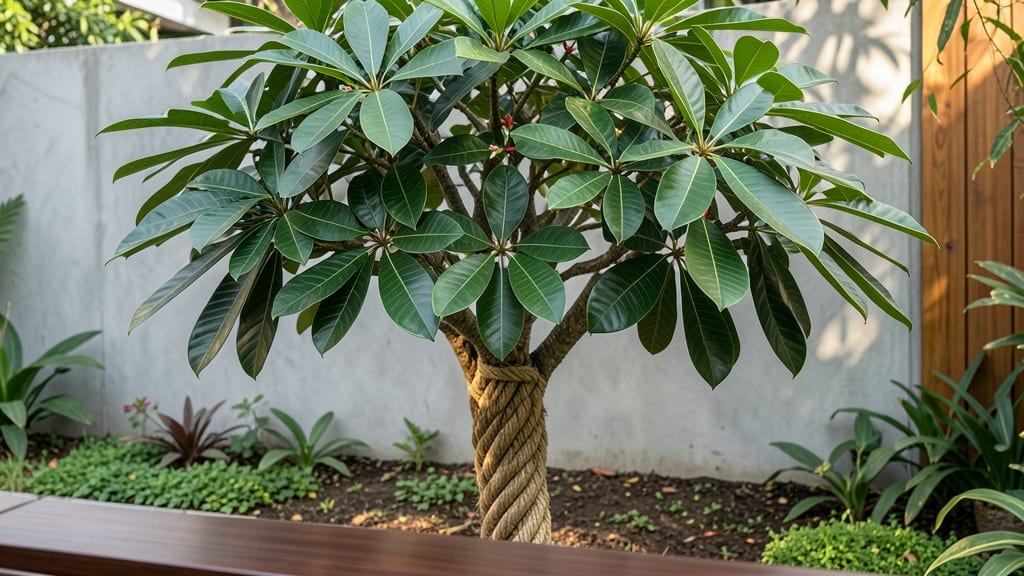
Money tree height ranges by variety: from dwarf to towering
If you’re wondering how tall your money tree (Pachira aquatica) will grow indoors, the answer varies dramatically by variety. Some stay compact and bushy, while others can reach ceiling height or beyond.
The key factors are genetics, care conditions, and pruning habits. Let’s break down the height ranges for the most popular money tree varieties to help you plan your indoor garden space.
Most money trees sold as houseplants fall into three main categories: standard, braided, and dwarf varieties. Each has distinct growth patterns and mature sizes. Understanding these differences will help you choose the right type for your home and manage its growth effectively.
For example, a braided money tree might grow taller than a dwarf variety, but both can be controlled with proper care.
Below is a quick reference table showing the typical height ranges for each variety, along with their growth rates and ideal indoor conditions. This will give you a clear idea of what to expect as your money tree matures.
| Variety | Mature Height Range | Growth Rate (Indoors) | Space Needs | Care Tip |
|---|---|---|---|---|
| Standard Money Tree (Pachira aquatica) | 3–6 feet | 1–2 feet per year | Ceiling to 8-foot space | Prune annually for bushiness |
| Braided Money Tree | 4–8 feet | 1.5–2.5 feet per year | 8–10-foot ceiling space | Use stakes for braiding support |
| Dwarf Money Tree | 2–3 feet | 6–12 inches per year | Bookshelf to 6-foot height | Minimal pruning needed |
| Mini Money Tree (Bonsai Style) | 1–2 feet (container-trained) | 3–6 inches per year | Shelf or tabletop space | Regular pruning and repotting |
The standard money tree is the most common variety you’ll find in nurseries, and it typically reaches 3–6 feet tall indoors with proper care. These trees grow at a steady pace of 1–2 feet per year, making them ideal for homes with 8-foot ceilings or higher.
If your ceiling is lower, don’t worry—regular pruning can keep it at a manageable height while encouraging a fuller, bushier shape.
A braided money tree is often the showstopper of indoor gardens, but its height can be dramatic. These varieties can grow 4–8 feet tall indoors, with some reaching even taller if given ideal conditions.
The braided stems require support stakes as they grow, and their rapid growth rate means you’ll need to plan for a spacious room or consider pruning to control their height. Without intervention, they can quickly outgrow their welcome in smaller spaces.
If you’re working with limited space, a dwarf money tree is an excellent choice. These varieties max out at 2–3 feet tall and grow much slower, adding only 6–12 inches per year.
They’re perfect for apartments, offices, or small homes where vertical space is limited. Dwarf varieties also require less frequent pruning, making them low-maintenance options for busy plant parents.
For those who love the idea of a money tree but have very limited space, a mini money tree (often trained as a bonsai) is a fantastic solution. These tiny versions stay between 1–2 feet tall and grow at a glacial pace of 3–6 inches per year.
They’re ideal for shelves, desks, or even as a striking centerpiece on a coffee table. However, maintaining their size requires regular pruning and repotting to prevent them from outgrowing their container.
Light conditions play a crucial role in determining how tall your money tree will grow. While all varieties prefer bright indirect light, too little light can lead to leggy growth and slower height increases.
Conversely, placing your money tree in a south-facing window can accelerate its growth rate, potentially making it taller than expected. Balance is key—aim for 4–6 hours of indirect sunlight daily to encourage healthy, proportional growth.
Another factor that influences height is container size. Money trees left in small pots will grow more slowly because their roots are restricted. If you want to encourage faster height growth, repot into a larger container every 2–3 years.
However, if you’re aiming to keep your money tree compact, a smaller pot will naturally limit its size. Just ensure the container has drainage holes to prevent root rot, which can stunt growth entirely.
Finally, don’t forget that pruning is your best tool for controlling height. Pruning not only keeps your money tree at a manageable size but also encourages bushier growth and more vibrant foliage. For standard and braided varieties, prune in early spring to shape the plant and remove any leggy stems.
For dwarf or mini varieties, a light trim once or twice a year is usually sufficient to maintain their size.
With the right variety and care, your money tree can thrive indoors for decades. Whether you prefer a towering statement piece or a compact desk companion, understanding these height ranges will help you make the best choice for your space and lifestyle. 🪴
How to control money tree height: pruning, training, and care tips
Your money tree (Pachira aquatica) can grow into a stunning indoor statement piece—but only if you guide its growth. Without proper care, it may become leggy and overgrown, reaching heights of 6 feet or more indoors.
The good news? With smart pruning, training, and light adjustments, you can keep it at your desired height while encouraging a full, bushy shape.
First, understand that money trees grow fastest in spring and summer when they receive bright indirect light and consistent moisture. If you notice rapid vertical growth, it’s time to intervene.
Pruning isn’t just about height control—it also promotes thicker foliage and prevents weak stems. But timing and technique matter to avoid stressing your plant.
⚠️ callout warning
Money trees can’t handle aggressive pruning. Trimming more than 20-30% of foliage at once causes stress, yellowing leaves, or even dormancy. For dwarf varieties, limit pruning to 10-15% to avoid stunting growth. Always prune above a leaf node to encourage new branches.
Start by pruning leggy stems to encourage bushiness. Use clean, sharp bypass pruners and cut just above a leaf node (where new growth emerges). For a braided money tree, prune the longest braid first to maintain balance.
After pruning, place your tree in bright indirect light to stimulate regrowth—direct sun can scorch new leaves.
Support structures like bamboo stakes or trellises help guide vertical growth without pruning. Gently tie the main stem to the stake as it grows, allowing you to control its direction. This method is ideal for standard money trees you want to keep tall but upright.
Avoid tight ties, which can girdle the stem over time—use soft fabric or rubber sleeves instead.
Adjusting water and fertilizer also impacts height. Overwatering leads to weak, stretchy growth, while underwatering slows growth entirely. Water when the top 1-2 inches of soil are dry, and reduce fertilizer in fall/winter to slow vertical growth.
A balanced 10-10-10 fertilizer applied every 6-8 weeks in spring/summer keeps growth steady without overpowering it.
Finally, avoid these common mistakes that lead to unruly growth: placing your tree in low-light corners (causes legginess), using plastic pots without drainage (root rot), or pruning at the wrong time (late fall/winter).
With these tips, your money tree will stay at your ideal height—whether you prefer a compact 3-foot bush or a tall 6-foot specimen. 🪴