
How To
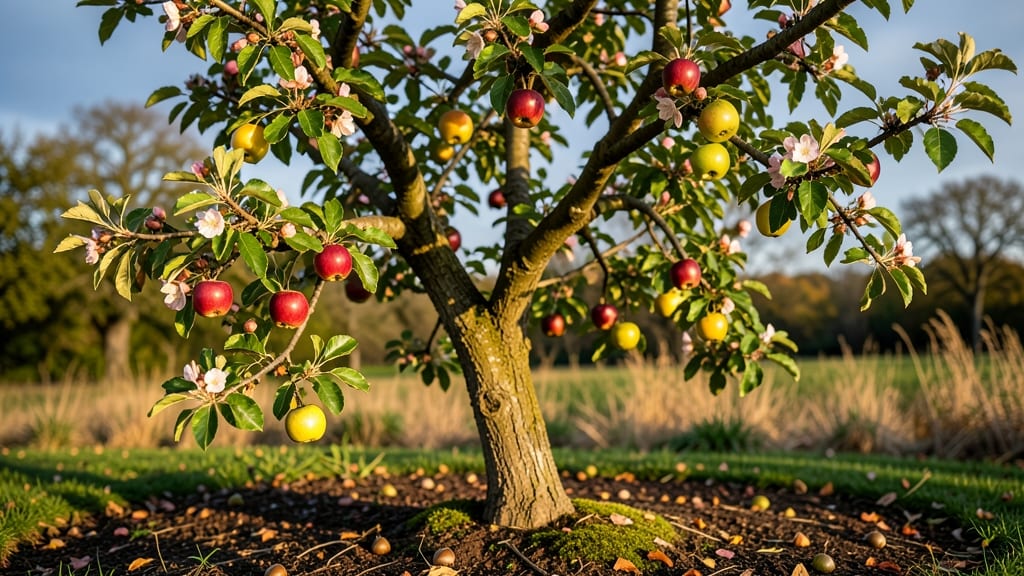
Standard apple tree heights: from 20 to 30+ feet tall
If you dream of a backyard orchard with towering apple trees, you’re likely considering standard apple trees. These majestic varieties grow between 20 to 30+ feet tall, making them perfect for spacious yards or rural properties.
Their impressive height comes with equally impressive fruit production, but they require careful planning to thrive.
Standard apple trees are the classic choice for homesteads and large gardens. Varieties like Granny Smith, Fuji, and Golden Delicious reach their mature height within 5-10 years, depending on growing conditions.
Their sprawling canopies can stretch 15-20 feet wide, so spacing is critical to avoid overcrowding and disease.
| Variety | Mature Height | Canopy Width | Sunlight Needs | Rootstock Type |
|---|---|---|---|---|
| Granny Smith | 25-30 ft | 15-20 ft | 6-8+ hours | Seedling or MM111 |
| Fuji | 20-25 ft | 12-18 ft | 6-8+ hours | Seedling or MM106 |
| Golden Delicious | 22-28 ft | 14-18 ft | 6-8+ hours | Seedling or MM111 |
| Honeycrisp | 20-25 ft | 15-20 ft | 6-8+ hours | Seedling or MM111 |
| Jonathan | 24-30 ft | 16-20 ft | 6-8+ hours | Seedling |
*All varieties require well-draining soil and regular pruning to maintain shape and health.
For standard apple trees to reach their full height, they need full sun exposure—at least 6-8 hours daily. Without adequate sunlight, growth slows, and fruit production suffers.
My Golden Delicious tree, planted in a sunny corner of my yard, now towers over my garage, proving how critical sunlight is for these giants.
Another key factor is rootstock type. Standard apple trees are often grafted onto seedling rootstock or MM111, which allows them to grow tall and vigorous. These rootstocks are hardy and drought-tolerant, making them ideal for larger properties where space isn’t a concern.
If you’re planting near a fence or building, consider pruning annually to control height and shape.
When planting, dig a hole twice as wide as the root ball but no deeper. This encourages root spread, which supports the tree’s towering growth. Amend the soil with compost to improve drainage, as standard apple trees hate soggy roots.
Mulch around the base with wood chips to retain moisture and suppress weeds—critical for young trees still establishing their massive root systems.
Pruning is essential for managing the height of standard apple trees. In late winter or early spring, remove dead or crossing branches to improve airflow and sunlight penetration. Thinning out overcrowded branches also reduces the risk of disease.
I prune my Honeycrisp tree every year, and it’s now a stunning, well-shaped tree that produces abundant fruit without becoming unruly.
Standard apple trees also benefit from regular fertilization during their growing season. Use a balanced fertilizer (like 10-10-10) in early spring and again in midsummer to fuel their rapid growth. Avoid fertilizing in fall, as this can stimulate late-season growth that won’t harden off before winter.
If you’re considering a standard apple tree, ensure your property has enough space. These trees need at least 20 feet of clearance in all directions to avoid shading out nearby plants and to allow for easy harvesting.
Their deep roots also mean they’ll compete with shallow-rooted plants, so avoid planting them near lawns or small shrubs.
For those with limited space, standard apple trees might not be the best fit. However, if you have the room, they’re unmatched for their productivity and longevity.
With proper care, a standard apple tree can live for 50+ years and produce fruit for decades. Just imagine the crisp, homegrown apples you’ll enjoy from your backyard giant!
Dwarf apple trees: compact heights (6 to 12 feet) for small spaces
If you’ve ever dreamed of growing your own apples but lack the space for a towering standard apple tree, dwarf varieties are your perfect solution.
These trees produce full-sized fruit on a much smaller frame—typically 6 to 12 feet tall—making them ideal for patios, balconies, or even large containers. The secret lies in their rootstock, which controls both height and vigor while maintaining productivity.
Dwarf apple trees are genetically engineered or grafted onto dwarfing rootstocks like M9 or B9, which restrict root and shoot growth. This allows you to enjoy homegrown apples without sacrificing your backyard’s layout. Plus, their compact size means easier harvesting and lower maintenance compared to their full-sized counterparts.
Whether you’re a city dweller with a tiny yard or a suburban gardener, these trees deliver big rewards in small packages.
When choosing a dwarf apple tree, consider your growing space and climate zone. For example, 'Red Delicious' on M9 rootstock stays under 8 feet, making it perfect for containers or balconies, while 'Fuji' on MM106 reaches 10-12 feet, ideal for backyard orchards.
Always check your USDA hardiness zone to ensure the variety thrives in your area.
Proper spacing is critical for dwarf trees. Plant them 8 to 12 feet apart to allow airflow and prevent disease. If growing in containers, use a 15-gallon pot with drainage holes and repot every 2-3 years as the tree grows.
Mulch around the base to retain moisture and regulate soil temperature, which is especially important for dwarf varieties that are more sensitive to temperature fluctuations.
Don’t let their small size fool you—dwarf apple trees produce high-quality fruit just like their larger counterparts. With the right pruning and care, you can keep them at your desired height while maximizing yield.
Thinning fruit in early summer also improves size and flavor. Whether you’re growing for fresh eating, baking, or selling at a farmers' market, these trees deliver abundant harvests without the space constraints.
Ready to transform your small space into a fruit-bearing oasis? Start by selecting a dwarf variety that suits your taste and climate, then give it the love and attention it deserves.
Your future self—and your taste buds—will thank you for choosing a tree that fits your life, not just your landscape.