
Pruning
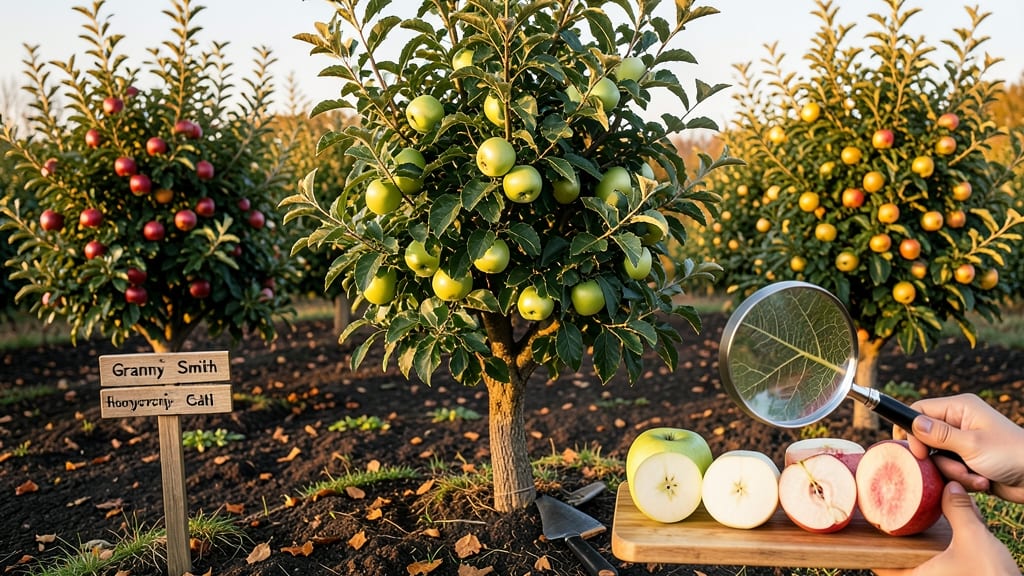
Identifying your apple tree variety starts with a close look at its leaves and fruit—this simple trick saved my neighbor's orchard from the wrong pruning schedule. 🌿 The key lies in leaf shape (lobed like 'Granny Smith' or smooth-edged like 'Honeycrisp'), fruit markings (stripes, dots, or solid colors), and bark texture that changes with age.
One wrong ID can mean your tree gets the wrong care, pests thrive, or you miss the perfect harvest window.
Grab a notebook and camera—you'll need to note leaf size, fruit color patterns, and even the tree's growth habit (upright, spreading, or weeping). Most varieties have distinctive traits: 'McIntosh' apples have red stripes and pointed leaves, while 'Fuji' fruits are bright red with yellow flesh.
Bark color shifts from gray to reddish-brown as trees mature, another big clue.
Once you spot these details, cross-reference with online databases like the National Fruit Collection or use apps like PlantNet to upload photos. Local nurseries often have experts who recognize regional varieties just by a leaf sample.
Knowing your tree's exact type means you can prune at the right time, fight pests effectively, and predict harvest dates with confidence.
Pro tip: Check fruit markings in late summer when colors peak, and compare your notes with variety guides from your state's agricultural extension office. Even a rough ID helps—it's the first step toward growing apples that taste like they came from a farm stand, not just any tree.
📚 In This Guide
- What you need
- Instructions
- Tips and common mistakes
- Wrapping up and next steps
What you need
- ● Hand Lens or Magnifying Glass – A 10x magnification lens is ideal for closely examining leaf veins, fruit markings, and fine details.
- ● Ruler or Measuring Tape – A 12-inch metal ruler (for precision) to measure leaf length, width, and fruit dimensions.
- ● Notebook & Pen – To record observations like leaf shape, fruit color, and any unique markings.
- ● Camera or Smartphone – For capturing high-resolution images of leaves, flowers, and fruit (natural light works best!).
- ○ Pruning Shears (Optional but Helpful) – Bypass pruners (clean and sharp) to safely collect small leaf or fruit samples if needed.
- ● Field Guide or Apple Variety Database – A printed guide (like “The Apple Grower”) or a digital resource (e.g., Midwest Fruit) for cross-referencing traits.
- ● Leaf Press & Herbarium Sheets – To preserve samples for long-term reference.
- ● pH Test Kit – If your region’s soil pH might influence apple traits (e.g., red vs. green fruit intensity).
- ● GPS or Mapping App – To note the tree’s location if comparing with regional variety databases.
- ● Glove – A lightweight gardening glove to protect your hands while handling thorns or rough bark.
How to identify apple tree variety: leaf shape and fruit markings guide
Here's the method I rely on to tell apple varieties apart—no fancy tools needed, just your eyes and a little practice.
🌿 Step 1: Examine Leaf Shape and Teeth
Start by looking at the leaves. Apple tree leaves vary dramatically in shape, and this is your first clue. Hold a leaf up to the light to see its outline—some varieties like Granny Smith have broad, rounded leaves with deep, jagged teeth, while others like Honeycrisp feature narrower, more pointed lobes with shallower serrations. Count the teeth along one edge: McIntosh typically has 60-70 teeth, while Fuji leaves often show fewer, more pronounced serrations.
Pay attention to the leaf's color and texture too. Some varieties like Golden Delicious have smooth, glossy leaves, while others like Arkansas Black develop rough, dull surfaces. If the leaf is hairy on the underside, it might be a wild crabapple rather than a cultivated variety. I always compare multiple leaves from different branches—they can vary slightly even on the same tree.
🍎 Step 2: Study Fruit Skin Texture and Color Patterns
Now examine the apples themselves. The skin texture is a dead giveaway: Granny Smith apples have smooth, almost waxy skin, while Pink Lady varieties show fine russeting (a net-like pattern) and a blushed pink overlay. Look for stripes too—Red Delicious apples have bold red stripes, whereas Gala often displays orange-yellow skin with a faint red blush.
Check for lenticels (tiny raised dots) on the fruit. McIntosh apples usually have prominent, numerous lenticels, while Honeycrisp skin tends to be smoother with fewer dots. If the apple has heavy russeting (a grayish-brown, rough texture), it might be a winter variety like Cortland or a wild crabapple. I always inspect both sides of the fruit—some varieties only show their true markings when viewed from specific angles.
🍏 Step 3: Assess Fruit Shape and Stem Attachment
The apple's shape and symmetry can narrow it down further. Granny Smith apples are round and slightly conical, while Honeycrisp tends to be flatter and broader. Fuji apples often have a distinct ribbing near the stem. Look at how the stem attaches too: some varieties like Gala have a deep, narrow cavity, while others like Golden Delicious show a shallow, wide indentation.
Weigh the apple in your hand—density matters. Honeycrisp apples feel heavy for their size due to their crisp, juicy flesh, while McIntosh apples are lighter and softer. If the apple is small and tart, it might be a crabapple or a winter variety like Rome. I always compare multiple apples from the same tree—size and shape can vary even within a single variety.
⏰ Step 4: Note Growth Habits and Seasonal Clues
Timing is everything. Early-season apples like McIntosh ripen in late summer, while late-season varieties like Fuji hold until fall. Observe when the tree blooms too—some varieties bloom earlier in spring (like Honeycrisp) while others bloom later (like Granny Smith). If the tree has thorny branches, it might be a wild crabapple rather than a cultivated variety.
Check the tree's overall size and shape: Dwarf varieties like Columnar Delicious grow tight and upright, while standard trees like Liberty spread wider and bushier. If the tree has reddish stems, it could be a winter-hardy variety like Cortland. I always jot down these details in a small notebook—over time, patterns emerge that make identification much easier.
🔍 Step 5: Cross-Reference with Known Samples
Compare your findings to reference photos or samples from local orchards or nurseries. Many varieties have distinctive markings that only show up when you see them side by side. For example, Pink Lady apples often have a distinct "blush" pattern that’s hard to describe but easy to spot once you know what to look for. If you’re still unsure, taste the fruit—some varieties like Honeycrisp have a signature sweet-tart flavor, while others like Granny Smith are tart with a crisp bite.
Don’t forget to ask local growers or extension offices—they often know the varieties in your area and can confirm your guesses. I’ve found that combining visual clues with local knowledge cuts down on mistakes dramatically. If you’re identifying a young tree, you might need to wait until it bears fruit, but leaf shape and branch structure can still give you strong hints.
Tips & tricks for identifying apple tree varieties
Identifying apple varieties gets easier once you know what to look for—here’s how to sharpen your eye for detail.
Leaf Comparison is Key: I always collect leaves from different branches before making a call. Some varieties like Granny Smith show consistent leaf shapes across the tree, while others like Honeycrisp might have slight variations. If you notice leaves with 60-70 teeth (as mentioned in Step 1), you’re likely dealing with a McIntosh—but cross-check with fruit markings too. The underside hairiness clue is particularly helpful for wild crabapples, which often have fuzzy leaves that cultivated varieties lack.
Fruit Markings Under Different Light: Here's what nobody tells you—some apple markings only show up when viewed from specific angles. Hold the apple up to a window and rotate it slowly. The blush pattern on Pink Lady apples, for example, often appears more pronounced when light hits it at a 45-degree angle. I’ve caught myself missing this pattern when examining fruit in direct sunlight, which can wash out subtle color variations.
Seasonal Timing Shortcut: If you're identifying a tree in late summer, focus on early-season varieties like McIntosh or Gala. For fall identification, late-season apples like Fuji or Cortland become more likely candidates. I keep a small notebook by my tree with bloom dates—this helps me eliminate varieties that wouldn't bloom at the same time as the tree I'm examining.
Taste Test as Final Check: While visual clues get you 90% there, taste is your ultimate confirmation. Honeycrisp has that signature sweet-tart crunch, while Granny Smith delivers a sharp, crisp tang. For crabapples, expect a much more tart, almost puckery flavor. I always taste-test a few apples from different branches to confirm consistency—some trees have mixed varieties!
Pro Tips for Identify Apple Tree Variety
- Identifying apple varieties gets easier once you know what to look for—here’s how to sharpen your eye for detail.
- Leaf Comparison is Key: I always collect leaves from different branches before making a call.
- Fruit Markings Under Different Light: Here's what nobody tells you—some apple markings only show up when viewed from specific angles.
Frequently asked questions
Got questions about identifying your apple tree variety?
You’re not alone! Here are some of the most common queries—plus quick, actionable answers to help you crack the code on your tree’s identity.
How can I tell if my apple tree is old or young based on its leaves?
Leaf size and texture are key clues! Younger trees often have smaller, softer leaves with vibrant green hues. Mature trees (5+ years) typically feature larger, thicker leaves with deeper veins and occasional browning edges. Check the bark too—older trees develop rougher, more textured trunks. If your leaves are tiny and sparse, your tree might still be establishing its roots.
What’s the best time of year to identify my apple tree variety?
Timing matters! Aim for late summer to early fall (August–October) when fruit is ripe but hasn’t yet dropped. Leaves are fully mature, and markings (like russeting or stripes) are most visible. Avoid spring—young leaves may lack defining traits. Pro tip: If you’re stuck, snap photos of leaves, fruit, and bark in all seasons for a comparison.
Can I use an app to identify my apple tree variety?
Apps like PictureThis or PlantNet let you upload photos of leaves, fruit, and bark for AI-assisted ID. For apple-specific help, try Apple Varieties—it’s a database built by orchardists. Just ensure good lighting and clear shots of distinctive features (e.g., fruit shape, leaf serrations).
What if my apple tree’s fruit looks weird—could it still be a known variety?
Even "weird" apples might be a known variety! Mutations (like double-sized fruit or odd colors) happen naturally. Compare your apples to RHS apple descriptions—look for traits like stem attachment or seed color. If it’s truly unique, it might be a sport (a genetic variant) or a cross-pollinated hybrid. Save seeds (if viable) to propagate and study!
My tree has no fruit—can I still identify it by leaves alone?
Yes, but it’ll be trickier! Focus on leaf shape, serration pattern, and underside texture. For example, Granny Smith leaves are glossy and wavy-edged, while Honeycrisp leaves are matte with fine teeth. Use a USDA apple leaf guide and cross-reference with nearby trees. If all else fails, consult a local master gardener—they’ve seen it all!
Bonus Tip: Quick ID Cheat Sheet
| Feature | Common Varieties |
|---|---|
| Red stripes on fruit | Red Delicious, Jonathan |
| Russeting (brown patches) | Granny Smith, Braeburn |
| Heart-shaped leaves | Honeycrisp, Fuji |
| Thin, curved leaves | McIntosh, Golden Delicious |
Still unsure? Dig into the tree’s history—ask neighbors or check old garden journals!
Wrapping up and next steps
Identifying your apple tree variety doesn’t have to be a guess—by closely examining leaf shape, fruit markings, and growth habits, you’ve got the tools to uncover its secrets! 🍏 Whether it’s the serrated edges of a Granny Smith or the rusty blush of a Honeycrisp, every detail tells a story.
Now that you’re armed with knowledge, take the next step: share your findings with local orchard groups or even submit samples to plant databases for expert verification. Happy identifying—and may your harvest be bountiful!