
Trees
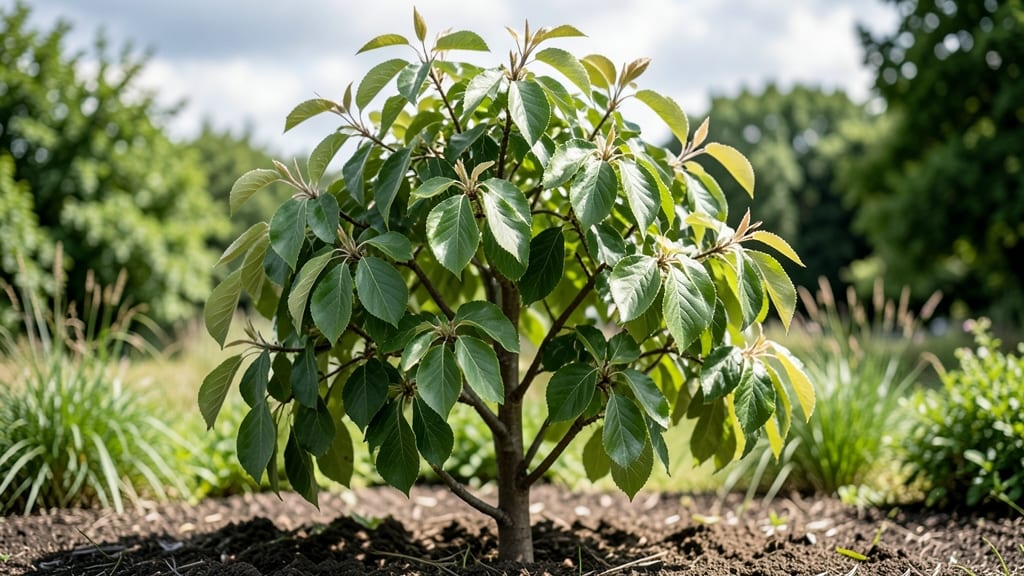
The identification of cherry tree leaves starts with noticing their oval shape, pointed tips, and finely serrated edges—features that set them apart from plums or peaches. 🌿 I’ve spent years comparing leaves in my backyard, and the key is focusing on those tiny tooth-like edges along the leaf’s perimeter, paired with a slightly glossy surface when mature.
Sweet cherries often have leaves that are slightly more rounded at the base than their sour cousins, while black cherries might show subtle red tinges in spring.
Young leaves emerge bright red or coppery before turning deep green, which can confuse beginners—don’t assume a tree is a cherry just because the leaves look similar to other stone fruits.
Grab a magnifying glass to check the vein pattern: cherry leaves have smooth, slightly curved secondary veins that create a gentle arch, unlike the more angular veins of plum leaves.
For tricky cases, snap a photo and compare it to a field guide or use a leaf identification app to cross-reference your findings.
📚 In This Guide
- What you need
- Instructions
- Tips and common mistakes
- Wrapping up and next steps
What you need
- ● Hand Lens or Magnifying Glass – A 10x magnification lens (or a smartphone magnifier app) to examine fine details like leaf veins, edges, and surface textures.
- ● Field Notebook & Pencil – A rugged, waterproof notebook (or a digital note-taking app) to jot down observations, measurements, and sketches.
- ● Ruler or Measuring Tape – For recording leaf length, width, and petiole size (inches or centimeters).
- ● Camera or Smartphone – To capture high-resolution images of leaves, bark, and overall tree structure for later reference.
- ● Plastic Bags or Pressing Kit – Clear resealable bags (for fresh samples) or a leaf press (for long-term preservation).
- ● Field Guide or Identification App – A printed guide (like “Cherry Trees of North America”) or apps like iNaturalist or PictureThis for on-the-go ID help.
- ● Gloves – Protect your hands from thorns or sap (especially when handling black cherry trees).
- ● Pruning Shears – For safely collecting small leaf samples without damaging the tree.
- ● Portable UV Light – Some cherry leaves fluoresce under UV, aiding in species differentiation.
- ● Weather-Resistant Backpack – To keep all your gear organized and dry during field trips.
How to identify cherry tree leaves in the wild
No need to stress—cherry tree leaves reveal everything you need to know with just a few simple checks.
🌿 Step 1: Examine Leaf Shape and Arrangement
Cherry tree leaves are simple and oval-shaped, usually 3-6 inches long with smooth, slightly pointed tips. They grow alternately along the stem, meaning each leaf emerges at a different height rather than directly across from its neighbor. Hold a branch in your hand—you'll notice the leaves fan out like pages on a book.
Look for the fine serrations along the edges. Sweet cherries have more rounded teeth, while tart cherries often show sharper, finer serrations. Run your thumb gently along the edge—smooth, rounded teeth suggest a sweet variety, while jagged edges point to tart.
🌱 Step 2: Check the Leaf Underside and Venation
Flip the leaf over and look at the underside. Cherry leaves often have a slightly hairy or fuzzy texture, especially along the veins. This is a key trait—smooth undersides are rare in true cherry trees. Run your fingers lightly over the surface; you'll feel a subtle roughness if it's a cherry.
The veins form a prominent, arching pattern from the central stem. Secondary veins curve gently upward, creating a net-like structure. This is different from maple leaves, which have more pronounced, straight veins. Hold the leaf up to light—you'll see the veins cast shadows that reveal their true shape.
☀️ Step 3: Observe the Leaf Base and Stem
Look where the leaf attaches to the stem. Cherry leaves have a rounded or slightly heart-shaped base that wraps partially around the branch. This is called an "asymmetrical base" and is a dead giveaway. Compare it to other trees—oak leaves, for example, have a more pointed or wedge-shaped base.
The stem (or petiole) connecting the leaf to the branch is usually thin and slightly hairy. Twist the leaf gently—if it snaps cleanly at the base without tearing, that's another sign you're looking at a cherry. Some leaves will even have a small pair of leaf-like structures (stipules) at the base when young.
🌸 Step 4: Note Seasonal Clues and Flower Residue
If you're identifying in spring, look for small clusters of white or pink flowers near the leaves. These are the tree's blossoms, and their remnants often linger as the leaves mature. Cherry trees bloom before their leaves fully emerge, so you might spot dried flower clusters even when the tree is in full leaf.
In fall, cherry leaves turn vibrant colors—sweet cherries often shift to yellow or orange, while tart cherries may deepen to red or purple. Even when the leaves are green, this color shift clue can help you narrow down the variety later in the season.
✂️ Step 5: Compare with Known Cherry Features
Pull out a reference photo or sketch of common cherry tree leaves—black cherry, pin cherry, chokecherry, and sweet/tart varieties all have slight differences. Notice how the leaf edges, underside texture, and base shape vary. For example, black cherry leaves have a slightly rougher texture and more pronounced serrations than sweet cherries.
If you're still unsure, look for bud scars on the branches. Cherry trees have a distinctive "V" or "U" shaped scar where last year's buds fell off. This is a subtle but reliable clue when leaves aren't enough to go on. Compare the scar pattern with other trees in the area—it's often the final piece of the puzzle.
Tips & tricks for mastering cherry tree leaf identification
These field-tested insights will help you spot cherry tree leaves like a pro—no botanist degree required.
Leaf Edge Test: The serration pattern is your best friend. For a quick check, hold a leaf up to a bright window and angle it slightly—this makes the tooth patterns pop. Sweet cherries often have 20-30 rounded teeth per side, while tart varieties show 30-40 sharper serrations. I've found this visual trick saves time when comparing multiple leaves in the field.
Texture Trick: That fuzzy underside is non-negotiable for true cherry leaves. Run your fingernail along the vein pattern—you should feel a slight resistance, not a smooth surface. I once mistook a smooth-leafed tree for cherry until I noticed the underside was completely hairless. This one detail prevented a costly identification error.
Seasonal Shortcuts: Spring and fall offer extra clues. In spring, look for dried flower clusters clinging to branches—cherry trees bloom before leaves fully emerge. In fall, watch for color shifts: sweet cherries often yellow first, while tart varieties deepen to purple. I keep a small color chart in my field notebook to compare against fresh leaves.
Bud Scar Secret: The "V" or "U" shaped bud scars are often overlooked but incredibly reliable. If you're still unsure after checking leaves, examine the branch scars—cherry trees have these distinctive marks where last year's buds fell off. I've used this trick to confirm identifications when leaves were damaged or incomplete.
Pro Tips for Identification Cherry Tree Leaves
- These field-tested insights will help you spot cherry tree leaves like a pro—no botanist degree required.
- Leaf Edge Test: The serration pattern is your best friend. For a quick check, hold a leaf up to a bright window and a...
- Texture Trick: That fuzzy underside is non-negotiable for true cherry leaves. Run your fingernail along the vein patt...
Frequently asked questions
Got questions about spotting cherry tree leaves? You’re not alone! Here are some of the most common queries—plus quick answers to help you ID those leaves like a pro.
How can I tell the difference between sweet and sour cherry tree leaves?
Sweet cherry leaves are smooth-edged with a shiny, waxy finish and 5-7 pairs of serrated lobes. Sour cherry leaves are rougher, with 6-9 pairs of lobes and a slightly hairier underside. Check the leaf shape and texture—it’s a game-changer!
When is the best time of year to identify cherry tree leaves?
The late spring to early summer (May–July) is ideal—leaves are fully grown but before pests or diseases distort them. Avoid fall (when leaves yellow/brown) or winter (bare branches). Pro tip: Mornings work best; leaves are turgid (plump) and easier to examine.
What if my cherry tree leaves look diseased? How can I tell?
Watch for unusual spots, curling, or premature drop. Healthy leaves are green, firm, and uniformly shaped. Common issues:
- Brown spots → Fungal infection (e.g., leaf spot).
- Yellowing edges → Nutrient deficiency (iron/chlorosis).
- Holes or chew marks → Insect damage (e.g., Japanese beetles).
Are there non-cherry trees with similar-looking leaves?
Yes! Plums, peaches, and almonds can mimic cherry leaves. Key differences:
Feature
Cherry
Alternatives
Leaf shape
Oval with serrated edges
Plum: Smoother, elongated; Peach: Wavy edges
Bark
Exfoliating, reddish-brown
Plum: Gray, scaly; Almond: Dark, rough
Flowers
White/pink, clustered
Peach: Single, pink; Almond: Purple-tinged
How do I measure leaf size for identification?
Use a ruler or measuring tape to check:
- Length: Most cherry leaves are 2–5 inches long.
- Width: Typically 1–3 inches wide.
- Lobe spacing: Count pairs of serrations (e.g., 5–9 pairs for sour cherries).
Wrapping up and next steps
Now that you’ve mastered the art of identifying cherry tree leaves, you’re well on your way to becoming a true tree enthusiast! 🌿 Whether you’re a gardener, a nature lover, or just curious about the world around you, recognizing these key features opens doors to appreciating the beauty and diversity of cherry trees. Ready to put your skills to the test?
Your next step? Head outdoors and compare your findings with real cherry trees in your area—bonus points if you spot a Prunus avium or Prunus serotina! For deeper learning, consider joining local horticulture groups or exploring tree-mapping apps to document your discoveries. Happy exploring! 🌳