
Propagation
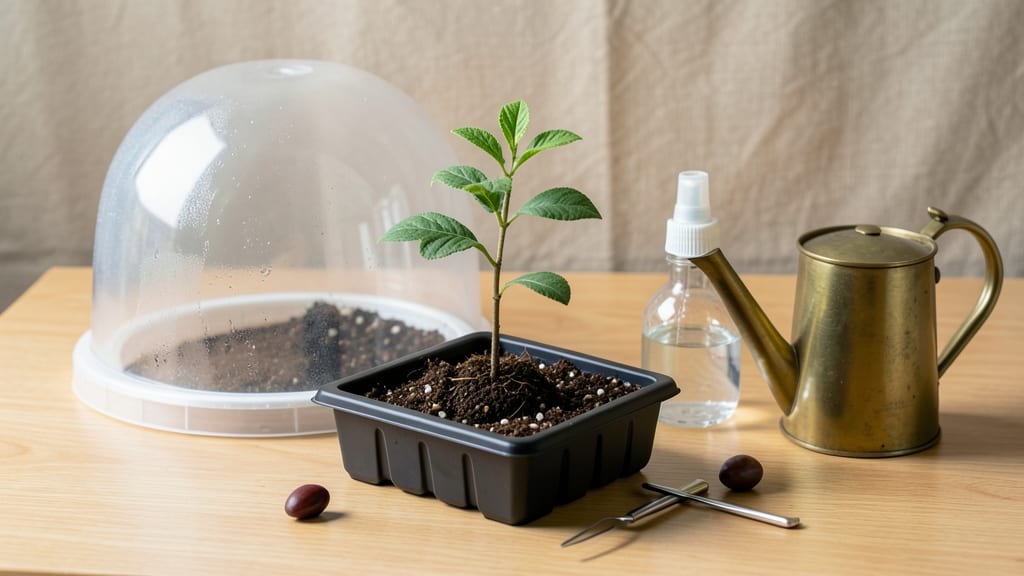
Starting a persimmon tree from seed means years of anticipation—but the first sweet slice is worth every wait. 🌱 The secret to success begins with selecting plump, ripe fruit from a healthy tree, then learning the dormancy tricks that break seed dormancy without shortcuts.
Persimmons need cold stratification, which mimics winter's natural process. After removing seeds, let them dry slightly, then store in a moist paper towel in the fridge for 2-3 months. This step is non-negotiable—skipping it means seeds that never sprout.
When you finally plant them in well-draining soil, keep the soil consistently moist but never soggy. Germination can take 3-6 weeks, and seedlings grow slowly at first.
Patience here is everything—these trees won't bear fruit for 8-12 years, but the reward is homegrown fruit sweeter than anything you'll find in stores. The trade-off?
Seed-grown persimmons may not match grafted varieties in size or flavor, but the adventure of growing your own tree from scratch makes it unforgettable. Let's get those seeds going!
Seed Germination Roadblocks
Understanding why persimmon seeds struggle to sprout is half the battle—once you know the science behind it, you can troubleshoot like a pro. Here’s why your seeds might be playing hard to grow, and what’s really going on in that little seed coat.
Persimmon seeds (Diospyros spp.) are physiologically dormant, meaning they won’t sprout right away even if conditions seem perfect. This isn’t laziness—it’s survival strategy. In the wild, seeds need cold stratification (a period of chilling) to break dormancy. Without it, enzymes inside the seed stay inactive, blocking germination.
Why it happens:
- Enzyme inhibition: A compound called abscisic acid (ABA) keeps the seed in a holding pattern until temperatures drop.
- Hard seed coat: Some persimmon varieties have impermeable seed coats that resist water uptake, stalling the germination process.
- Evolutionary timing: Seeds wait for optimal spring conditions to avoid early frosts or drought.
Actionable fix: 🌡️ Cold-moist stratification for 6–12 weeks in the fridge (34–41°F or 1–5°C) mimics winter. Wrap seeds in a damp paper towel, seal in a plastic bag, and check for mold weekly.
Seeds need just the right moisture balance—not soggy, not bone-dry. Persimmon seeds are particularly sensitive because their embryo is delicate and prone to rot or desiccation (drying out).
Why it happens:
- Overwatering: Excess moisture drowns the seed, cutting off oxygen and triggering fungal growth (e.g., Pythium).
- Underwatering: Seeds dry out before the radicle (root) emerges, halting germination.
- Poor drainage: Compacted soil or sealed containers trap water, suffocating the seed.
Actionable fix:
- Use a 50/50 mix of perlite and peat moss for airflow.
- Bottom-water seeds (place container in a tray of water for 10 mins, then drain) to avoid soggy conditions.
- Spritz seeds lightly with a spray bottle if using a damp paper towel method.
Persimmon seeds thrive in a narrow temperature sweet spot—too hot, and enzymes overheat; too cold, and they stall.
Why it happens:
- Below 60°F (15°C): Metabolic activity slows to a crawl. Seeds may never sprout without stratification.
- Above 85°F (29°C): Heat denatures enzymes, killing the embryo or causing premature sprouting (weak, leggy seedlings).
- Inconsistent temps: Fluctuations (e.g., moving seeds from fridge to warm room) confuse the seed’s internal clock.
Actionable fix:
- Ideal germination temp: 70–75°F (21–24°C)—use a seedling heat mat if needed.
- Avoid direct sunlight on containers (use indirect light or shade cloth).
- Monitor humidity: A clear plastic dome or humidity tray keeps temps stable.
Persimmon seeds are nutrient-rich, making them a buffet for mold and bacteria. If your seeds develop fuzzy white/green growth or smell sour, fungi like Rhizopus or Aspergillus are likely the culprits.
Why it happens:
- Excess moisture + warm temps = fungal party.
- Old or damaged seeds have weakened defenses.
- Contaminated growing medium (e.g., reused soil with pathogens).
Actionable fix:
- Sterilize tools with rubbing alcohol before handling seeds.
- Use fresh, sterile medium (avoid garden soil—opt for coconut coir or seed-starting mix).
- Discard moldy seeds immediately—don’t risk spreading spores.
Not all persimmon seeds are created equal. Age, storage, and harvesting method drastically affect viability.
Why it happens:
- Old seeds (>1 year): Persimmon seeds lose viability quickly. After 6–12 months, germination drops below 50%.
- Improper storage: Seeds stored in heat or dry conditions dehydrate or develop free radical damage.
- Underripe or overripe fruit: Seeds from unripe persimmons (hard, astringent) may be immature; those from rotting fruit can carry pathogens.
Actionable fix:
- Test viability: Float seeds in water—sinkers are viable; floaters are dead.
- Store seeds properly: Keep in a paper envelope in the fridge (not freezer) for up to 6 months.
- Harvest ripe fruit: Choose fully ripe, soft persimmons (non-astringent varieties like ‘Fuyu’ work best).
Even with great seeds, a poor growing environment can sabotage germination. Persimmon seeds need specific conditions to thrive post-sprout.
Why it happens:
- Compacted soil: Blocks oxygen and water flow, leading to root rot.
- Too small containers: Crowded roots strangle the seedling before it breaks soil.
- Wrong pH: Persimmons prefer slightly acidic soil (pH 6.0–7.0). Alkaline or clay-heavy soil locks out nutrients.
Actionable fix:
- Use 4-inch pots (minimum) with drainage holes.
- Aerate soil by mixing in vermiculite or sand.
- Test pH—amend with sulfur if soil is too alkaline.
Pro Tip: 💡 Persimmon seeds are finicky, but persistence pays off! If your first batch fails, try adjusting one variable at a time (e.g., stratification duration, moisture, or temp) to isolate the issue.
Quick Fixes for Persimmon Seed Struggles
Growing a persimmon tree from seed can be a journey filled with small hurdles, but each challenge has a practical solution. Below, we’ve mapped common issues to step-by-step fixes—plus prevention tips to keep your seedlings thriving. Think of this as your troubleshooting guidebook for turning stubborn seeds into sturdy saplings!
Cause: Persimmon seeds need specific conditions to break dormancy—too dry, too cold, or improper scarification can stall growth.
Fix It:
- Soak Seeds First 💦
- Place seeds in a bowl of warm water for 24–48 hours to soften the hard outer shell. Drain and let them sit in a damp paper towel for another 3–5 days to encourage swelling. Pro Tip: 💡 Use a plastic bag to trap moisture while keeping seeds in a warm spot (like on top of your fridge).
- Stratify for Success ❄️
- After soaking, mix seeds in a damp sand-peat moss blend and refrigerate for 4–6 weeks. This mimics winter’s chill, breaking dormancy.
- Prevention: 🌡️ Skip this step if your climate is naturally cold—plant seeds outdoors in late fall for natural stratification.
- Warmth & Patience ☀️
- Plant soaked seeds ½-inch deep in a pot with well-draining soil (60% potting mix + 40% perlite).
- Keep soil at 70–75°F using a heat mat or sunny windowsill. Germination can take 4–12 weeks—don’t give up!
Cause: Overwatering, poor drainage, or nutrient deficiencies weaken young persimmon trees.
Fix It:
- Check the Soil 🏺
- Stick your finger 1 inch deep—if damp, wait to water. Persimmons hate soggy roots! Use a pot with drainage holes and a mix of sand, peat, and compost (3:1:1 ratio).
- Prevention: ✨ Use a moisture meter to avoid guesswork.
- Boost Nutrients 🌿
- After sprouting, fertilize lightly with a balanced 10-10-10 formula (½ tsp per gallon of water). Avoid heavy doses—young roots are sensitive!
- Pro Tip: 💡 Add worm castings to the soil for natural, slow-release nutrients.
- Light Love 🌞
- Place seedlings in bright, indirect light (south-facing window or grow lights). Leggy stems? They’re stretching for more light!
- Fix: Rotate the pot weekly for even growth.
Cause: Fungal spores (like powdery mildew) or pests (aphids, spider mites) target stressed seedlings.
Fix It:
- Spot & Treat Fungus 🍄
- Early signs? White powder on leaves? Spray with a 1:10 ratio of hydrogen peroxide to water (or neem oil for organic control).
- Prevention: 🌡️ Ensure airflow—space seedlings 3–4 inches apart and avoid overhead watering.
- Pest Patrol 🐜
- Aphids? Blast off with a strong stream of water, then apply insecticidal soap.
- Spider mites? Wipe leaves with rubbing alcohol on a cotton swab (safe for young plants).
- Pro Tip: 🎯 Introduce ladybugs as natural predators once seedlings are established.
Cause: Persimmon seedlings are tender—even light frost can kill them if not hardened off.
Fix It:
- Gradual Hardening 🌡️
- After 4–6 weeks indoors, move pots outside for 2–3 hours daily, increasing time over 2 weeks.
- Prevention: ❄️ If frost is forecast, cover seedlings with frost cloth or bring pots indoors.
- Outdoor Planting Prep 🌍
- Wait until soil is 60°F+ and night temps stay above 50°F before transplanting.
- Pro Tip: 💡 Plant in a sheltered spot (near a fence or south wall) for extra protection.
Cause: Underwatering, lack of sunlight, or transplant shock can stunt development.
Fix It:
- Water Wisely 💧
- Water deeply 2–3 times a week (let top inch of soil dry between waterings). Yellowing leaves? You’re overwatering.
- Prevention: 🌱 Use a self-watering pot for consistency.
- Support Young Trees 🪵
- If stems flop, stake them with a toothpick or bamboo skewer tied gently with twine.
- Pro Tip: 🌿 Prune leggy growth to encourage bushier habits.
Final Reminder: Persimmon seeds are slow but steady—celebrate small wins like sprouting leaves or new roots! With these fixes, your seedling will grow into a fruit-bearing tree in 3–5 years. 🍉✨
Frequently asked questions
How do I know if my persimmon seeds are still viable?
Test viability by placing seeds in a bowl of water. Viable seeds will sink to the bottom within 15 minutes, while hollow or damaged seeds will float. For best results, use seeds from fully ripe fruit—those harvested too early may not germinate properly. Store seeds in a paper envelope in the fridge for up to 6 months to maintain viability.
Can I skip cold stratification for persimmon seeds?
No, cold stratification is essential for breaking dormancy. Without it, seeds may never sprout. For natural stratification, plant seeds outdoors in late fall where winter temperatures will handle the process. Alternatively, mimic winter by refrigerating seeds in a damp paper towel for 6–12 weeks before planting. This step is non-negotiable for successful germination.
How long does it take for persimmon seeds to germinate?
Germination typically takes 3–6 weeks under ideal conditions (consistent moisture, 70–75°F soil temperature, and proper stratification). Some seeds may take up to 12 weeks, so patience is key. Keep the soil consistently moist but never soggy, and avoid disturbing the seeds once planted.
Will my seed-grown persimmon tree bear fruit like grafted varieties?
Seed-grown trees may take 8–12 years to bear fruit and often produce smaller, less predictable fruit compared to grafted varieties. The flavor can also vary—some may be sweeter, while others may be more astringent. If you want consistent fruit quality, consider grafting later, but the adventure of growing from seed is part of the reward!
What’s the best soil mix for persimmon seedlings?
Use a well-draining mix of 60% potting soil, 30% perlite, and 10% compost to prevent root rot. Persimmons prefer slightly acidic soil (pH 6.0–7.0). Avoid compacted or clay-heavy soils, which can suffocate young roots. Always use pots with drainage holes to prevent waterlogging.